 flip
flipMamsa with ghee, ginger, and long pepper
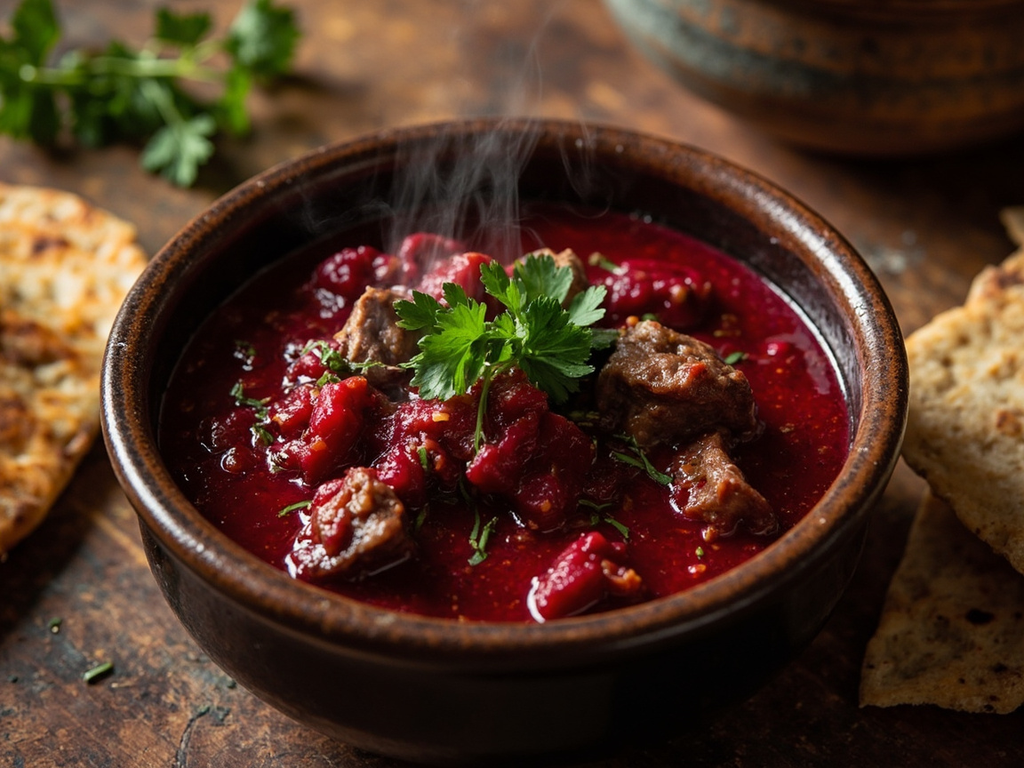
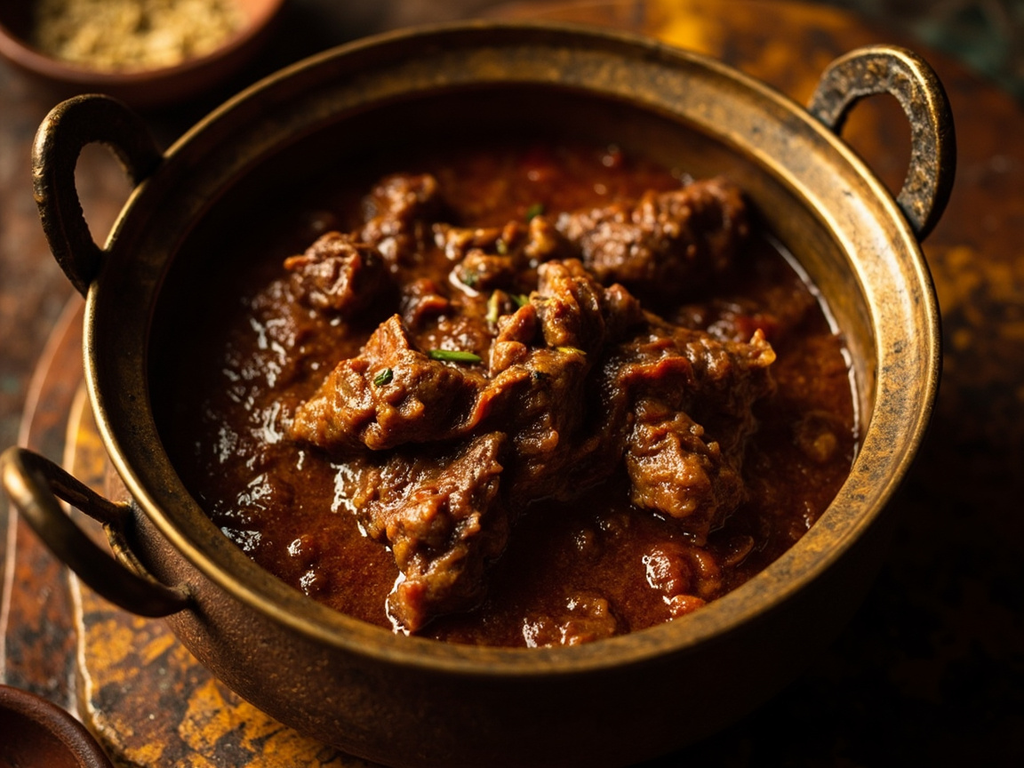
Mamsa with ghee, ginger, and long pepper
Why this dish? Queen of the Kuru warrior caste, Ambika shares the table of the kshatriyas during great sacrifices and dynastic banquets, the only times when meat from a ritually offered animal — here goat — was consumed. This dish evokes the feasts of Hastinapura that seal alliances and births.
Pieces of goat long-simmered in ghee with ginger, long pepper (pippali), and coriander, until the flesh falls apart. A powerful and fragrant dish, reserved for the auspicious days of warriors.
In ordinary times, my table remains of rice and milk. But when the sacrificial fire has spoken and a goat has been offered according to the rites, then the Kurus feast. I sear the flesh in ghee, season it with ginger and pippali — that long pepper that bites and warms a warrior's blood — and let it simmer until dusk. It is a dish of strength, for those whose destiny is to fight and rule.
- •Goat meat (ritually sacrificed animal) — according to the feast (festive protein)
- •Ghee — abundantly (cooking fat)
- •Fresh ginger — a good amount (aromatic)
- •Long pepper (pippali) — a few crushed heads (pungent spice)
- •Coriander seeds — a handful (spice)
- •Fresh turmeric — a little (color)
- •Curd (dahi) — one bowl (tenderizer)
- •Rock salt — to taste (seasoning)
Mamsa with ghee, ginger, and long pepper
Pieces of goat long-simmered in ghee with ginger, long pepper (pippali), and coriander, until the flesh falls apart. A powerful and fragrant dish, reserved for the auspicious days of warriors.
Why this dish? Queen of the Kuru warrior caste, Ambika shares the table of the kshatriyas during great sacrifices and dynastic banquets, the only times when meat from a ritually offered animal — here goat — was consumed. This dish evokes the feasts of Hastinapura that seal alliances and births.
In ordinary times, my table remains of rice and milk. But when the sacrificial fire has spoken and a goat has been offered according to the rites, then the Kurus feast. I sear the flesh in ghee, season it with ginger and pippali — that long pepper that bites and warms a warrior's blood — and let it simmer until dusk. It is a dish of strength, for those whose destiny is to fight and rule.
Ingredients (period version)
- Goat meat (ritually sacrificed animal) — according to the feast (festive protein)
- Ghee — abundantly (cooking fat)
- Fresh ginger — a good amount (aromatic)
- Long pepper (pippali) — a few crushed heads (pungent spice)
- Coriander seeds — a handful (spice)
- Fresh turmeric — a little (color)
- Curd (dahi) — one bowl (tenderizer)
- Rock salt — to taste (seasoning)
Ingredients
- Goat or kid shoulder, cut into pieces — 800 g (protein)
- Ghee — 4 tbsp (cooking fat)
- Fresh grated ginger — 2 tbsp (aromatic)
- Long pepper (pippali) or, failing that, black pepper — 1 tsp ground (spice)
- Ground coriander seeds — 1 tbsp (spice)
- Turmeric powder — 1 tsp (color)
- Plain yogurt — 150 g (tenderizing marinade)
- Salt — to taste (seasoning)
Method
- Mix the meat with yogurt, turmeric, and half the ginger; marinate for at least 1 hour.
- Heat ghee in a heavy-bottomed pot and sear the meat pieces on all sides.
- Add the remaining ginger, coriander, and crushed long pepper; stir to coat.
- Pour in a large glass of water, salt, cover, and simmer on low heat for 1.5 to 2 hours.
- Uncover at the end to reduce the liquid to a short, glossy sauce.
- Serve very hot, with rice or barley flatbreads.
How it was made : Vedic texts and the Mahabharata attest to meat consumption by kshatriyas during sacrifices and hospitality to honored guests; the flesh was cooked in ghee over coals, seasoned with native spices — ginger, long pepper, black pepper, turmeric — long before the arrival of chili from the Americas in the 16th century.
The contemporary twist : Serve in small portions on a warm barley flatbread, palace-style street food, with a squeeze of lime for freshness.
Sources : K. T. Achaya, Indian Food: A Historical Companion, Oxford University Press, 1994 · The Mahabharata (passages sur l'hospitalité et les festins, trad. anglaise K. M. Ganguli)
Ambika · Charactorium