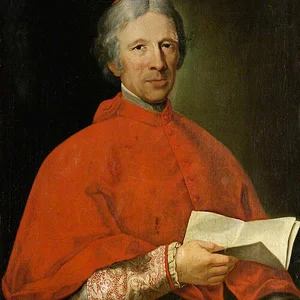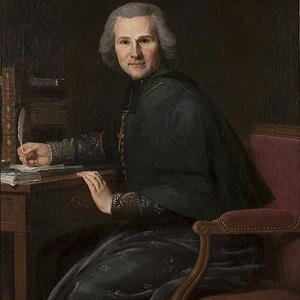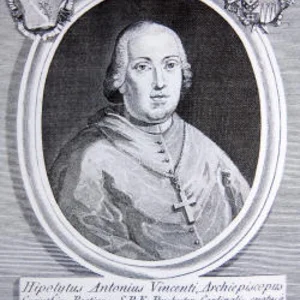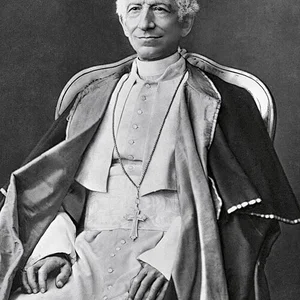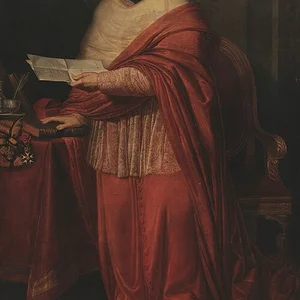

Cardinal and papal legate, Giovanni Battista Caprara (1733–1810) played a central role in the reconciliation between the Catholic Church and Napoleonic France. He negotiated and signed the Concordat of 1801 on behalf of the Holy See, and was subsequently appointed Archbishop of Milan.
Giovanni Battista Caprara(1733 — 1810)
Giovanni Battista Caprara
7 min read
Frequently asked questions
Key Facts
- Born in Bologna in 1733, into a noble family
- Appointed legate a latere by Pius VII in 1801 to negotiate with Bonaparte
- Signed the Concordat of 1801, which restored the Catholic Church in France
- Appointed Archbishop of Milan in 1802 by Napoleon
- Died in Paris in 1810, having sealed the Franco-papal reconciliation
Works & Achievements
Treaty signed between the Holy See and Napoleonic France, ending the revolutionary schism. It redefined the relationship between the State and the Catholic Church for over a century, until the law of separation of 1905.
Caprara presided over the coronation ceremony in Milan, conferring religious legitimacy on the new Napoleonic Kingdom of Italy and consolidating the alliance between the Empire and the Church.
A collection of pastoral letters and directives addressed to the Milanese clergy to reorganize religious life after the revolutionary upheavals and adapt the Concordat to local realities.
A vast corpus of dispatches and reports sent to Rome, documenting the negotiations of the Concordat and the evolving Franco-pontifical relations under the Empire — a major source for historians.
Anecdotes
Named as legate of Pope Pius VII in 1800, Caprara arrived in Paris to negotiate the Concordat at the age of 67. Napoleon, renowned for his impatience, grew exasperated by the cardinal's lengthy deliberations, to the point of ironically dubbing him “the tortoise” — but this methodical slowness allowed them to reach a solid agreement signed on July 15, 1801.
The signing ceremony of the Concordat of 1801 marked the end of a ten-year rupture between revolutionary France and the Catholic Church. Caprara, representing the Holy See, had to accept painful compromises, most notably the renunciation of ecclesiastical properties confiscated since 1789 — regarded by Rome as a necessary sacrifice for religious peace.
In 1805, Caprara had the singular honor of crowning Napoleon King of Italy in the cathedral of Milan, before an immense crowd. He placed on the Emperor's head the Iron Crown of the ancient Lombard kings, repeating the famous words: “God has given it to me; woe to him who touches it.” It was the crowning diplomatic triumph of his career.
Despite his ties to Napoleon, Caprara remained deeply attached to the pope's authority. When Napoleon had Pius VII imprisoned in 1809, the cardinal — too old and ill to resist openly — continued to carry out his duties in Milan while discreetly maintaining his loyalty to Rome until his death in 1810.
Primary Sources
His Holiness Pope Pius VII and the French government of the Republic acknowledge that the Catholic, Apostolic, and Roman religion is the religion of the great majority of French citizens.
Discussions are progressing slowly due to the demands of the First Consul, who insists on the appointment of bishops by the government and on pontifical confirmation. I believed it necessary to accept this principle in order to preserve what is essential.
Citizen Caprara has arrived in Paris with the powers of the Holy See. Conferences have begun. I wish this matter to be concluded as promptly as possible.
No act of the Holy See may be received in France, and no pontifical agent or legate may exercise their functions on French territory, without the authorization of the government of the Republic.
Key Places
Caprara's birthplace in 1733, then under papal sovereignty. He completed his early ecclesiastical studies there, in a city renowned for its university and its legal and theological traditions.
Caprara's official residence during the Concordat negotiations (1800–1801), and thereafter the seat of the legation following the agreement's signing. It was here that discussions with Napoleon's representatives took shape, against a backdrop of mutual mistrust.
In 1805, Caprara crowned Napoleon King of Italy here with the Iron Crown. He subsequently served as Archbishop of Milan until his death, making the city the center of his pastoral ministry.
The center of Catholic authority to which Caprara remained answerable throughout his career. It was here that his powers as legate were confirmed and that the Concordat was ratified by Pius VII.
Caprara served as Apostolic Nuncio here before being chosen for the French mission. This diplomatic experience at the Habsburg court prepared him for the delicate negotiations ahead with the Napoleonic government.
Typical Objects

An official document sealed by the pope authorizing Caprara to negotiate and sign on his behalf. These parchments, bearing the lead seal (*bulla*), were the essential credentials for any pontifical diplomatic mission.

The *galero*, a large flat hat with wide brims and long red tassels, symbolizing the dignity of the cardinalate. It set Caprara apart at official ceremonies and served as a reminder that his authority came directly from Rome.

A treasured relic kept at Monza, which Caprara used to crown Napoleon King of Italy in 1805. According to tradition, it contained a nail from the True Cross, lending it both a religious and a political aura.

A book of daily prayers recited by every Catholic prelate at fixed hours. Caprara's richly bound breviary structured his spiritual day even amid his intense diplomatic obligations.

A stamp engraved with the arms of the Holy See and of Caprara, indispensable for authenticating diplomatic acts. Its impression in the wax affixed to the Concordat of 1801 bound the entire Catholic Church.

The original treaty document, drafted in French and Latin, signed by Caprara on behalf of the Holy See and by Joseph Bonaparte and two other plenipotentiaries on the French side. This parchment is the major diplomatic act of the pontificate of Pius VII.
School Curriculum
Vocabulary & Tags
Key Vocabulary
Daily Life
Morning
Caprara began his day with the recitation of Lauds and the celebration of Mass, a daily obligation for every cardinal. He then devoted several hours to reading dispatches from Rome and drafting his replies, in Latin or French depending on the correspondent.
Afternoon
The afternoon was reserved for diplomatic audiences and meetings with government representatives. In Paris, he regularly received Napoleonic negotiators in the salons of the legation; in Milan, he presided over chapter meetings of the cathedral and received members of the diocesan clergy.
Evening
The evening concluded with the recitation of Vespers and Compline, followed by a modest meal in the company of his secretary and ecclesiastics from his circle. He would sometimes reread canonical or theological texts, and dictate notes for his personal archives before retiring early.
Food
As befitted a prelate of his rank, Caprara observed the days of fasting and abstinence prescribed by the Church. At table, he preferred simple Italian fare — vegetable soups, boiled meats, cheeses — without the extravagance that some cardinals of the era readily allowed themselves.
Clothing
Caprara wore the cardinal's dress: a crimson red cassock, mozzetta (short cape), and skullcap of the same color for liturgical occasions. Outside of ceremonies, he wore a violet cassock trimmed with red, a mark of his dignity without the full ceremonial splendor reserved for major celebrations.
Housing
In Paris, he resided in the pontifical legation's hôtel, a formal building equipped with reception rooms for diplomatic audiences. Appointed Archbishop of Milan, he lived in the archbishop's palace adjoining the cathedral, surrounded by secretaries, a majordomo, and a small ecclesiastical household.
Historical Timeline
Period Vocabulary
Liens externes & ressources
Références
Œuvres
Concordat de 1801
15 juillet 1801
Cérémonie du sacre de Napoléon roi d'Italie
26 mai 1805
Instructions pastorales pour le diocèse de Milan
1802-1810
Correspondance diplomatique avec le Saint-Siège
1800-1810