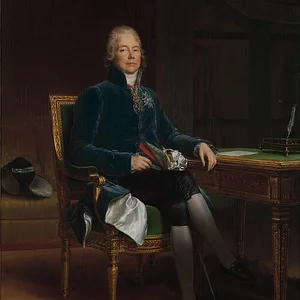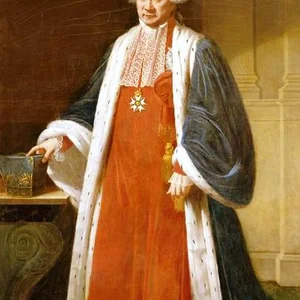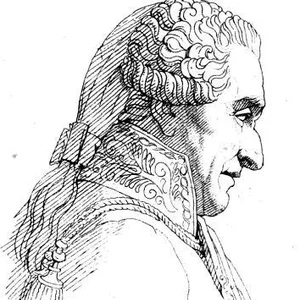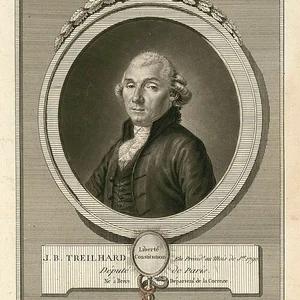

A Catholic priest and politician of the French Revolution, he championed the emancipation of Jews and the abolition of slavery in the colonies. Elected as a constitutional bishop, he sat in the National Convention and helped secure the passage of the 1794 abolition decree.
Abbé Henri Grégoire(1750 — 1831)
Henri Grégoire
France
8 min read
Frequently asked questions
Famous Quotes
« I vote for detention and banishment.»
« Prejudices are tyrants whose reign is founded on nothing but our own cowardice.»
Key Facts
- 1789: publishes the Essay on the Physical, Moral and Political Regeneration of the Jews
- 1789: elected as a clergy deputy to the Estates General, he spontaneously joins the Third Estate
- 1791: pleads before the Assembly for the civil equality of Jews in France
- 1794: active rapporteur of the Convention's decree abolishing slavery in the colonies
- 1801: refuses to resign his bishopric under the Concordat, a symbol of Gallican resistance
Works & Achievements
The first major plea for the civil emancipation of Jews in France. This essay contributed directly to the September 1791 decree granting them full citizenship — a first in Europe.
A founding text of Republican language policy, arguing for the unification of France through the French language. The report remains debated today for its stance toward regional cultures.
A series of reports in which Grégoire coined the term "vandalism" and called for the protection of cultural heritage. These texts are at the origin of France's policy for preserving historic monuments.
A survey cataloguing the works of African and African-American authors to demonstrate the intellectual equality of all peoples. A pioneering work of intellectual anti-racism, widely circulated in Europe and the United States.
An abolitionist work published after Napoleon reinstated slavery in 1802. Grégoire renews his struggle here and challenges the European powers gathered at the Congress of Vienna.
A sweeping survey of dissident religious movements in Europe and around the world. This work reflects Grégoire's intellectual curiosity and his commitment to enlightening minds about the diversity of beliefs.
Anecdotes
In May 1789, Abbé Grégoire was one of the very first members of the clergy to spontaneously join the Third Estate, defying the solidarity of his order at the Estates-General in Versailles. This courageous gesture earned him immediate popularity and foreshadowed his future battles for equal rights.
It was Grégoire who coined the word "vandalism" in 1793 to denounce the destruction of artworks and monuments by certain revolutionaries. The term, derived from the Germanic people known as the Vandals, immediately entered the French language and remains in common use today.
In 1789, he published his *Essai sur la régénération des juifs*, arguing for the full civil emancipation of Jews. His work proved decisive: on September 27, 1791, the National Assembly voted to emancipate the Jews of France — a first for a major European state.
During the trial of Louis XVI in January 1793, Grégoire refused to vote for the king's death, but also refused to call for a popular referendum. He was one of the very few members of the Convention to display this quiet refusal, which earned him the lasting hostility of the most radical Montagnards.
After his death in 1831, the dissident Church denied him burial at Saint-Denis, as he had wished. It was not until 2021 that his remains were transferred to the Panthéon in an official ceremony honoring his struggles for abolition and emancipation.
Primary Sources
Jews are human beings before they are Jews; they have the same rights as we do, the same needs; they are sensitive to the same pleasures, the same sorrows.
We no longer have provinces, but we still have prejudices. We must destroy the aristocratic habits of our languages and found a Republic one and indivisible.
I coin a word to kill the thing: vandalism. Every citizen must feel that defacing a public monument is an attack on society as a whole.
Wherever humanity exists, it is capable of virtue and talent; and if Africans have been degraded by us, the shame lies with our forefathers, not with nature.
I have fought for freedom of conscience, for that of oppressed peoples, and I die with the conviction that these causes will one day triumph.
Key Places
A small village in Lorraine where Henri Grégoire was born in 1750. His humble origins in this deeply Catholic region shaped his priestly vocation and his commitment to rural and marginalized communities.
It was at Versailles, in May 1789, that Grégoire took his first steps as a deputy by joining the Third Estate against the majority of the clergy. This place marks the beginning of his public revolutionary commitment.
Grégoire sat here as a deputy from 1792 to 1795, taking part in the great debates on the Republic, the king's trial, and above all the abolition of slavery on February 4, 1794. It was the heart of his political action.
Elected bishop of Blois by the people in 1791, Grégoire led this constitutional diocese while continuing his political mandate in Paris. He served in this role until the Concordat of 1801.
Long denied entry to the Panthéon due to his revolutionary positions, Grégoire was finally transferred there in 2021, during a national ceremony celebrating his struggles for emancipation and abolition.
Typical Objects

Essential liturgical books for any Catholic priest, Grégoire carried them daily for his offices. They symbolize the religious grounding of a man who never separated his faith from his political commitment.

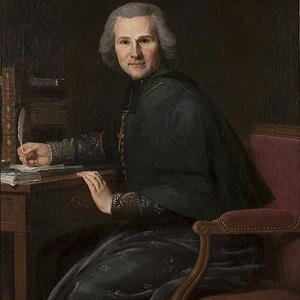
Grégoire was a prolific author, drafting reports, essays, and speeches throughout his life. His quill served as a political weapon to spread his abolitionist and emancipatory ideas across Europe.

Elected bishop of Loir-et-Cher by the people in 1791, Grégoire wore his episcopal vestments while sitting in the Convention. This attire made him a singular figure, blending clerical dress with the revolutionary tribune.

Documents drawn up before the Estates-General of 1789, the *cahiers de doléances* recorded the grievances and aspirations of the people. Grégoire contributed on behalf of the clergy of Nancy, already calling for sweeping reforms in favor of the most disadvantaged.

This solemn document voted by the Convention represented the culmination of several years of Grégoire's struggle within the Société des Amis des Noirs. It was the first general abolition of slavery by a Western state.

A book in which Grégoire catalogued the writings of African and African-American authors to demonstrate the intellectual equality of all peoples. Circulated across Europe and the United States, it stands as one of the earliest anti-racist works in history.
School Curriculum
Vocabulary & Tags
Key Vocabulary
Daily Life
Morning
Grégoire begins each day with prayer and the reading of the Divine Office, faithful to his obligations as a priest even amid the turmoil of the Revolution. He then spends the first hours reading newspapers and political pamphlets to stay informed about the debates unfolding in the Assembly.
Afternoon
Afternoons are taken up by sessions at the Assembly or the Convention, where he regularly takes the floor to champion his causes. Outside the chamber, he receives correspondents, abolitionist activists, and intellectuals in his Parisian apartments.
Evening
In the evenings, Grégoire works by candlelight drafting his essays, reports, and speeches. A man of books as much as of action, he keeps up a rich correspondence with prominent figures across Europe and the Americas.
Food
His table is simple and austere, in keeping with the ideal of frugality he preaches. He eats the ordinary fare of the Parisian middle classes: bread, vegetables, inexpensive cuts of meat, and wine diluted with water, never seeking to imitate the luxury of the circles he moves in.
Clothing
In public, Grégoire wears the black cassock of a priest or episcopal vestments when performing his duties as a constitutional bishop. At the Convention, he appears in dark civilian dress but often retains his clerical collar — a visible sign of his dual identity.
Housing
He lives in modest Parisian apartments, without ostentation, rejecting the extravagance that some representatives of the people allow themselves. His library is his most prized possession, containing thousands of volumes on theology, law, natural history, and the languages of the world.
Historical Timeline
Period Vocabulary
Liens externes & ressources
Références
Œuvres
Essai sur la régénération physique, morale et politique des juifs
1789
Rapport sur la nécessité et les moyens d'anéantir les patois et d'universaliser l'usage de la langue française
1794
Rapports sur le vandalisme (Convention nationale)
1793–1794
De la littérature des nègres
1808
De la traite et de l'esclavage des Noirs et des Blancs
1815
Histoire des sectes religieuses
1810