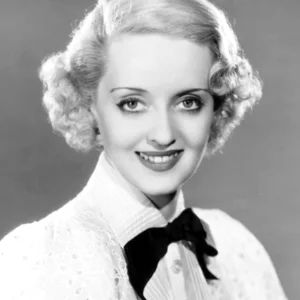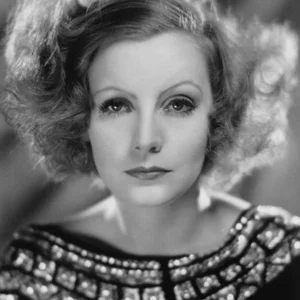

Swedish actress who became one of Hollywood's greatest stars of the 1920s–1930s. Famous for her air of mystery and restrained acting style, she voluntarily stepped away from the screen in 1941 at the age of 36.
Greta Garbo(1905 — 1990)
Greta Garbo
États-Unis, Suède
9 min read
Frequently asked questions
Famous Quotes
« I want to be alone.»
Key Facts
- Born on September 18, 1905 in Stockholm, Sweden
- Made her Hollywood debut in 1925, during the silent film era
- Starred in Anna Karenina (1935) and Ninotchka (1939)
- Permanently retired from cinema in 1941 at age 36
- Received an honorary Oscar in 1954 for her lifetime achievement
Works & Achievements
Garbo's first major film, directed by Mauritz Stiller and based on Selma Lagerlöf's novel. Its success across Scandinavia opened the doors of Hollywood to her.
Garbo's first major American success, opposite John Gilbert. MGM leveraged their real-life passion on screen; Garbo brought to the role a sensual, internalized style of acting that was revolutionary for the era.
An adaptation of Eugene O'Neill's play and Garbo's first talking picture. The film's worldwide triumph proved that her deep voice and faint Scandinavian accent only heightened her magnetism rather than diminishing it.
A masterpiece of classical cinema in which Garbo portrays the seventeenth-century Queen of Sweden, a free-spirited woman who refuses to bow to convention. The final scene — her face motionless at the prow of the ship — is among the most celebrated in film history.
An adaptation of Alexandre Dumas fils's novel, widely regarded as Garbo's most accomplished performance. She received an Oscar nomination for the role, and critics were unanimous in praising her ability to transcend melodrama.
Ernst Lubitsch's comedy in which Garbo plays a rigid Soviet commissar won over by the charms of Paris. This comic turn, heralded by the tagline "Garbo Laughs!", revealed an entirely unexpected side of the actress.
Garbo's final film, a light comedy that proved a commercial and critical failure. She never explained the retirement that followed immediately afterward, but she never stood before a camera again.
Anecdotes
Greta Garbo was born Greta Lovisa Gustafsson in a poor neighborhood of Stockholm in 1905. It was Swedish director Mauritz Stiller who spotted her at the Royal Dramatic Theatre School and gave her the stage name “Garbo,” judging her real name too ordinary for a future star. Without Stiller, who negotiated her contract with MGM and insisted she be hired alongside him, Garbo might never have left Sweden.
When Garbo spoke her first words on screen in Anna Christie in 1930, MGM launched a worldwide advertising campaign with the slogan “Garbo Talks!” The event was so eagerly anticipated that movie theaters sold out from the very first screenings. Unlike many silent film stars whose voices disappointed audiences, her deep, slightly Scandinavian-accented voice only deepened her mystique.
In 1941, at just 36 years old and at the peak of her fame, Garbo permanently retired from cinema following the commercial failure of The Two-Faced Woman. She never offered a public explanation and turned down every offer made to her over the following fifty years, until her death. This voluntary, deliberate, and total withdrawal is unique in the history of cinema.
Her famous line “I want to be alone,” spoken in Grand Hotel in 1932, became the symbol of her public persona. Garbo later pointed out that she had actually said “I want to be left alone” — an important distinction, meaning she wished to be undisturbed, not that she sought absolute solitude. Yet the phrase nonetheless perfectly captured her way of life.
During World War II, Garbo quietly worked for British intelligence. Thanks to her fame and her connections in neutral Sweden, she was able to approach figures in European high society and pass information to the Allies. Her liaison officer was William Stephenson, head of British counter-espionage, and her role as a spy was confirmed after the war by declassified documents.
Primary Sources
I am trying to find myself as a person. Sometimes that is not easy. Perhaps I have been too strict, too demanding of myself. I am not very good at being a 'star'.
Autograph letter in which Garbo speaks of her need for solitude and her weariness of Hollywood life, expressing the wish to return to Sweden.
I am not a difficult woman. I am simply a woman who knows what she wants and what she does not want. Hollywood gave me a great deal, but took even more from me.
I never said 'I want to be alone.' I only said 'I want to be let alone.' There is all the difference.
Garbo's voice, low and throaty, matches her beauty and her acting. She has conquered the talkies as she conquered the silents.
Key Places
A working-class neighborhood in southern Stockholm where Greta Gustafsson was born and raised in a blue-collar family. This modest background stood in stark contrast to the star life that awaited her, and Garbo never forgot her roots, regularly sending money to her family back in Sweden.
The prestigious institution where Garbo trained from 1922 to 1924, before being discovered by Mauritz Stiller. It was here that she developed the foundations of her restrained, internalized acting style — the very quality that set her apart from every other Hollywood actress.
The vast Hollywood studio complex where Garbo filmed virtually all of her American movies between 1926 and 1941. She imposed strict conditions: closed sets, no visitors, and shooting halted if anyone brought out a personal camera.
The New York apartment where Garbo lived as a recluse for more than forty years after her retirement from cinema in 1941. She died there in 1990; New Yorkers would occasionally spot her on solitary walks through Manhattan, recognizable by her dark glasses and beret.
Garbo returned to Sweden regularly between film shoots, finding there an anonymity that Hollywood never afforded her. She was particularly fond of the Swedish coastline and lakes, where she could walk and swim without being recognized.
Typical Objects

An indispensable accessory of 1930s Hollywood glamour, the cigarette holder appears in many of Garbo's official portraits. It symbolized the sophistication and feminine freedom that defined her femme fatale characters.

Garbo constantly wore large dark glasses whenever she stepped out onto the streets of New York to preserve her anonymity. They became the emblem of her reclusive life and inspired generations of celebrities seeking to escape photographers.

The standard camera used on MGM sets in the 1930s, with which Queen Christina and Camille were filmed. Unlike other stars, Garbo refused to allow photographers onto the set during shooting.

Garbo often wore a dark beret tilted to one side, combining understated elegance with a nod to her Swedish roots. This simple hat, paired with her trench coat, formed an instantly recognizable silhouette on the streets of New York.

The legal document binding Garbo to Metro-Goldwyn-Mayer since 1925, governing every aspect of her public life: assigned roles, authorized interviews, and image rights. This type of contract embodied the Hollywood “star system,” which treated actors as precious commodities.

Enormous electric arc lamps used in studios to achieve powerful, directional lighting. MGM's lighting technicians developed special techniques for Garbo — backlighting and cast shadows — that sculpted her face and deepened her on-screen mystique.
School Curriculum
Vocabulary & Tags
Key Vocabulary
Tags
Daily Life
Morning
Garbo woke up early, around 6 a.m., accustomed to shoots starting at dawn in the MGM studios. She ate a frugal breakfast — fresh fruit, cereal, or toast — before heading to the set by car driven by her personal chauffeur, systematically turning away the photographers posted at the studio entrance.
Afternoon
Filming days lasted ten to twelve hours. Garbo was known for her absolute concentration between takes, which she spent alone in her dressing room, shunning small talk and on-set socializing. Outside of filming, she devoted her afternoons to long solitary walks through the hills of Los Angeles.
Evening
Unlike other Hollywood stars, Garbo avoided galas, premieres, and studio-organized parties. She dined at home or with a small circle of close friends — notably photographer Cecil Beaton and actress Marlene Dietrich — and went to bed early to preserve her voice and focus.
Food
Garbo followed a diet that was ahead of its time, shaped by Scandinavian health theories: raw vegetables, fish, little red meat, and plenty of water. She avoided alcohol during shoots and was careful not to snack between meals — a discipline shared by very few Hollywood stars of her era.
Clothing
Off set, Garbo dressed in a deliberately androgynous and understated style: wide trousers, dark coats, berets, and scarves. This look, unusual for a woman in the 1930s, let her pass unnoticed — yet paradoxically became one of the most recognizable personal styles of the age. On screen, she wore the creations of Adrian, MGM's in-house costume designer.
Housing
In Hollywood, Garbo rented an isolated villa in the Bel Air hills, far removed from her colleagues' ostentatious residences. After her retirement, she settled in New York in a modest apartment overlooking the East River, furnished simply, where she lived for forty years in near-total seclusion.
Historical Timeline
Period Vocabulary
Liens externes & ressources
Références
Œuvres
Chair et le Diable (Flesh and the Devil)
1926
Ninotchka
1939