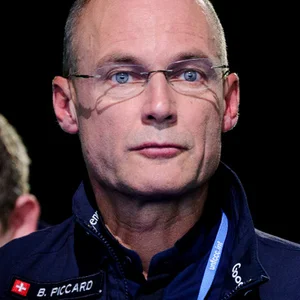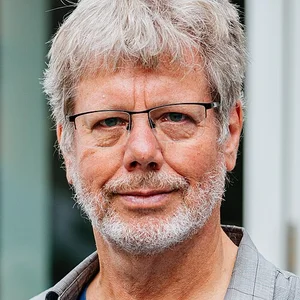

Dutch computer scientist born in 1956, Guido van Rossum is the creator of the Python programming language, which he began developing in 1989. Python is today one of the most widely used languages in the world, particularly in programming education and artificial intelligence.
Guido van Rossum(1956 — ?)
Guido van Rossum
Royaume des Pays-Bas
7 min read
Frequently asked questions
Key Facts
- Born January 31, 1956 in Haarlem, Netherlands
- Began developing Python in December 1989
- Python 1.0 released in 1994
- Named 'Benevolent Dictator For Life' (BDFL) of the Python community, a title he stepped down from in 2018
- Python becomes the most popular programming language in the world in the 2020s
Works & Achievements
Creation of the Python language, whose philosophy is built on code readability and simplicity. Today it is used by millions of developers and in computer science education around the world.
Major release introducing list comprehensions, Unicode support, and an improved memory management system, cementing Python's place as a professional language at scale.
A deep redesign of the language correcting long-standing inconsistencies; an ambitious migration that took more than ten years to be adopted across the entire Python ecosystem.
The founding document defining Python's democratic evolution process through Python Enhancement Proposals, an open governance model that has been highly influential in the free software world.
Creation of the non-profit foundation that holds Python's intellectual property rights and supports its development, global conferences (PyCon), and community.
Since 2020, Guido has been working on the CPython project to significantly improve Python's execution speed, addressing one of the language's most recurring criticisms.
Anecdotes
Guido van Rossum began creating Python during the Christmas holidays of 1989, while working at the Centrum Wiskunde & Informatica (CWI) in Amsterdam. He was looking for a "fun" project to fill his week off, never imagining that this language would become one of the most widely used in the world.
The name "Python" does not come from the snake, but from the British comedy television series *Monty Python's Flying Circus*, of which Guido was a fan. He wanted a name that was short, unique, and slightly mysterious — and he was keen for the documentation to be able to include humorous references to the show.
For nearly thirty years, the Python community gave Guido van Rossum the affectionate title of "BDFL" — Benevolent Dictator For Life. The title reflected his role as the ultimate arbiter of decisions about the language, exercised with goodwill and attentiveness to the community.
In July 2018, following a heated controversy over PEP 572 introducing the "walrus" operator (:=), Guido announced his resignation from the role of BDFL in a terse email, stating that he needed "a permanent vacation." The global Python developer community was deeply shaken by this unexpected announcement.
In 2020, at the age of 64, Guido van Rossum joined Microsoft, saying he wanted to continue improving Python's performance and its development tools. His longevity and undiminished passion for programming are regularly cited as a source of inspiration for generations of developers.
Primary Sources
I'd like to announce the availability of a new language called Python. It is freely available in source form. It is an interpreted language, somewhat like BASIC but much more powerful.
Beautiful is better than ugly. Explicit is better than implicit. Simple is better than complex. Readability counts. Special cases aren't special enough to break the rules.
I am resigning as BDFL of Python. I am not going to appoint a successor. I am going to take a permanent vacation from being BDFL, and you will be on your own.
PEPs are the primary mechanism for proposing major new features, for collecting community input on an issue, and for documenting the design decisions that have gone into Python.
Python is designed to be highly readable. It uses English keywords frequently where other languages use punctuation, and it has fewer syntactic constructions than other languages.
Key Places
Birthplace of Guido van Rossum, born on January 31, 1956, in this historic city in the province of North Holland.
The Dutch national research institute for mathematics and computer science, where Guido worked from 1982 to 1995 and where he invented Python in 1989.
An American research organization where Guido worked from 1995 to 2000, a period during which Python experienced its first major international growth.
Google's headquarters, where Guido van Rossum worked from 2005 to 2012, helping establish Python as an essential language across Silicon Valley projects.
An online storage startup built entirely in Python, where Guido worked from 2012 to 2019, turning Dropbox into a global showcase for the language.
Since 2020, Guido has been working at Microsoft on improving CPython performance and developing modern programming tools.
Typical Objects

The everyday tool of Guido and every Python developer: it lets you type and execute Python instructions line by line, making learning and experimentation easy.

The central instrument of Guido's work. He designed Python so that code would be readable and fast to write, with a clean syntax that avoids unnecessary characters and curly braces.

Guido has always placed great importance on documentation: the official Python manual, largely written by him, is renowned for its clarity and educational value.

It was through Usenet discussion groups — the forerunner of Internet forums — that Guido shared the earliest versions of Python and built his developer community throughout the 1990s.

A fixture in the offices of CWI, Google, and Dropbox alike, the whiteboard is used to sketch out algorithms and discuss software architecture as a team.

Python was designed in a Unix environment at CWI in Amsterdam; that operating system deeply influenced the philosophy of the language, particularly its modularity and preference for composable tools.
School Curriculum
Vocabulary & Tags
Key Vocabulary
Daily Life
Morning
Guido van Rossum starts his day early by browsing Python mailing lists and bug reports. He reads new PEPs submitted by the international community and drafts detailed feedback before team meetings even begin.
Afternoon
Afternoons are devoted to writing and reviewing code, as well as technical discussions with colleagues about implementation choices. Guido favors simple development environments and the command line, staying true to the Unix philosophy that shaped his early years.
Evening
In the evenings, Guido takes part in online discussions with the global Python developer community, spread across every time zone. He also gives interviews and speaks at conferences (PyCon, EuroPython), where he shares his vision for the language's evolution.
Food
Like many engineers who have worked their way through American tech companies, Guido embraces a pragmatic lifestyle. The work culture at Google, Dropbox, and Microsoft centers on on-site meals in company cafeterias, supporting long, uninterrupted workdays.
Clothing
Guido van Rossum sports the relaxed attire typical of Silicon Valley engineers: a t-shirt or sweater, jeans, and sneakers. He is regularly photographed at PyCon conferences in this understated, no-frills look.
Housing
Guido lived in the Netherlands until the mid-1990s before moving to the United States — first to Virginia, then to California. He has been based in the San Francisco Bay Area since the early 2000s, at the heart of the global tech ecosystem.
Historical Timeline
Period Vocabulary
Liens externes & ressources
Références
Œuvres
Python (langage de programmation)
1991
Python 2.0
2000
Python 3.0
2008
PEP 1 — What is a PEP?
2001
Python Software Foundation (PSF)
2001
Contributions aux performances de CPython chez Microsoft
2020