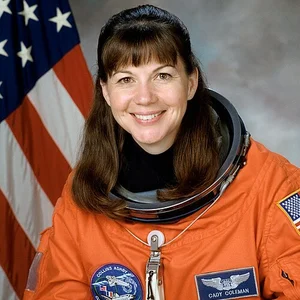
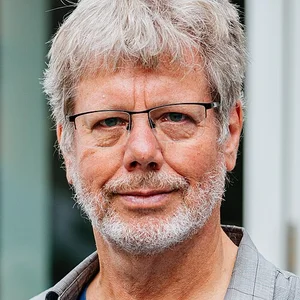
Tebello Nyokong is a South African chemist born in 1951, a specialist in phthalocyanines. She develops a photodynamic therapy against cancer, an alternative to conventional chemotherapy, and works on cleaning up water through photochemistry.
Tebello Nyokong(1951 — ?)
Tebello Nyokong
Lesotho
5 min read
Frequently asked questions
Key Facts
- Born on 20 October 1951 in Hlotse (Leribe), Lesotho
- Earned her doctorate in chemistry at the University of Western Ontario (Canada) in 1987
- Professor of medicinal chemistry and nanotechnology at Rhodes University (South Africa)
- Develops phthalocyanine-based photodynamic cancer therapy as an alternative to chemotherapy
- Recipient of the L'Oréal-UNESCO For Women in Science Award in 2009
Works & Achievements
Development of laser-activated molecules to destroy tumors, a more targeted alternative to chemotherapy.
Using light and catalysts to destroy toxic dyes and microbes in wastewater.
Leadership of a major national program funding South African research on medicines and nanomaterials.
Development of chemical sensors and smart coatings harnessing the properties of these molecules.
Mentoring dozens of doctoral students at Rhodes University, strengthening science across the African continent.
World-leading publications on the chemistry of phthalocyanines and their medical and environmental applications.
Anecdotes
As a child in the mountains of Lesotho, Tebello Nyokong herded her family's sheep. She couldn't go to school every week: she alternated one week in class and one week watching over the livestock. Despite this difficult path, she became one of Africa's greatest scientists.
Her research focuses on colored molecules called phthalocyanines. Injected into the body and then activated by laser light, they destroy cancer cells while sparing healthy cells: this is photodynamic therapy, a gentler alternative to conventional chemotherapy.
In 2009, Tebello Nyokong received the L'Oréal-UNESCO For Women in Science Award, which each year honors five researchers across the five continents. That year she represented Africa and the Arab world, a worldwide recognition of her work.
She also uses the same light-based principle to clean up water: when exposed to sunlight or a lamp, her molecules destroy the toxic dyes and microbes present in wastewater. A single scientific idea thus serves both to heal and to protect the environment.
An emeritus professor at Rhodes University in South Africa, she has trained dozens of doctoral students from across the continent. The South African government honored her with the Order of Mapungubwe, one of the country's highest distinctions.
Primary Sources
I would go to school one week, then herd the animals the next week. It taught me patience and perseverance.
Tebello Nyokong is recognized for her work on light-sensitive molecules, used against cancer and for water purification.
Professor Nyokong's research group studies phthalocyanines and nanotechnology applied to medicine and the environment.
Key Places
A small mountainous kingdom entirely surrounded by South Africa, where Nyokong was born and spent her childhood herding sheep.
The institution where Nyokong completed her first higher studies in chemistry before leaving for Canada.
The Canadian university where she earned her master's degree in chemistry in the early 1980s.
The university where Nyokong earned her PhD in chemistry in 1987.
The university where she has led her research laboratory on phthalocyanines since the 1990s, which became the heart of her career.
The American laboratory where Nyokong carried out a postdoctoral research stay on light-sensitive molecules.
Typical Objects

A beam of concentrated light that activates light-sensitive molecules inside the body. It triggers the destruction of cancer cells during photodynamic therapy.

A colorful star-shaped molecule, a cousin of chlorophyll, able to capture light. It is the central material of Nyokong's research, used against cancer and to clean up water.

A device that measures which light a molecule absorbs. It makes it possible to check that a phthalocyanine reacts properly to the desired color of light.

A white garment that protects against chemical splashes. It is the daily uniform of the researcher and her students in the laboratory.

A transparent vessel lit by a lamp or the sun, in which reactions triggered by light take place. Nyokong uses it to test the cleaning of polluted water.

Grains of matter thousands of times smaller than a hair, used to carry active molecules to diseased cells. They make treatments more precise.
School Curriculum
Vocabulary & Tags
Key Vocabulary
Daily Life
Morning
The morning begins early at the Rhodes University laboratory. Tebello Nyokong checks the experiments in progress, adjusts the settings of the lasers and spectrophotometers, and discusses the previous day's results with her team.
Afternoon
The afternoon is devoted to supervising doctoral students, reading and writing scientific papers, and sometimes attending international meetings by videoconference to coordinate research projects.
Evening
In the evening, she prepares lessons and lectures, reviews her students' theses, and answers her correspondence. She also takes time to rest and to think about new ideas for experiments.
Food
Like many South Africans, her diet combines maize-based dishes (pap), vegetables, grilled meats, and local fruits. Tea often accompanies the long working days.
Clothing
In the laboratory, she wears a white coat, goggles, and protective gloves. Outside, she dresses in modern clothing, sometimes enhanced with African fabrics and patterns for ceremonies.
Housing
She lives in Makhanda, a university town in South Africa, in a comfortable house close to her campus, in a country where she can now move about and work freely after the end of apartheid.
Historical Timeline
Period Vocabulary
Liens externes & ressources
Références
Œuvres
Thérapie photodynamique à base de phtalocyanines
années 2000
Dépollution photochimique de l'eau
années 2000-2010
Chaire de recherche SARChI en chimie médicinale et nanotechnologie
2007
Capteurs et nanomatériaux à base de phtalocyanines
années 2010
Formation d'une génération de chercheurs africains
depuis les années 1990
Plusieurs centaines d'articles scientifiques
1987-aujourd'hui