 flip
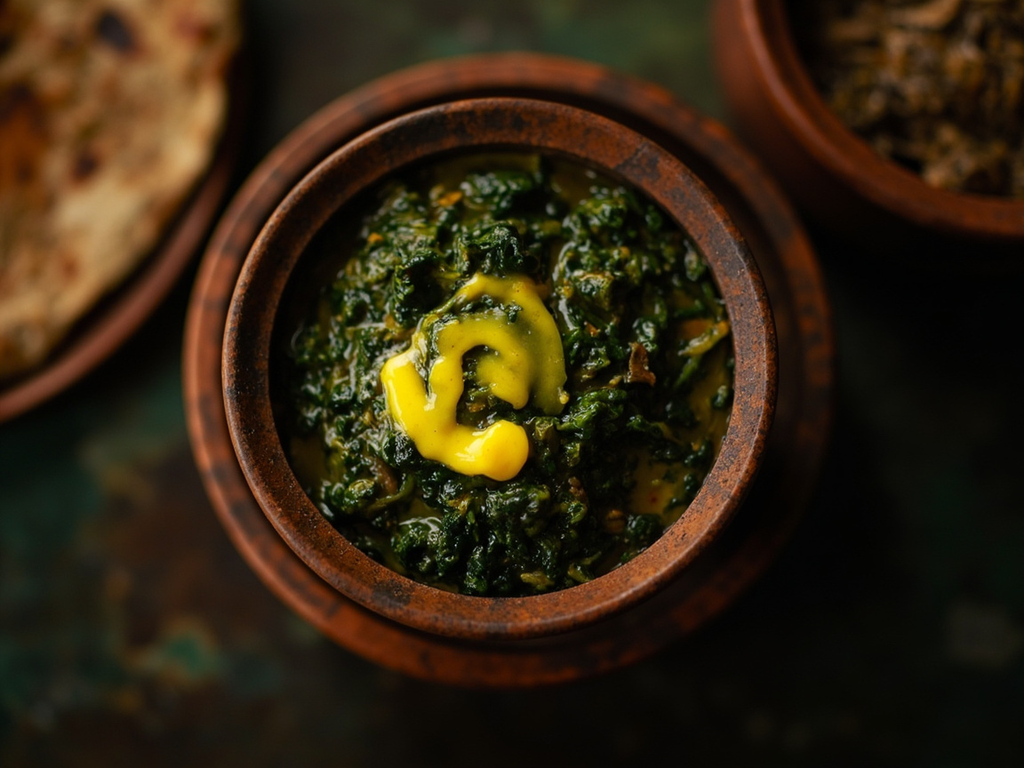
flipMustard Greens Saag with Ginger
Mustard Greens Saag with Ginger
Why this dish? Nanak's Punjab is a land of fields: as winter approaches, mustard and spinach leaves abound, and a long-simmered saag marked the days of gathering when the community (sangat) met to sing hymns and share a meal.
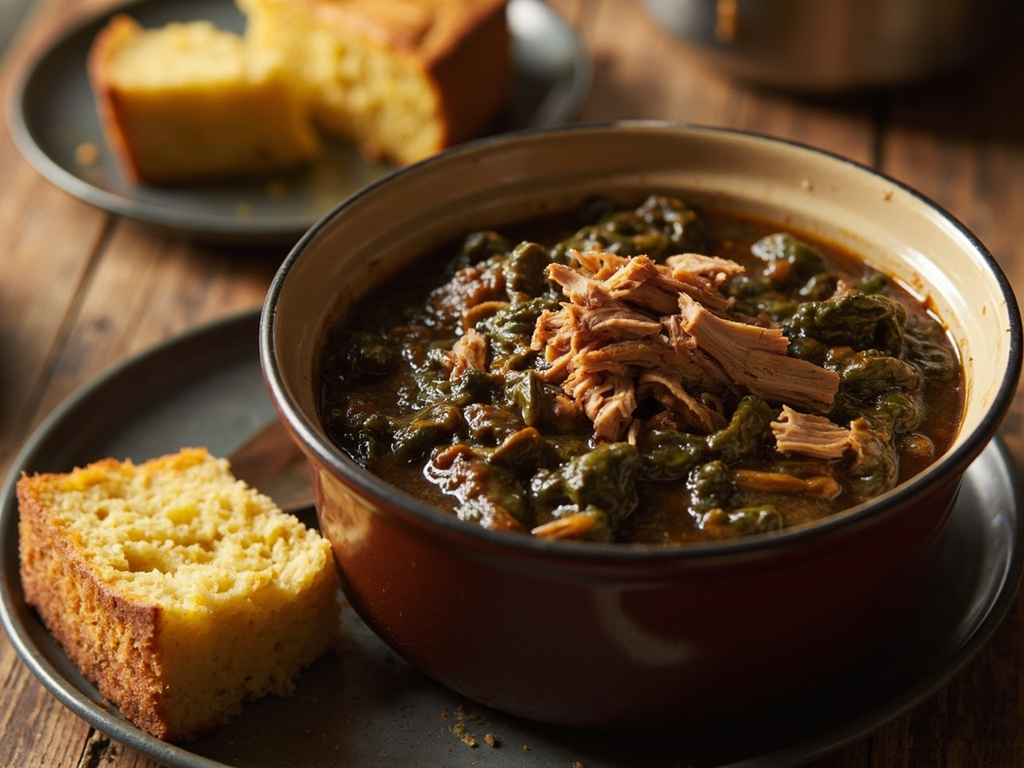
Mustard greens, spinach, and bathua simmered for hours until they melt into a dense green purée, spiced with ginger and bound with ghee. A peasant feast dish, bitter-sweet, demanding patience and generosity.
When the cold descends on the fields and the mustard rises tall and bitter, it is time for the great pot. Pluck the leaves still beaded with dew, add spinach and bathua to soften the bitterness, and let them dissolve over the fire all day — patience too is a prayer. Mash them with a little flour to bind, perfume with sharp ginger and a dollop of ghee, and serve this thick green to all the sangat gathered. He who has cultivated with his own hands and shares his harvest knows a joy no king can buy.
- •Mustard greens (sarson) — a large armful (base, bitterness)
- •Spinach — an armful (sweetness, volume)
- •Bathua (Chenopodium) — a handful (roundness)
- •Fresh ginger — a good piece (warmth)
- •Whole wheat flour — a spoonful (binder)
- •Ghee — a generous spoonful (richness, finish)
- •Rock salt — to taste (seasoning)
Mustard Greens Saag with Ginger
Mustard greens, spinach, and bathua simmered for hours until they melt into a dense green purée, spiced with ginger and bound with ghee. A peasant feast dish, bitter-sweet, demanding patience and generosity.
Why this dish? Nanak's Punjab is a land of fields: as winter approaches, mustard and spinach leaves abound, and a long-simmered saag marked the days of gathering when the community (sangat) met to sing hymns and share a meal.
When the cold descends on the fields and the mustard rises tall and bitter, it is time for the great pot. Pluck the leaves still beaded with dew, add spinach and bathua to soften the bitterness, and let them dissolve over the fire all day — patience too is a prayer. Mash them with a little flour to bind, perfume with sharp ginger and a dollop of ghee, and serve this thick green to all the sangat gathered. He who has cultivated with his own hands and shares his harvest knows a joy no king can buy.
Ingredients (period version)
- Mustard greens (sarson) — a large armful (base, bitterness)
- Spinach — an armful (sweetness, volume)
- Bathua (Chenopodium) — a handful (roundness)
- Fresh ginger — a good piece (warmth)
- Whole wheat flour — a spoonful (binder)
- Ghee — a generous spoonful (richness, finish)
- Rock salt — to taste (seasoning)
Ingredients
- Mustard greens (or substitute Swiss chard + arugula) — 500 g (bitter base)
- Spinach — 300 g (sweetness)
- Fresh ginger — 3 cm (warmth)
- Whole wheat flour (atta) — 1 tbsp (binder)
- Ghee — 2 tbsp (finish)
- Salt — to taste (seasoning)
- Water — 250 ml (cooking)
Method
- Wash and roughly chop all the greens. Place them in a large pot with ginger, a little water, and salt.
- Cover and simmer over very low heat for 60 to 90 minutes, stirring occasionally, until the leaves are tender.
- Mash with a pestle (or potato masher) into a still slightly textured mass. Dissolve the flour in a little water and stir in to thicken.
- Continue cooking for 15 minutes, stirring, so the saag firms up.
- Finish with foaming ghee, adjust salt, and serve hot with a wheat flatbread.
How it was made : Saag was traditionally cooked for hours in an earthen pot left on the embers. Today it is often accompanied by *makki di roti* (corn flatbread) — but corn came from the Americas and reached India only after Nanak: in his time, a wheat, millet, or barley flatbread accompanied the saag.
The contemporary twist : A spoonful of melted ghee swirled in a spiral in the center of the saag, topped with a few crispy fried fresh ginger slivers.
Guru Nanak · Charactorium