 flip
flipSchweinsbraten — roast pork with caraway and rye
Schweinsbraten — roast pork with caraway and rye
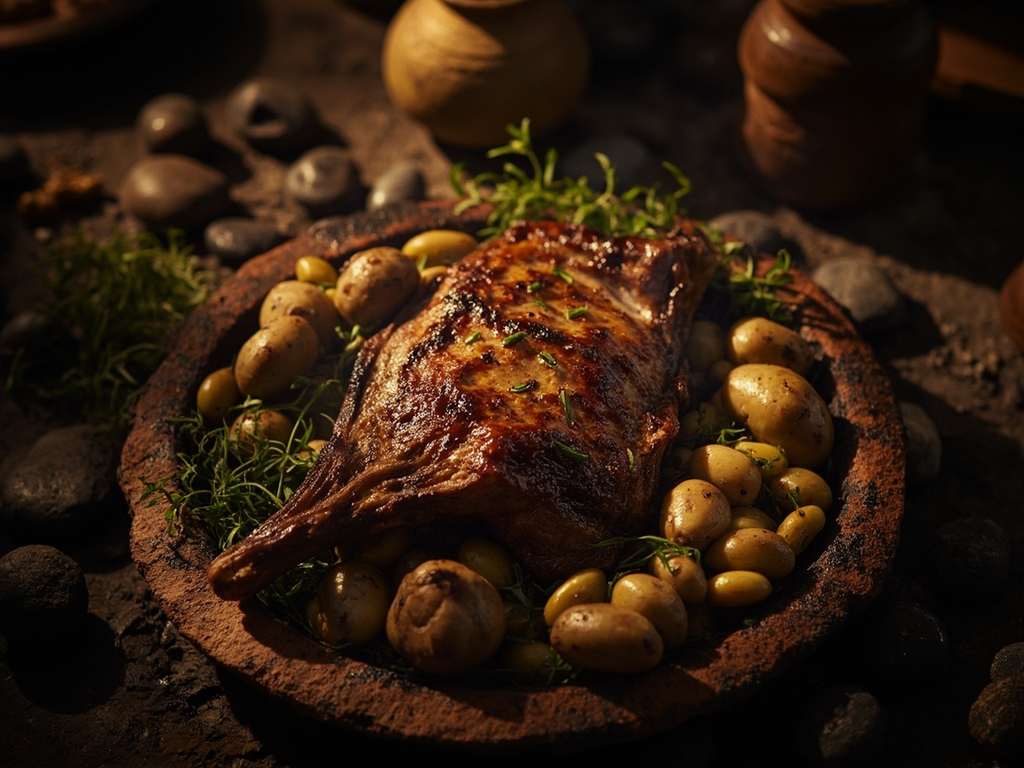
Why this dish? The anchor says: Dürer, a wealthy burgher, ate pork and beef at his table. Crispy roast pork was the dish for great occasions in Nuremberg — a meal to celebrate the completion of a large engraved plate or the visit of a merchant friend.
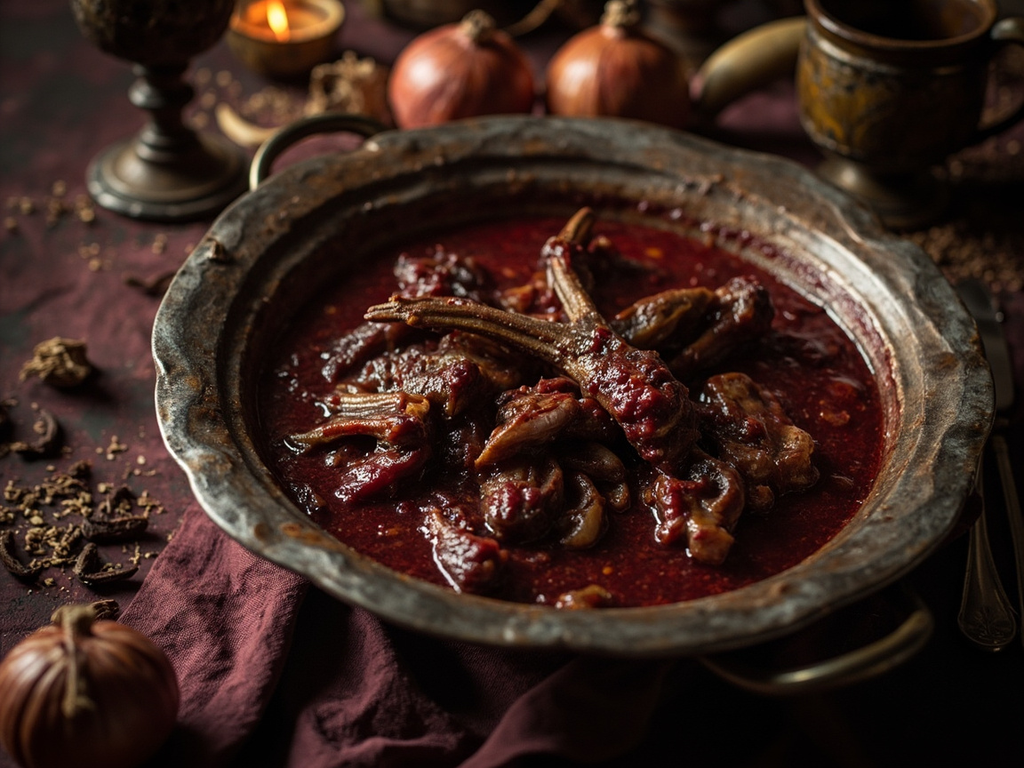
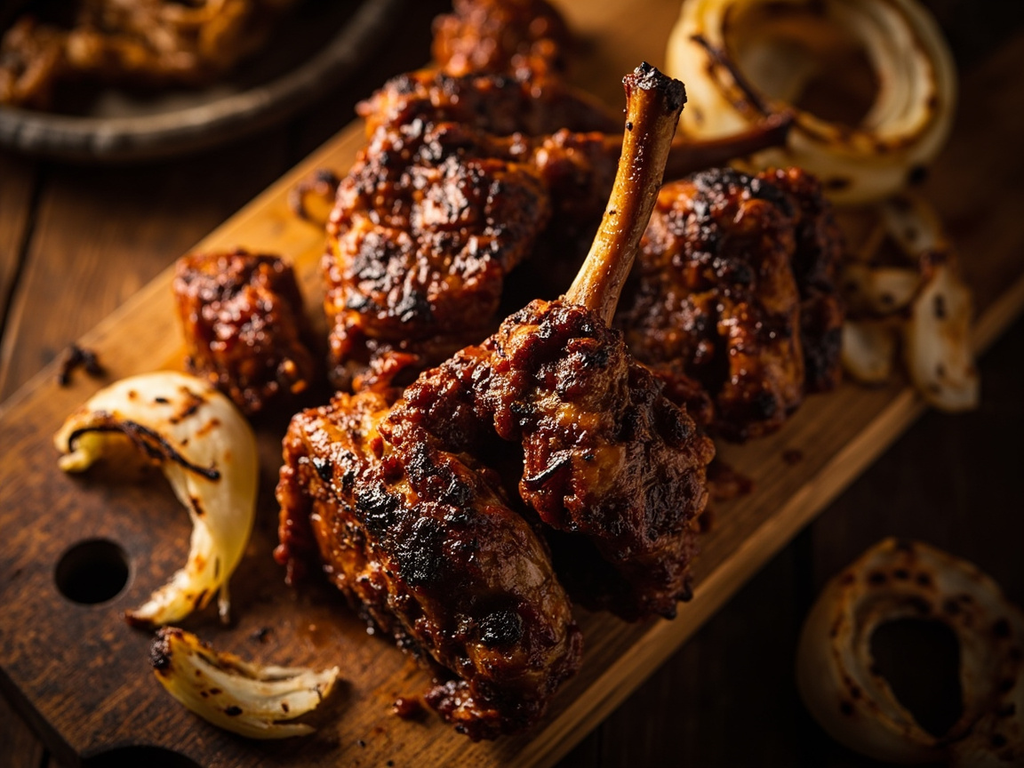
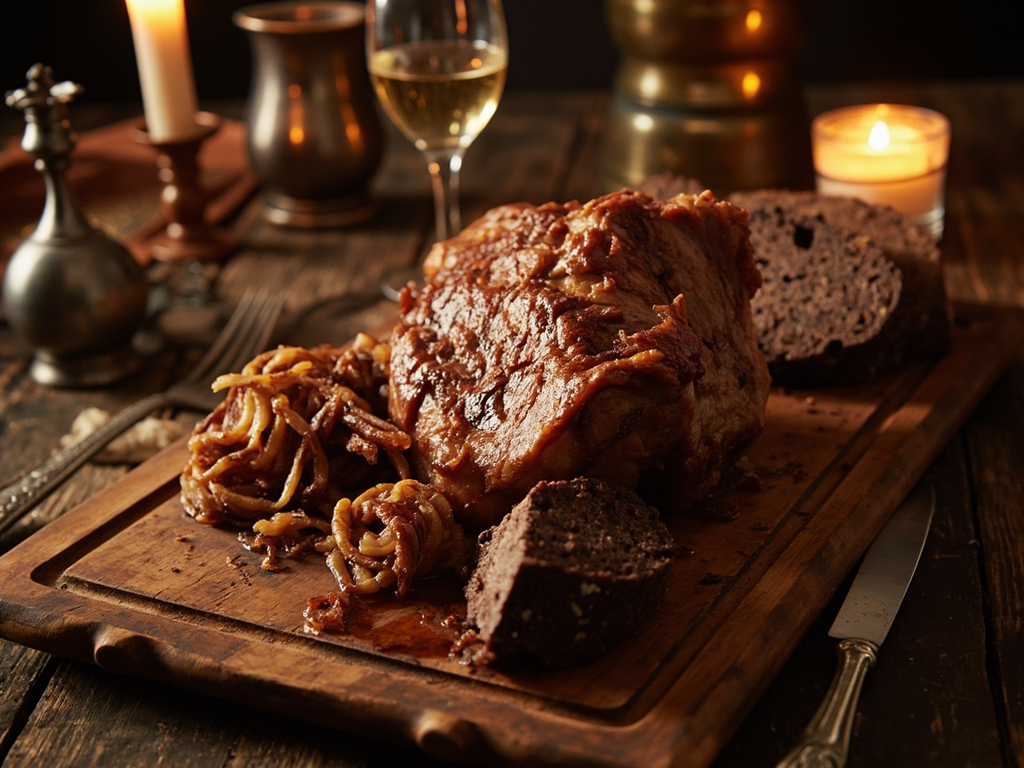
A pork shoulder or neck with skin, rubbed with salt and caraway, roasted slowly until the crackling crackles under the tooth. Served with its juices and rye bread for sopping.
When a great work finally leaves my workshop, it is fitting to entertain well. Then we rub a fine piece of pork with salt and caraway seeds, and turn it before the fire until the crackling sings and crackles like parchment. The secret, my friend, is patience: a good roast, like a good engraving, does not suffer haste. We break rye bread into the juice, raise a glass of Rhine wine, and give thanks to God.
- •Pork shoulder with skin — a fine piece (main meat)
- •Caraway seeds — a good pinch (signature Germanic spice)
- •Salt — generously (seasoning and crispness)
- •Onions — a few (bed for roasting)
- •Rhine wine — a goblet (moistening)
Schweinsbraten — roast pork with caraway and rye
A pork shoulder or neck with skin, rubbed with salt and caraway, roasted slowly until the crackling crackles under the tooth. Served with its juices and rye bread for sopping.
Why this dish? The anchor says: Dürer, a wealthy burgher, ate pork and beef at his table. Crispy roast pork was the dish for great occasions in Nuremberg — a meal to celebrate the completion of a large engraved plate or the visit of a merchant friend.
When a great work finally leaves my workshop, it is fitting to entertain well. Then we rub a fine piece of pork with salt and caraway seeds, and turn it before the fire until the crackling sings and crackles like parchment. The secret, my friend, is patience: a good roast, like a good engraving, does not suffer haste. We break rye bread into the juice, raise a glass of Rhine wine, and give thanks to God.
Ingredients (period version)
- Pork shoulder with skin — a fine piece (main meat)
- Caraway seeds — a good pinch (signature Germanic spice)
- Salt — generously (seasoning and crispness)
- Onions — a few (bed for roasting)
- Rhine wine — a goblet (moistening)
Ingredients
- Pork shoulder or neck with skin — 1.5 kg (main meat)
- Caraway seeds (kümmel) — 2 teaspoons (signature Germanic spice)
- Coarse salt — 2 tablespoons (seasoning and crispness)
- Onions — 3, cut into wedges (bed for roasting)
- Dry white wine (e.g., Riesling) — 250 ml (moistening)
- Black pepper — to taste (seasoning)
Method
- Score the skin in a crosshatch pattern without cutting into the meat. Rub with coarse salt, crushed caraway, and pepper.
- Arrange the onion wedges in the bottom of a roasting pan, place the meat on top, skin side up.
- Roast in the oven at 160°C for 2 hours 30 minutes, basting regularly with the wine and juices.
- Increase the oven to 220°C for the last 20 minutes to puff and crackle the skin.
- Let rest for 10 minutes, then slice and serve with the strained juices and rye bread.
How it was made : Caraway (kümmel) has been the quintessential German domestic spice since the Middle Ages: it was thought to aid digestion, making it a natural partner for fatty meats. The roast was turned on a spit before the hearth, basted with its own fat, in houses wealthy enough to afford a fine piece of meat.
The contemporary twist : A hollowed-out rye loaf filled with slices of roast and juices: a Renaissance 'sandwich' to share at the center of the table.
Albrecht Dürer · Charactorium