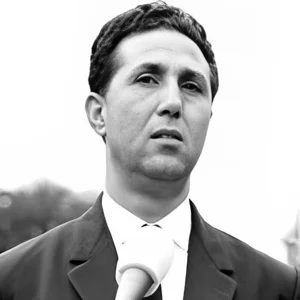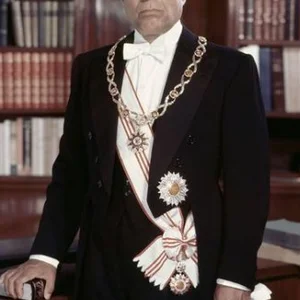

Tunisian statesman and founder of modern Tunisia. The architect of Tunisia's independence in 1956, he became the first president of the Tunisian Republic in 1957 and led the country until his removal from office in 1987.
Habib Bourguiba(1903 — 2000)
Habib Bourguiba
Tunisie, protectorat français de Tunisie
6 min read
Frequently asked questions
Key Facts
- Founds the Neo-Destour party in 1934 to fight against the French protectorate
- Secures Tunisia's independence on 20 March 1956
- Becomes the first president of the Tunisian Republic on 25 July 1957
- Enacts the Code of Personal Status in 1956, emancipating Tunisian women
- Is removed from office on 7 November 1987 by Zine el-Abidine Ben Ali on health grounds
Works & Achievements
Creation of a modern, popular nationalist party that became the driving force behind Tunisian independence.
The culmination of decades of struggle; Tunisia became a sovereign state on 20 March 1956.
A revolutionary reform abolishing polygamy and establishing equality in marriage and divorce, pioneering in the Arab world.
Abolition of the beylical monarchy and establishment of the Republic, of which Bourguiba became the first president.
A sweeping policy of free and compulsory schooling, making education a national priority.
The first Constitution of independent Tunisia, defining a presidential system and the institutions of the state.
The departure of the last French troops, completing Tunisia's territorial sovereignty.
A set of reforms (the right to vote, access to education and work) making Tunisia a regional model for women's rights.
Anecdotes
In 1934, the young lawyer Habib Bourguiba broke away from the old Destour party and founded the Neo-Destour at the Ksar Hellal congress. More modern and popular, this new party would become the driving force behind the struggle for independence.
Bourguiba spent long years in prison and under house arrest, moved from jail to jail by the French authorities, sometimes as far as Fort Saint-Nicolas in Marseille. Far from breaking him, these imprisonments made him a national hero nicknamed the “Supreme Combatant.”
In 1956, shortly after independence, Bourguiba pushed through the Code of Personal Status, which abolished polygamy and repudiation and established judicial divorce. It was one of the boldest pieces of legislation in the Arab world regarding women's rights.
During the month of Ramadan, Bourguiba dared to publicly drink a glass of orange juice on television to encourage Tunisians not to fast, arguing that the country's development was a “jihad” that exempted them from fasting. The gesture caused an enormous scandal.
In 1987, old and weakened, Bourguiba was ousted by his Prime Minister Zine el-Abidine Ben Ali through a “medical coup”: doctors declared him unfit to govern. He spent his final days under house arrest in Monastir, his hometown.
Primary Sources
Woman, like man, is a human being endowed with reason and dignity; she cannot be treated as an object or a perpetual minor.
Polygamy is prohibited. Anyone who, being bound by the ties of marriage, contracts another before the dissolution of the previous one is liable to one year of imprisonment.
The National Constituent Assembly proclaims the abolition of the monarchical regime and the Republic as the regime of the Tunisian State.
Tunisia is a free, independent and sovereign State: its religion is Islam, its language Arabic and its form of government the Republic.
Key Places
Bourguiba's birthplace on the Tunisian coast, where he was born in 1903 and where his mausoleum stands today. It was also where he spent his final years under house arrest.
A small town in the Tunisian Sahel where Bourguiba founded the Neo-Destour party in 1934. The birthplace of his political struggle.
The capital of Tunisia, where Bourguiba wielded presidential power and made his triumphant entrance upon independence in 1956. The center of the country's political life.
Bourguiba studied law and political science at the Sorbonne here in the 1920s. He shaped his political thinking here and later conducted negotiations in the city.
A French fortress where Bourguiba was imprisoned by the colonial authorities. One of the many places of detention during his long struggle.
A strategic port in northern Tunisia, the scene in 1961 of a bloody crisis with France, which had kept a naval base there. Its evacuation in 1963 completed Tunisia's independence.
Typical Objects

Traditional Tunisian red felt cap that Bourguiba wore to assert his roots in the national culture. It became a symbol of Tunisian identity.

Traditional long tunic worn during official ceremonies. Bourguiba alternated between Western suits and traditional dress depending on the political message he wished to send.

Radio was Bourguiba's favorite propaganda weapon, and he galvanized Tunisians through his speeches. His voice became one of the instruments of national unification.

A body of laws promulgated in 1956 that reformed family law. A founding document in the modernization of Tunisian society.

Bourguiba often sported a European-style suit and tie to embody the modernity and progress he wanted for Tunisia. This sartorial choice was a deliberate political message.

By drinking publicly during Ramadan, Bourguiba turned a simple glass into an object of national controversy. It symbolizes his determination to prioritize development over religious constraints.
School Curriculum
Vocabulary & Tags
Key Vocabulary
Daily Life
Morning
A hardworking and methodical president, Bourguiba began his day early by reading the press and reports from his ministers. He placed great importance on his appearance and took care of his attire before official audiences.
Afternoon
His afternoons were structured around cabinet meetings, receptions for dignitaries, and the preparation of his speeches. A born orator, he carefully weighed every word meant to rally the people.
Evening
In the evening, Bourguiba would sometimes receive advisers or foreign heads of state at dinners in the Palace of Carthage. He also liked to withdraw to reflect on the country's political strategy.
Food
Bourguiba favored a rather simple Tunisian cuisine, blending Mediterranean influences with local dishes such as couscous. Concerned about his health, especially as he grew older, he followed a diet monitored by his doctors.
Clothing
He strategically alternated between Western suits, a symbol of modernity, and traditional Tunisian garments such as the *chéchia* and the *jebba* during ceremonies. His wardrobe was a political language in its own right.
Housing
Once he became president, he resided at the presidential Palace of Carthage, near the ancient ruins overlooking the sea. He also retained a deep attachment to his native city of Monastir, where he had a palace and a mausoleum built.
Historical Timeline
Period Vocabulary
Liens externes & ressources
Références
Œuvres
Fondation du Néo-Destour
1934
Indépendance de la Tunisie
1956
Code du statut personnel
1956
Proclamation de la République
1957
Généralisation de l'enseignement
années 1958-1970
Constitution de 1959
1959
Évacuation de Bizerte
1963