 flip
flipMelitoutta, honey sesame cake
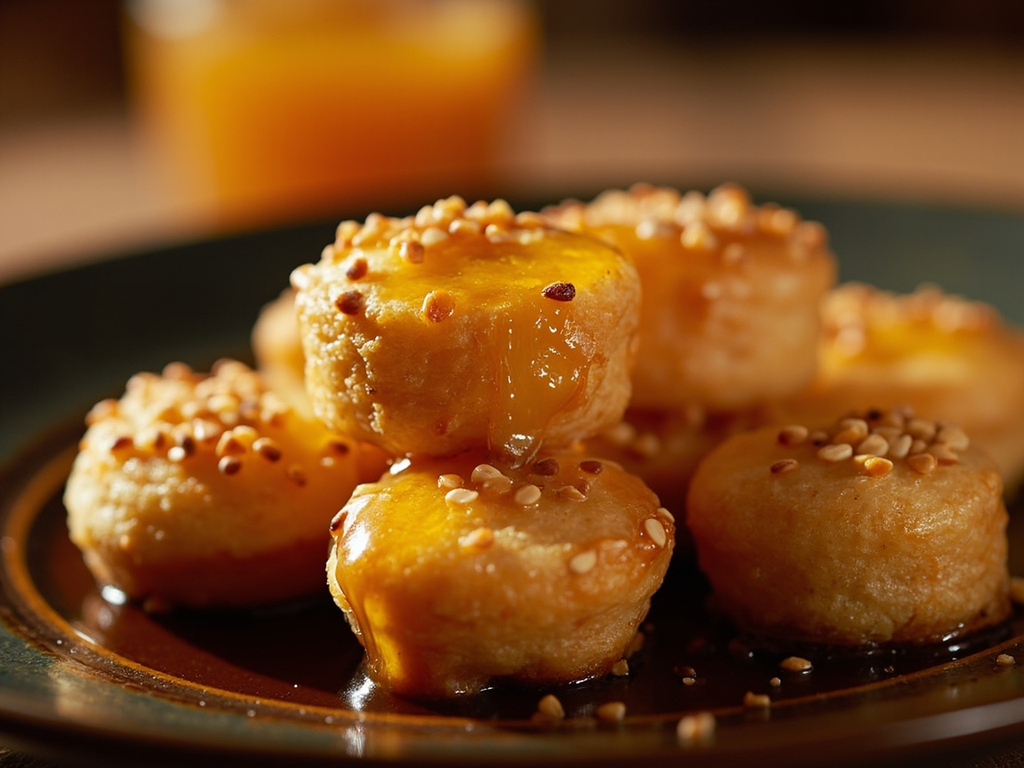
Melitoutta, honey sesame cake
Why this dish? The honey cake was the offering slipped into the hand of the deceased to appease Cerberus, the three-headed dog guarding the gate of Hades' realm. They were also placed on tombs. Sweet as a promise of peace in the dark house of the god.
A small dense cake of honey, barley flour and sesame, perfumed with cooked wine. Sweet, sticky, ritual — the treat for great days and the viaticum of the dead.
You tremble at the thought of crossing my door? Know that my three-mouthed guardian does not bite those who know how to soothe him. Knead barley flour with my darkest honey, that of mountain thyme, roll it in toasted sesame and make a cake round as the moon you will never see again. Slip it into your hand before the great passage: Cerberus will snatch it, and you will enter my home as a guest, not as prey.
- •Barley flour — two parts (base)
- •Wheat flour — one part (binder)
- •Thyme honey — generously (sweetener and binder)
- •Sesame seeds — a good handful (signature crunch)
- •Cooked wine (hepsêma) — a little (flavor)
- •Olive oil — a drizzle (softness)
Melitoutta, honey sesame cake
A small dense cake of honey, barley flour and sesame, perfumed with cooked wine. Sweet, sticky, ritual — the treat for great days and the viaticum of the dead.
Why this dish? The honey cake was the offering slipped into the hand of the deceased to appease Cerberus, the three-headed dog guarding the gate of Hades' realm. They were also placed on tombs. Sweet as a promise of peace in the dark house of the god.
You tremble at the thought of crossing my door? Know that my three-mouthed guardian does not bite those who know how to soothe him. Knead barley flour with my darkest honey, that of mountain thyme, roll it in toasted sesame and make a cake round as the moon you will never see again. Slip it into your hand before the great passage: Cerberus will snatch it, and you will enter my home as a guest, not as prey.
Ingredients (period version)
- Barley flour — two parts (base)
- Wheat flour — one part (binder)
- Thyme honey — generously (sweetener and binder)
- Sesame seeds — a good handful (signature crunch)
- Cooked wine (hepsêma) — a little (flavor)
- Olive oil — a drizzle (softness)
Ingredients
- Barley flour — 120 g (base)
- Wheat flour — 60 g (binder)
- Thyme honey (or mountain honey) — 120 g (sweetener and binder)
- Sesame seeds — 60 g (signature crunch)
- Cooked wine / reduced must (or grape syrup) — 2 tbsp (flavor)
- Olive oil — 2 tbsp (softness)
- Warm water — if needed (adjustment)
Method
- Toast the sesame seeds in a dry pan until golden and fragrant, set aside.
- Mix the two flours, add olive oil and cooked wine.
- Incorporate half the honey and knead: the dough should be soft and sticky (adjust with a little warm water).
- Add half the sesame seeds to the dough, shape into small round flattened cakes.
- Bake at 170°C for 18-22 minutes, until golden and firm.
- Upon removal, brush with the remaining honey and roll in toasted sesame seeds. Let cool slightly.
How it was made : The *melitoutta* ('honey cakes') are mentioned notably in Aristophanes as the pastry given to the dead for Cerberus. Greek cuisine knew no sugar: honey was THE sweetener, and reduced wine (*hepsêma*, *sapa*) was used to flavor and color. Barley dominated wheat, which was rarer and costlier.
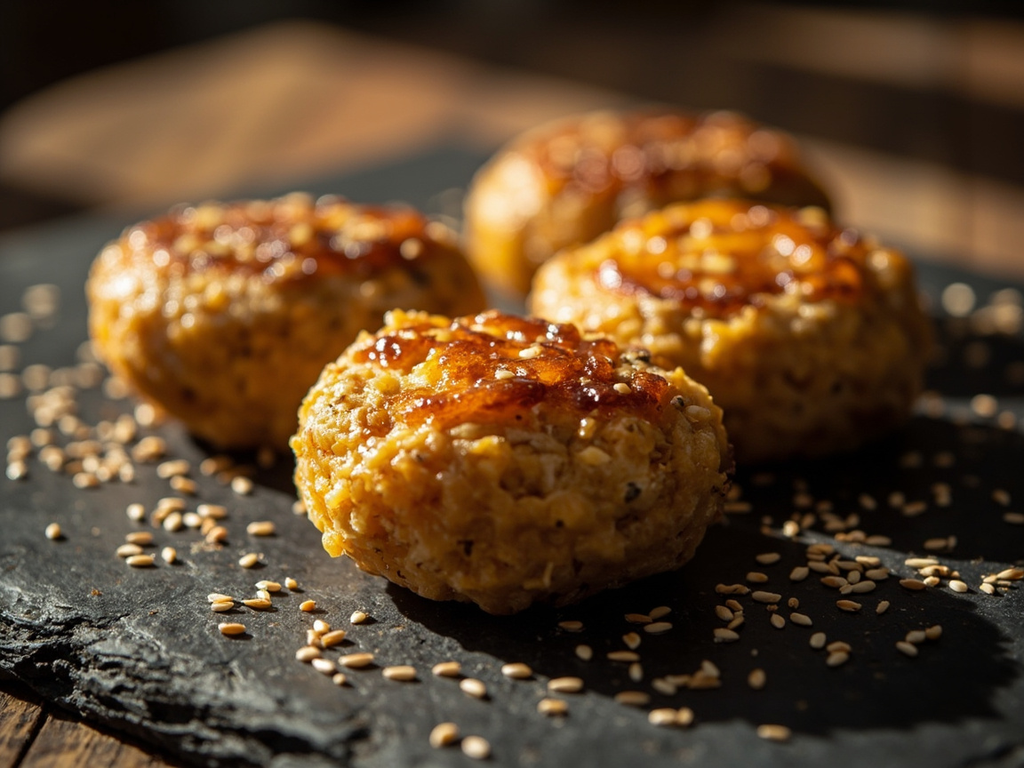
The contemporary twist : Presented as three bite-sized pieces on a black slate — one for each of Cerberus' heads — with a honey thread drawn at the last moment.
Sources : Aristophanes, Lysistrata (reference to the cake for Cerberus) · Andrew Dalby & Sally Grainger, The Classical Cookbook (1996) · Eugenia Salza Prina Ricotti, Dining as a Roman / ancient Greek cuisine
Hades · Charactorium