flip
Black Coffee of the Thinking Nights
Black Coffee of the Thinking Nights
Why this dish? Arendt is famous for her nights of work and discussion punctuated by strong coffee and cigarettes — the cigarette is indeed among her typical objects. Coffee was not a detail but the companion of her intellectual life, from the Heidelberg seminar to New York salons.
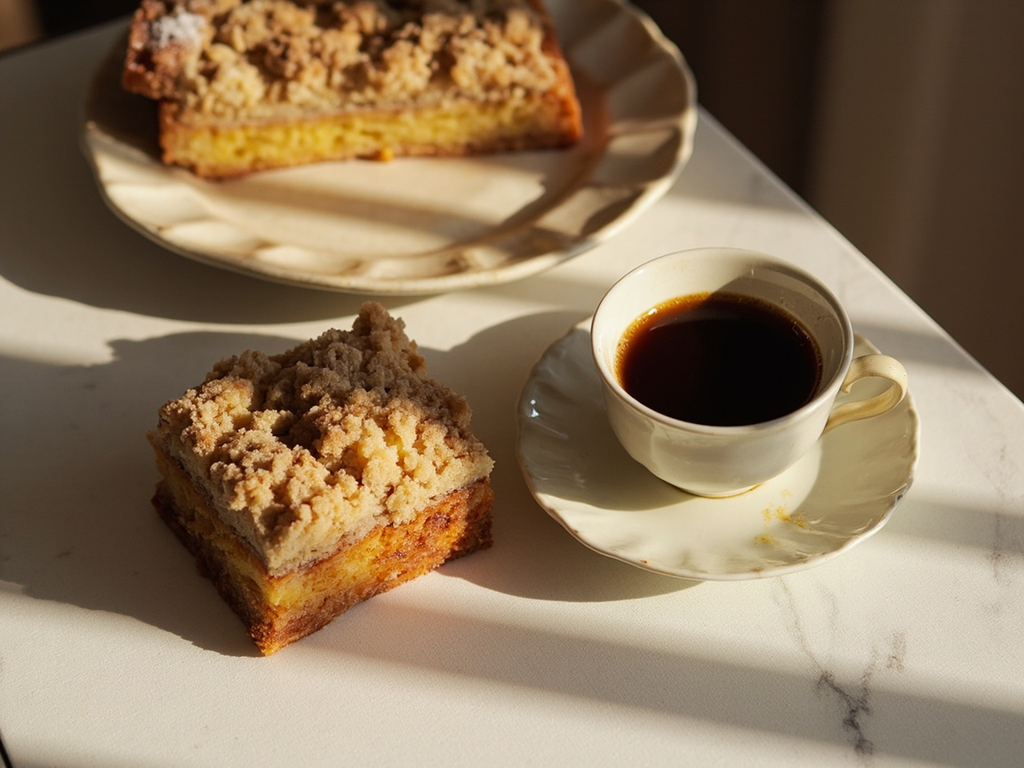
A strong, bold coffee, nearly black, served in a small cup and stretched with hot water in the German style when the night grows long. Frank bitterness, no detours.
Much has been written about my cigarette; the coffee is forgotten, yet it always accompanied it. I wanted it strong — lukewarm coffee is a betrayal of thought. Already in Heidelberg as a student, it was in smoke and bitterness that ideas took shape; later, in New York, my friends knew that a visit to me lasted until the coffee pot was empty twice. Drink it without sugar, I beg you: bitterness keeps the mind awake far better than any speech.
- •Freshly ground coffee, fine grind — generous (body and bitterness)
- •Simmering water (not boiling) — as needed (extraction)
Black Coffee of the Thinking Nights
A strong, bold coffee, nearly black, served in a small cup and stretched with hot water in the German style when the night grows long. Frank bitterness, no detours.
Why this dish? Arendt is famous for her nights of work and discussion punctuated by strong coffee and cigarettes — the cigarette is indeed among her typical objects. Coffee was not a detail but the companion of her intellectual life, from the Heidelberg seminar to New York salons.
Much has been written about my cigarette; the coffee is forgotten, yet it always accompanied it. I wanted it strong — lukewarm coffee is a betrayal of thought. Already in Heidelberg as a student, it was in smoke and bitterness that ideas took shape; later, in New York, my friends knew that a visit to me lasted until the coffee pot was empty twice. Drink it without sugar, I beg you: bitterness keeps the mind awake far better than any speech.
Ingredients (period version)
- Freshly ground coffee, fine grind — generous (body and bitterness)
- Simmering water (not boiling) — as needed (extraction)
Ingredients
- Quality coffee, medium-fine grind — 18 g for 2 cups (body)
- Filtered water at 93°C — 300 ml (extraction)
- Hot water to stretch (Verlängerter style) — to taste (mild extension)
Method
- Heat water until simmering, then let it rest for 30 seconds (never a rolling boil, which burns the coffee).
- Pour water over the ground coffee — in a French press, steep for 4 minutes then press gently.
- Serve very hot in a small cup. For long conversations, stretch with a little hot water in the Viennese/German style.
- No sugar: take it bitter, accompanied — why not — by a square of Zwetschgenkuchen.
How it was made : In early 20th-century Central Europe, coffee was both a domestic ritual (Kaffee und Kuchen) and the fuel of Viennese and German intellectual cafés where the life of ideas unfolded. It was prepared by decoction or filter, always strong, and stretched with water ("Verlängerter") to make it last.
The contemporary twist : Served in a small cup with gold rim on a saucer, next to an empty ashtray — a knowing nod to Arendt's iconography, without glorifying anything.
Sources : Témoignages biographiques sur les habitudes de travail d'Arendt (café et tabac) · Culture du café d'Europe centrale, XXe siècle
Hannah Arendt · Charactorium