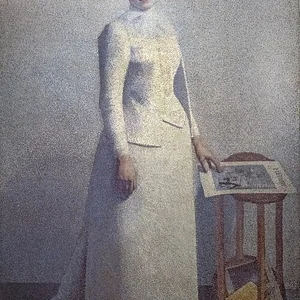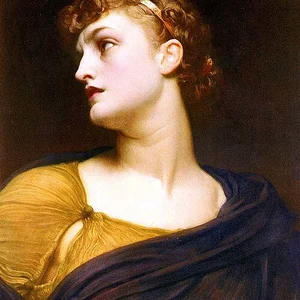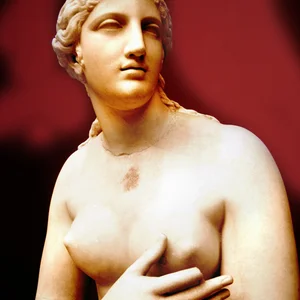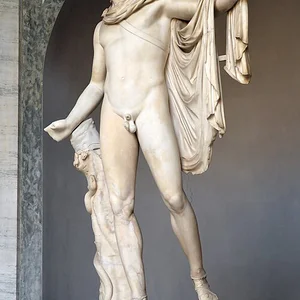

A central figure in Greek mythology, Helen is the wife of King Menelaus of Sparta. Her abduction by the Trojan prince Paris triggers the Trojan War, one of the greatest conflicts in ancient mythology. She symbolizes both ideal beauty and the destructive consequences of passion.
Helen of Troy
Helen
8 min read
Frequently asked questions
Key Facts
- Daughter of Zeus and Leda according to Greek mythology
- Abducted by Paris, prince of Troy, triggering the Trojan War (traditionally dated around 1200 BCE)
- Central subject of Homer's Iliad, a foundational epic of Western literature
- Symbol of perfect beauty in Antiquity, embodying the Greek aesthetic ideal
- Her story has inspired countless literary, dramatic, and artistic adaptations to this day
Works & Achievements
A founding event of Greek mythology in which Helen, abducted by the Trojan prince Paris, abandons her husband Menelaus and Sparta. This act directly triggers the Trojan War, the defining mythological conflict of ancient Greece.
A conflict sparked by the abduction of Helen, uniting the greatest Greek heroes — Achilles, Agamemnon, Ajax — against Troy for ten years. This war stands as the central event of Greek epic tradition and symbolizes the clash between the Greek and Eastern worlds.
A mythological event in which Helen becomes the prize in a contest among three goddesses — Hera, Athena, and Aphrodite. Paris names her the most beautiful, setting in motion the chain of events that leads to her abduction and, ultimately, the Trojan War.
After the fall of Troy, Helen is reunited with Menelaus and restored to her place as Queen of Sparta. Her return symbolizes the reestablishment of order and the resolution of the Trojan War across the mythological tradition.
Helen becomes the archetypal symbol of absolute feminine beauty in Greek mythology, inspiring countless works of art, literature, and poetry across the centuries. Her beauty is portrayed as powerful enough to launch a war involving every great hero of the Greek world.
According to some mythological traditions, Helen becomes immortal and is deified after her death, joining the ranks of the demigods. Different versions of her fate vary widely — from apotheosis to exile — reflecting the many interpretations of her moral role in the myths.
Anecdotes
In Homer's Iliad, Helen herself acknowledges her beauty as a source of misfortune, calling it a 'fatal beauty.' In a poignant scene, she watches from the walls of Troy as warriors slaughter each other because of her, expressing her regret and guilt over the destruction caused by her abduction.
According to Greek accounts, Helen was courted by the greatest heroes of Greece before her marriage to Menelaus. Her father Tyndareus reportedly made all her suitors swear an oath to defend her union — which is why every Greek king joined forces to fight Troy when Paris carried her away.
Tradition holds that it took Helen ten years to reach Troy after her abduction by Paris, with some versions claiming she was detained in Egypt. This variant of the myth, attested by several ancient authors, complicates the traditional narrative of her immediate voyage to Troy.
After the fall of Troy, different versions of the myth describe Helen's fate differently: in Homer, she is brought back to Sparta by Menelaus and restored to her position as queen, while other sources — such as Euripides in his play 'Helen' — offer alternative accounts in which she survived by other means.
The ancient Greeks viewed Helen as an ambiguous figure: at once a victim (abducted against her will, according to some) and a willing participant (complicit, according to others). This ambiguity reflects broader Greek philosophical debates about fate, moral responsibility, and the power of beauty in human affairs.
Primary Sources
So spoke Helen of the golden hair. And Priam, beholding Helen, was struck with admiration. For she was beautiful as the immortal goddesses. But the old man sighed and said: 'Helen, you are not to blame. It is the gods who have brought upon us this terrible war.'
Helen, the wife of Menelaus, shed tears. Her heart trembled, for she remembered all that had come to pass. Telemachus gazed upon her with wonder, for he had heard of her beauty throughout the Greek world.
I am not the one you accuse. It was Aphrodite who led me to Paris. What punishment could I have inflicted upon the goddess? The gods are more powerful than mortals.
Helen, cause of so much misery, she whose beauty brought about the ruin of Troy and the tears of so many warriors.
Key Places
Capital of Menelaus's kingdom, where Helen reigns as queen before her abduction by Paris. It is the starting point of the Trojan War.
The Trojan city where Helen is taken by Paris. She remains there for the ten years of the conflict, at the heart of the greatest war in Greek mythology.
The mythological birthplace of Helen, daughter of Zeus and Leda. She grows up here before becoming queen of Sparta.
A mountain near Troy where Paris, a Trojan shepherd, judges the beauty contest between Hera, Athena, and Aphrodite — a decision that sets him on the path to abducting Helen.
A small islet off the coast of Crete that bore Helen's name in ancient tradition, marking one of the memorial sites associated with the heroine.
An island where, according to some mythological traditions, Helen takes refuge after the fall of Troy before returning to Sparta and reuniting with Menelaus.
Typical Objects

A typical grooming item from ancient Greece, symbolizing Helen's legendary beauty. Polished bronze mirrors were luxury accessories used by elite Spartan women to attend to their appearance.

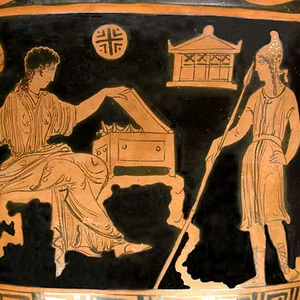
Greek pottery from the Archaic and Classical periods frequently depicts scenes from the Trojan War and Helen. These vases are visual records of the legend and the artistic techniques of the 6th–5th centuries BCE.

A characteristic garment of ancient Greek women, worn by high-ranking ladies such as Helen. This light, elegant draped robe symbolizes the status and refinement of the Queen of Sparta.

A mark of royal power worn by Helen as the wife of Menelaus and Queen of Sparta. Decorated gold diadems were symbols of aristocratic status in ancient Greece.

A military or merchant vessel representing the era and the means of travel across the ancient Mediterranean. Legend tells that Paris abducted Helen by sea, setting off the famous Greek expedition to Troy.

A vessel used during royal banquets and religious ceremonies in ancient Greece. An everyday object for the Spartan elite to which Helen belonged, it stands as a symbol of aristocratic refinement.

A Greek decorative fastener used to hold garments in place, often made of bronze or gold for high-ranking women. Ornate fibulae reflect the aesthetic sensibility of ancient Greek women such as Helen.

Writing tools from ancient Greece representing written communication. In some versions of the myth, Helen and Menelaus exchange correspondence, offering a glimpse into the daily life of the Greek elite.
School Curriculum
Vocabulary & Tags
Key Vocabulary
Daily Life
Morning
Helen wakes in the megaron of the royal palace of Sparta. She takes part in the morning religious rituals, offering worship to Aphrodite and Athena. Handmaidens assist her with her toilette and preparations before the day's activities begin.
Afternoon
She oversees the textile work of the palace, directing a weaving workshop where she herself works with wool and purple-dyed cloth. She also receives visitors and supplicants, fulfilling her duties as the king's wife and mistress of the royal household.
Evening
She joins King Menelaus and the assembled guests for the evening meal. She presides over or takes part in entertainment — music, dancing, and recitations — in the throne room before retiring for the night.
Food
Helen follows an aristocratic diet of barley bread, meat (goat, mutton, and beef at feasts), fruit (grapes and figs), olive oil, and honey. Wine is her main drink, diluted with water according to Greek custom.
Clothing
She wears peplos or chitons of linen and fine wool, dyed purple as a mark of royal rank. She is adorned with gold jewelry — brooches, bracelets, and necklaces — and wears an elaborate hairstyle, a fitting reflection of her famed beauty.
Housing
She lives in the palace of Sparta, an administrative hub built around a monumental megaron. Her quarters include private apartments, reception areas, textile workshops, and storage spaces, all typical of Mycenaean palaces.
Historical Timeline
Period Vocabulary
Visual Style
Un style inspiré de la peinture classique grecque et de la Renaissance, combinant la technique des vases grec (poterie rouge et noire) avec l'or byzantin et le clair-obscur dramatique. L'atmosphère mêle beauté idéale antique et tragédie inévitable, avec des draperies luxueuses et des motifs ornementaux méditerranéens.
Sound Ambience
Une ambiance sonore empreinte de la grandeur antique et de la mélancolie qui accompagne Hélène, mêlant les sons délicats de la musique grecque aux bruits du palais de Sparte et de la mer Méditerranée, créant une atmosphère à la fois noble et traversée par le poids du destin tragique.
Liens externes & ressources
Références
Œuvres
L'enlèvement par Pâris
mythologie préclassique
La Guerre de Troie
mythologie préclassique
Le jugement de Pâris
mythologie préclassique
Son retour à Sparte
mythologie préclassique
Incarnation de la beauté idéale
mythologie préclassique
Son apotheosis légendaire
mythologie préclassique