Greek Mythology
Gods, heroes and creatures of Olympus — the founding myths that shaped Western culture.
26 characters
26 characters
Achilles
Achilles is the greatest Greek warrior in mythology and the central hero of Homer's Iliad. Son of Thetis and Peleus, he is invulnerable except for his heel — his legendary weak point. He embodies the ideal of the Greek warrior hero, renowned for his strength, courage, and pride.
Aphrodite
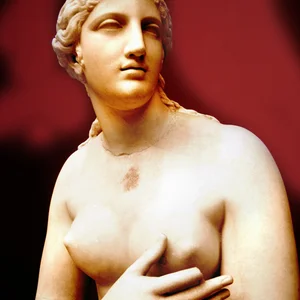
Greek goddess of love, beauty, and fertility in ancient mythology. Venerated throughout Greece and the Roman Empire under the name Venus. A central figure in mythological narratives and ancient art.
Apollo
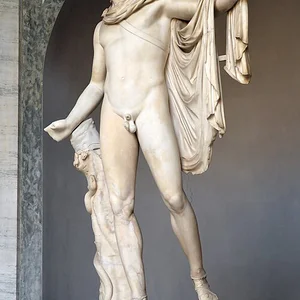
Greek god of music, poetry, the sun, and prophecy, Apollo is one of the most important deities in Greek mythology. Son of Zeus and Leto, he embodies harmony, beauty, and knowledge. His cult spread throughout the ancient Greek world, most notably at Delphi, where his famous oracle was located.
Ares
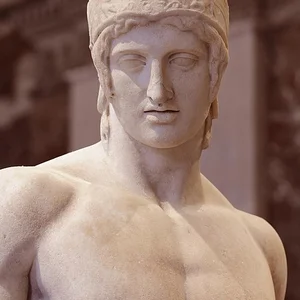
Ares is the god of war in ancient Greek mythology. Son of Zeus and Hera, he embodies violence, chaos, and the brutality of battle. He is one of the twelve major deities of Mount Olympus.
Artemis
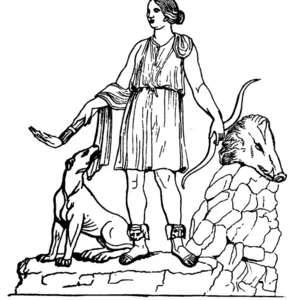
Greek goddess of the hunt, the moon, and the wilderness, Artemis is one of the twelve major deities of Olympus. Twin sister of Apollo, she embodies independence and remains a virgin according to Greek mythology. She is the protector of young girls and wild animals.
Athena
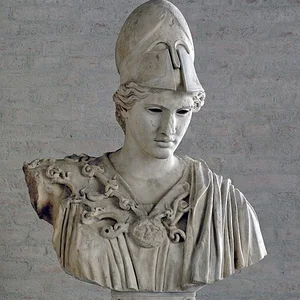
Athena is the Greek goddess of wisdom, military strategy, and the arts in ancient mythology. Patron of the city of Athens, she is depicted armed with an aegis and a spear, embodying intelligence and strategic thinking.
Daedalus and Icarus
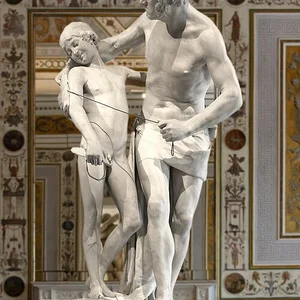
Legendary figures from Greek mythology: Daedalus is a brilliantly skilled craftsman and inventor who builds the Labyrinth of Crete, while Icarus is his son. Their story illustrates the themes of ambition, disobedience, and the limits of human nature when faced with greater forces.
Dionysus
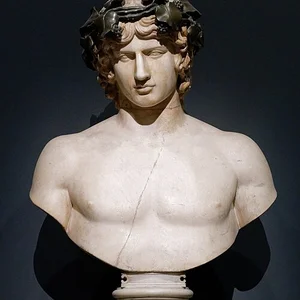
Greek god of wine, theater, fertility, and ecstasy, worshipped in ancient Greece. Son of Zeus and the mortal Semele, he embodies the duality between civilization and the wild, reason and intoxication. A central figure in mystery cults and ancient theatrical performances.
Hades
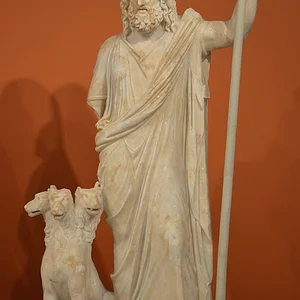
Hades is the god of the underworld and the dead in Greek mythology. Brother of Zeus and Poseidon, he rules over the realm of souls and the mineral riches of the earth. He is often portrayed as a just and unyielding god, though mortals feared him greatly.
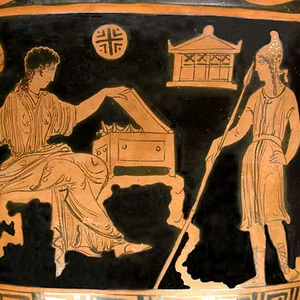
Helen of Troy
A central figure in Greek mythology, Helen is the wife of King Menelaus of Sparta. Her abduction by the Trojan prince Paris triggers the Trojan War, one of the greatest conflicts in ancient mythology. She symbolizes both ideal beauty and the destructive consequences of passion.
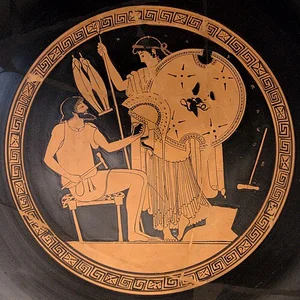
Hephaestus
Greek god of fire, the forge, and metalworking, Hephaestus is the patron of craftsmen and blacksmiths. Son of Zeus and Hera according to Greek mythology, he is depicted as a lame god who works in his underground workshop creating wondrous objects.
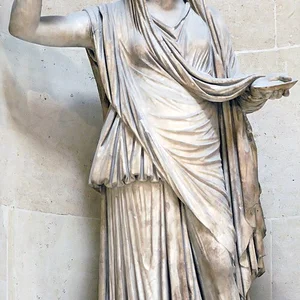
Hera
Hera is the queen of the gods and goddess of marriage in ancient Greek mythology. Wife of Zeus, she is venerated as the protector of marriage and family. Her legends reflect the values and conflicts of the Greek pantheon.
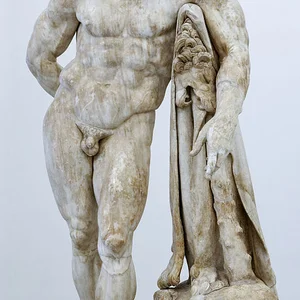
Hercules
Heracles is a hero of Greek mythology, son of the god Zeus and the mortal Alcmene. Famous for completing the twelve labors imposed by the goddess Hera, he embodies strength, courage, and perseverance. His story, passed down by Greek poets, has influenced Western literature and art for millennia.
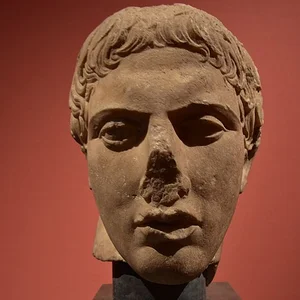
Hermes
Hermes is a major deity in Greek mythology, son of Zeus and Maia. He is venerated as the messenger of the gods, protector of commerce, travelers, and thieves, and identified with Mercury in Roman mythology.
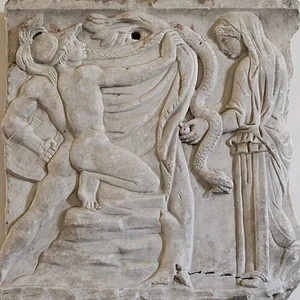
Jason
Jason is a hero of Greek mythology, son of Aeson and leader of the Argonauts. He undertakes a legendary quest to seize the Golden Fleece, a symbol of royal power. This adventure is one of the most celebrated in all of Greek mythology.
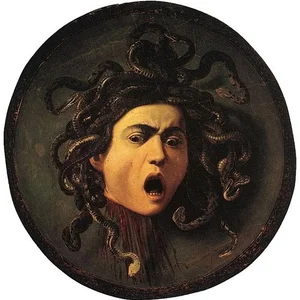
Medusa
In Greek mythology, Medusa is one of the three Gorgons — fearsome female monsters with snakes for hair whose gaze turns anyone who looks at them to stone. She is slain by the hero Perseus, who uses his shield as a mirror to face her without being petrified.
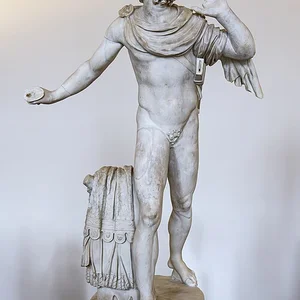
Odysseus
Legendary king of Ithaca, hero of Greek mythology celebrated for his intelligence and cunning. He is the central character of Homer's Odyssey, an epic poem recounting his ten years of wandering to return home after the Trojan War.
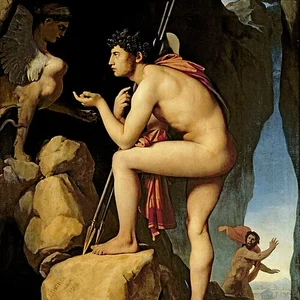
Oedipus
Legendary king of Thebes in Greek mythology, Oedipus is the hero of a classic tragedy exploring inevitable fate and destiny. Having unknowingly killed his father Laius and married his mother Jocasta, he embodies the archetype of a character caught in forces beyond his control.
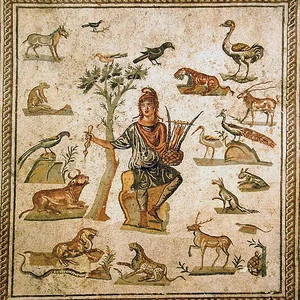
Orpheus
Legendary musician and poet of Greek mythology, son of Apollo and the Muse Calliope. He is famous for his magical lyre whose music enchanted gods, mortals, and nature alike. His love for Eurydice and his descent into the Underworld make up one of the greatest myths of Antiquity.
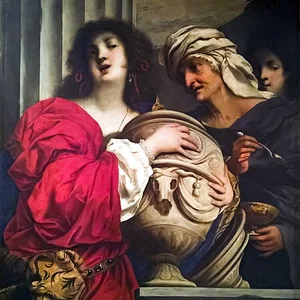
Pandora
Pandora is the first female figure in Greek mythology, created by the gods to punish humanity. She receives a jar (or box) containing all the evils of the world, which she opens out of curiosity, releasing suffering among humankind. Her myth illustrates the consequences of disobedience and the human condition.
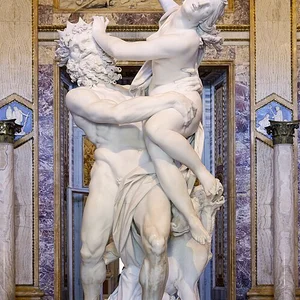
Persephone
Persephone is a goddess of Greek mythology, daughter of Demeter and Zeus. Abducted by Hades, the god of the Underworld, she becomes queen of the dead and rules alongside her husband. Her myth explains the changing of the seasons: her annual return to her mother brings about spring and summer.
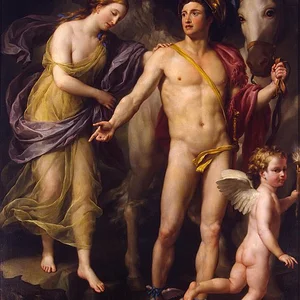
Perseus
Perseus is a hero of Greek mythology, son of Zeus and Danaë. He is famous for slaying the Gorgon Medusa and rescuing the princess Andromeda from a sea monster. His exploits make him one of the most important heroes in Greek mythology.
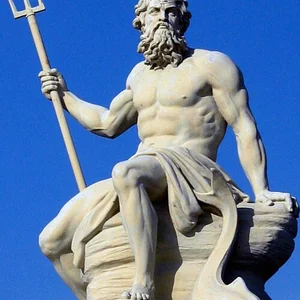
Poseidon
Greek god of the sea, oceans, and earthquakes, worshipped in ancient Greek mythology. Brother of Zeus and Hades, Poseidon rules over the seas and is often depicted wielding a trident. A central figure of the Olympian pantheon, he embodies the power of marine and seismic forces.
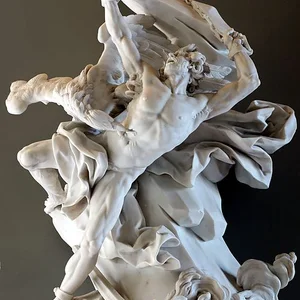
Prometheus
A Titan of Greek mythology, Prometheus is the symbol of human progress and rebellion against divine authority. He stole fire from the heavens to give it to humankind, transforming their condition and granting them access to civilization. Punished by Zeus for this act of defiance, he embodied the values of humanity and self-sacrifice.
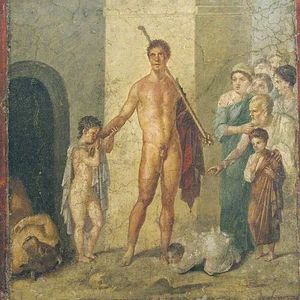
Theseus
Legendary hero of Greek mythology and king of Athens. Theseus is best known for slaying the Minotaur, a half-man half-bull monster imprisoned in the Labyrinth of Crete. He embodies the civilizing hero and unifier of Attica.
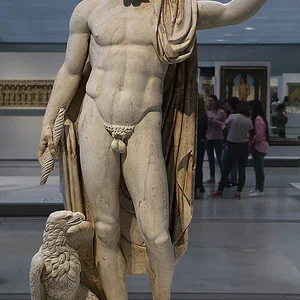
Zeus
Zeus is the king of the Olympian gods in ancient Greek mythology. God of the sky, lightning, and thunder, he embodies divine authority and celestial justice. A central figure in Greek religion, he was worshipped throughout the ancient Greek world.