 flip
flipQuince Jelly (Quittengelee)
Quince Jelly (Quittengelee)
Why this dish? A bourgeois Hessian garden always had a quince tree; its fruit, inedible raw, becomes an amber jelly that lasts all winter. For an apothecary family, transforming fruits into fragrant preserves was as natural as preparing a remedy.
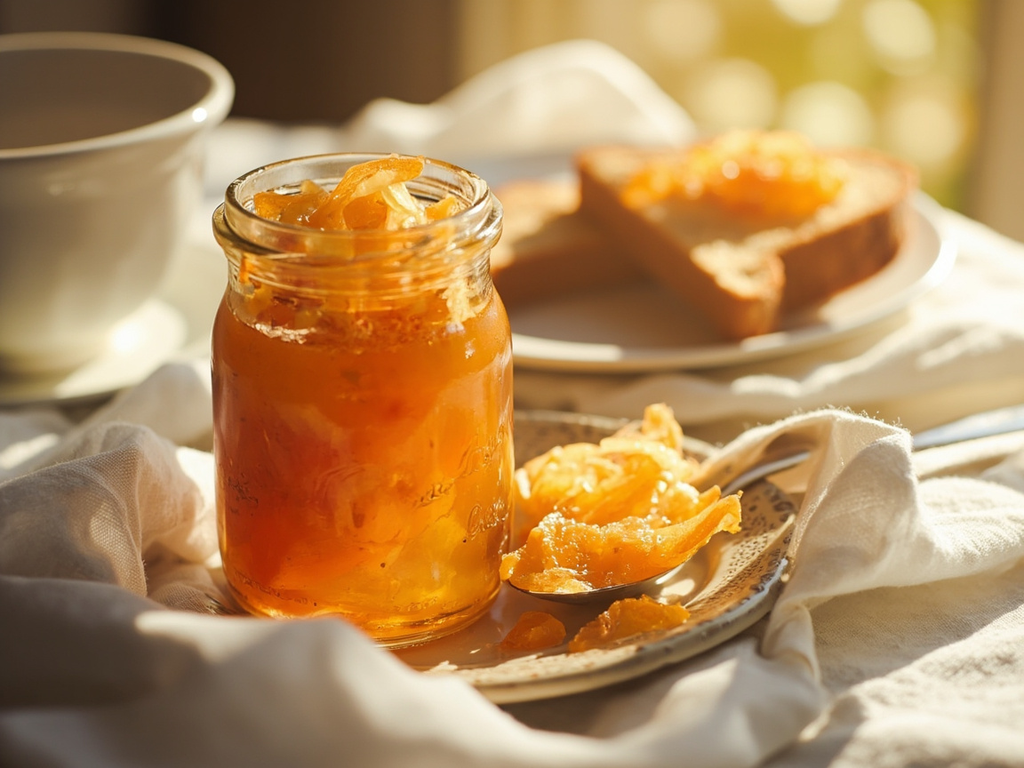
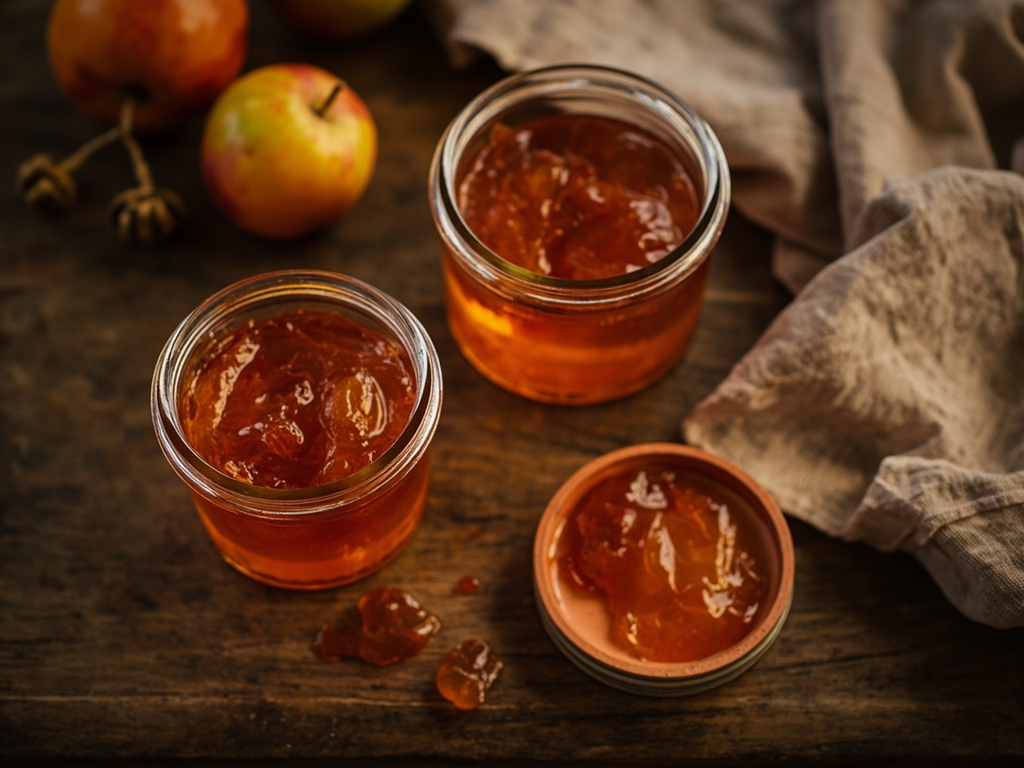
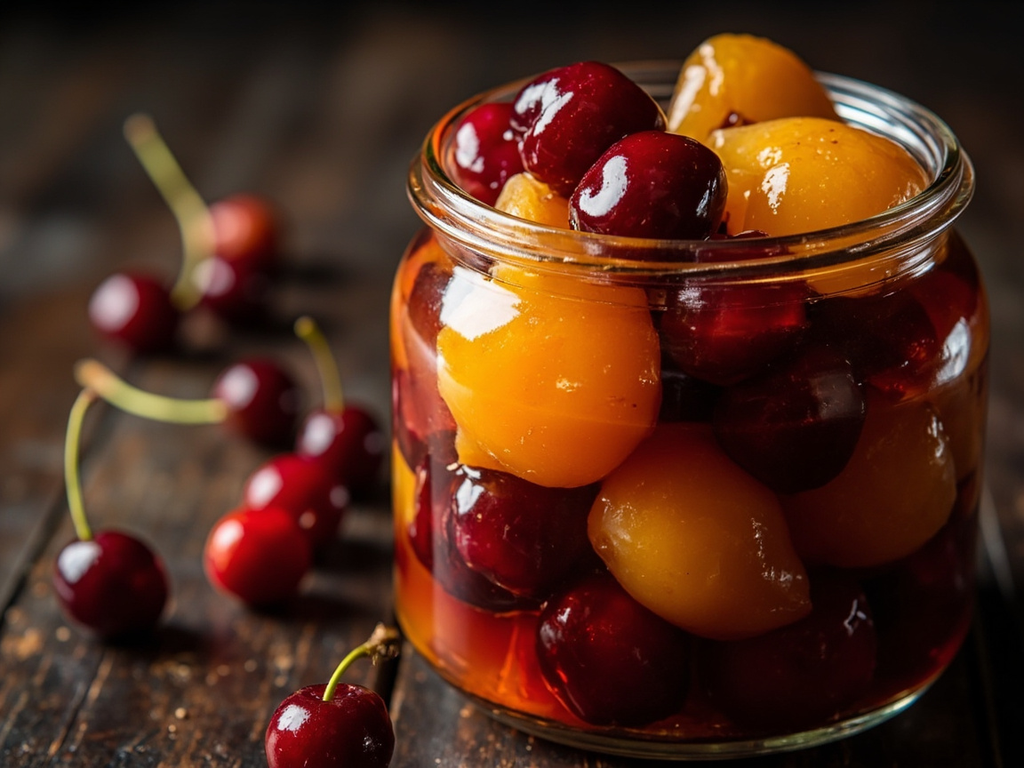
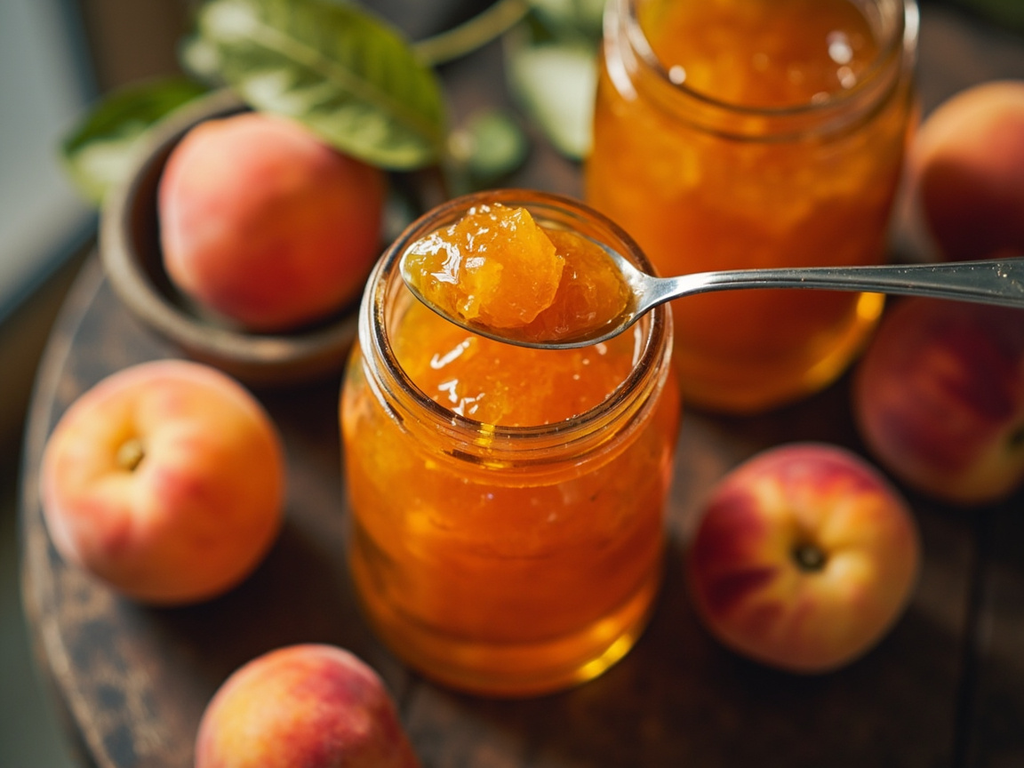
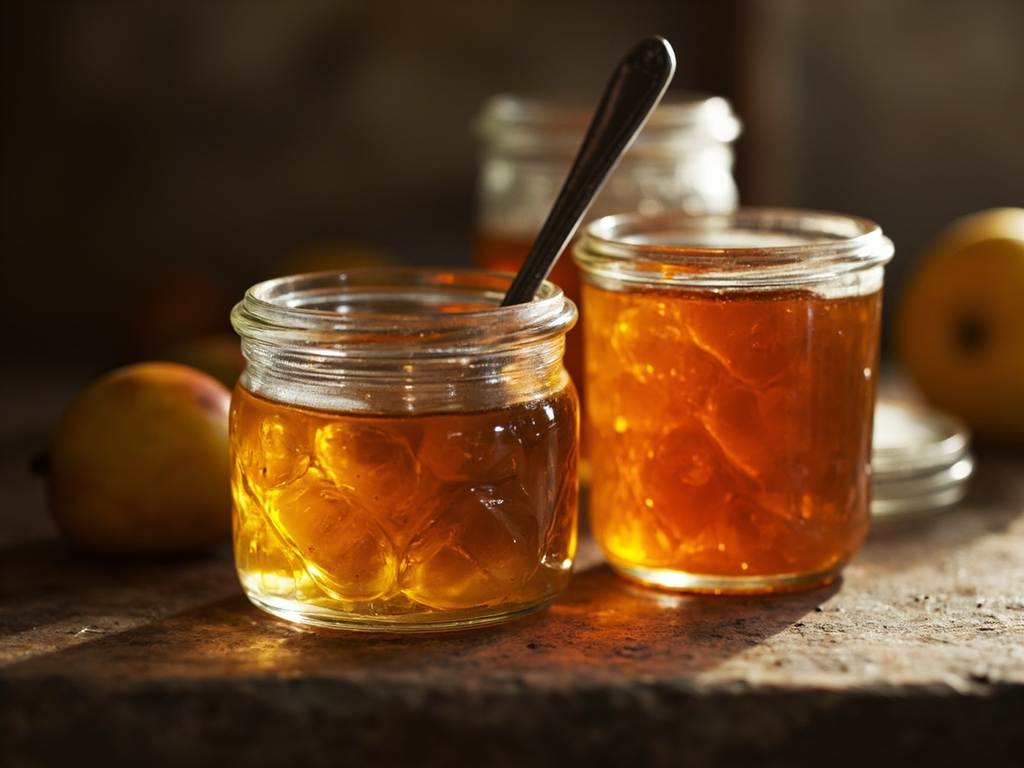
A translucent, fragrant jelly made from the juice of cooked quinces, set by the fruit's natural pectin. It is stored in jars to spread on rye bread for Abendbrot all winter long.
Never throw away a quince for being hard and rough: it is a fruit that yields its treasure only through patience. I wipe off its fuzz, cut it without peeling — for it is in the skin and seeds that the setting power hides — and let it simmer for hours until the house smells of honey and rose. I strain the juice through a cloth without ever pressing, lest it cloud, then reduce it with honey until a drop sets on a cold plate. In well-sealed pots, this amber jelly carries us through to spring, on a slice of rye or in an evening tisane.
- •Ripe fragrant quinces — the whole tree (fruit (high in pectin))
- •Spring water — to cover (juice extraction)
- •Honey or sugar — equal weight to juice (preservation and setting)
- •Lemon zest — a little, if available (acidity for setting)
Quince Jelly (Quittengelee)
A translucent, fragrant jelly made from the juice of cooked quinces, set by the fruit's natural pectin. It is stored in jars to spread on rye bread for Abendbrot all winter long.
Why this dish? A bourgeois Hessian garden always had a quince tree; its fruit, inedible raw, becomes an amber jelly that lasts all winter. For an apothecary family, transforming fruits into fragrant preserves was as natural as preparing a remedy.
Never throw away a quince for being hard and rough: it is a fruit that yields its treasure only through patience. I wipe off its fuzz, cut it without peeling — for it is in the skin and seeds that the setting power hides — and let it simmer for hours until the house smells of honey and rose. I strain the juice through a cloth without ever pressing, lest it cloud, then reduce it with honey until a drop sets on a cold plate. In well-sealed pots, this amber jelly carries us through to spring, on a slice of rye or in an evening tisane.
Ingredients (period version)
- Ripe fragrant quinces — the whole tree (fruit (high in pectin))
- Spring water — to cover (juice extraction)
- Honey or sugar — equal weight to juice (preservation and setting)
- Lemon zest — a little, if available (acidity for setting)
Ingredients
- Quinces — 1.5 kg (fruit high in pectin)
- Water — about 1.5 L (to cover) (extraction)
- Granulated sugar (or half honey) — about 750 g (1:1 with juice) (setting and preservation)
- Lemon juice — 1 lemon (acidity, helps setting)
Method
- Rub off quince fuzz, cut into quarters without peeling or coring.
- Cover with water, bring to a simmer and cook 1 hour until tender and juice is pink.
- Pour into a cloth suspended over a bowl; let drip several hours without pressing (or jelly will cloud).
- Measure juice, add equal weight of sugar (or half honey) and lemon juice.
- Boil rapidly 15–25 minutes until setting point (a drop sets on a cold plate).
- Pour into sterilized jars, seal immediately and invert to create a vacuum.
How it was made : Before the spread of beet sugar, orchard fruits were preserved with honey, by drying, or as thick pastes (like quince paste, Quittenbrot). The quince, too astringent raw, was almost always cooked into jelly or paste; its abundant pectin made it one of the few fruits that set without additives. Jars sealed with bladder or wax spent the winter in the cellar.
The contemporary twist : A few grains of long pepper or a slice of ginger in the final cooking: a nod to the spices the apothecary Wilds would have had on hand.
Henriette Dorothea Wild · Charactorium