 flip
flipSeville Orange Marmalade
Seville Orange Marmalade
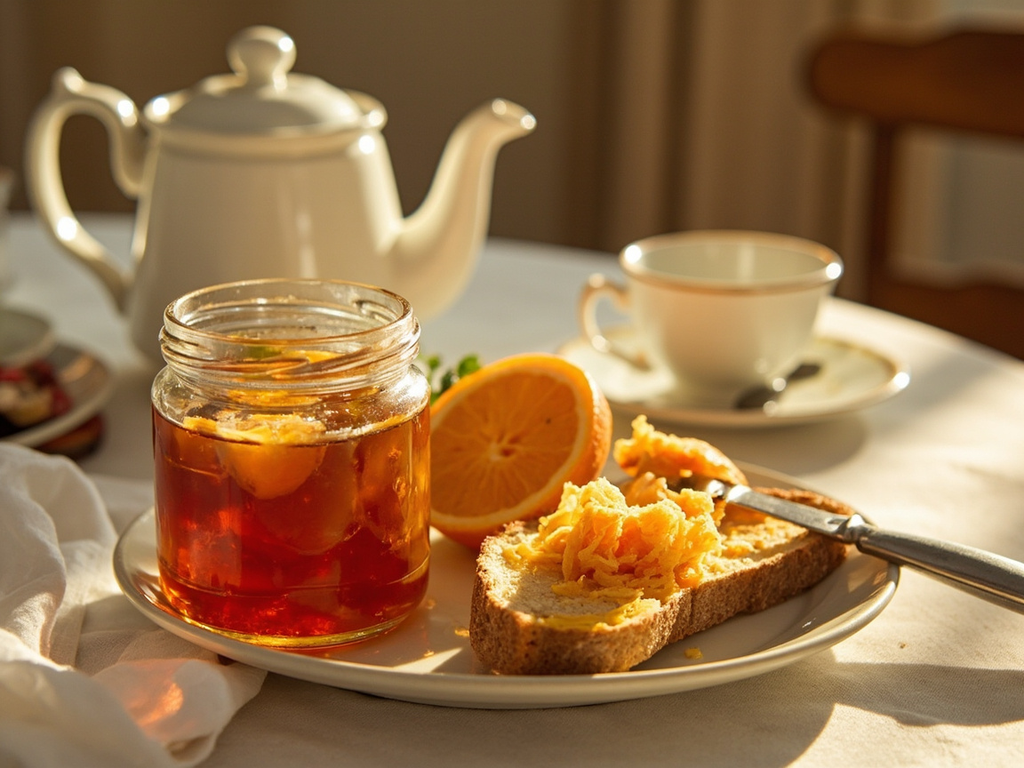
Why this dish? Seville orange marmalade, a British glory, was made in winter when Seville oranges briefly appeared on the markets. Jars were filled for the whole year. On Ada's breakfast buffet, it invariably accompanied toast and tea.
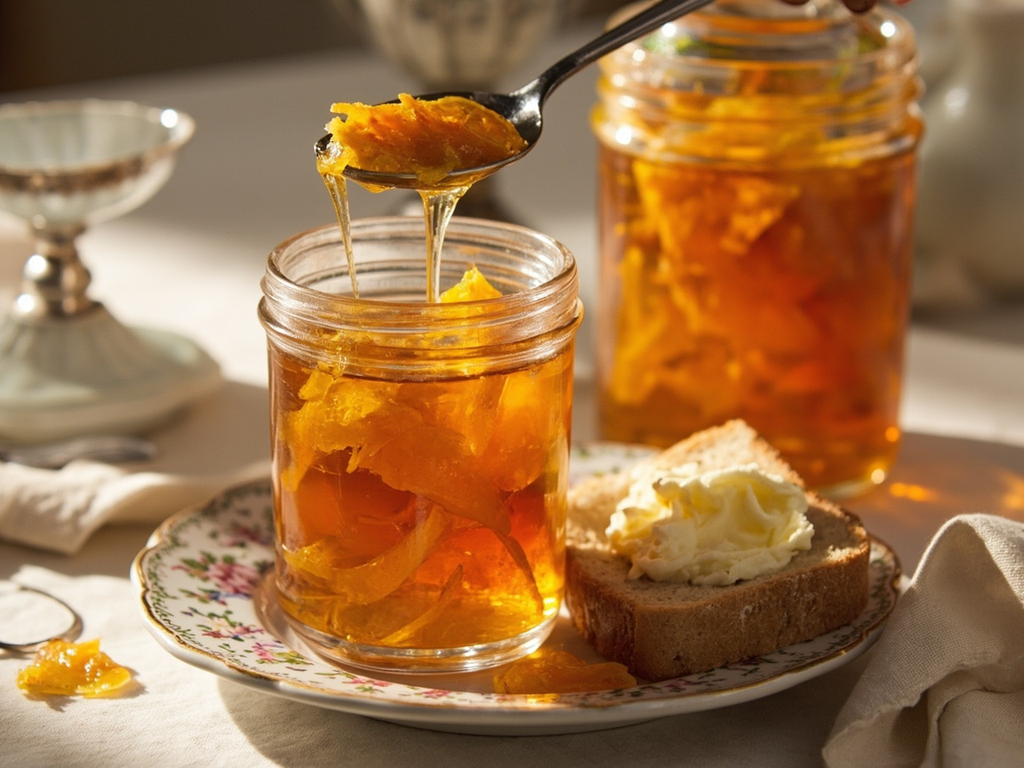
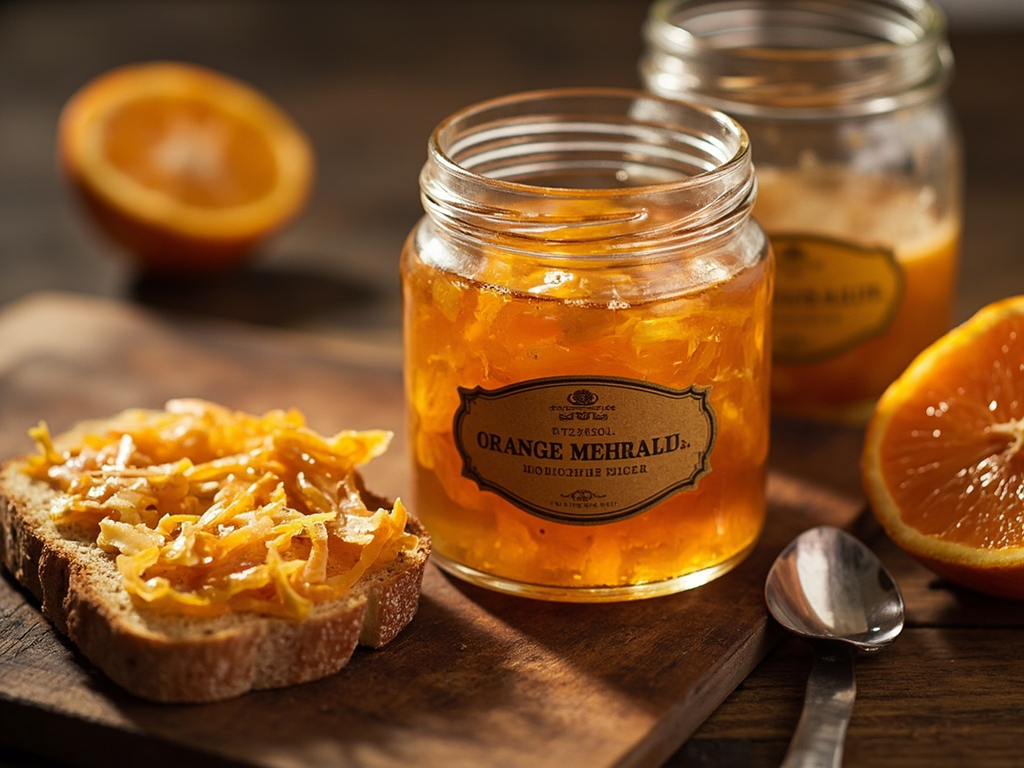
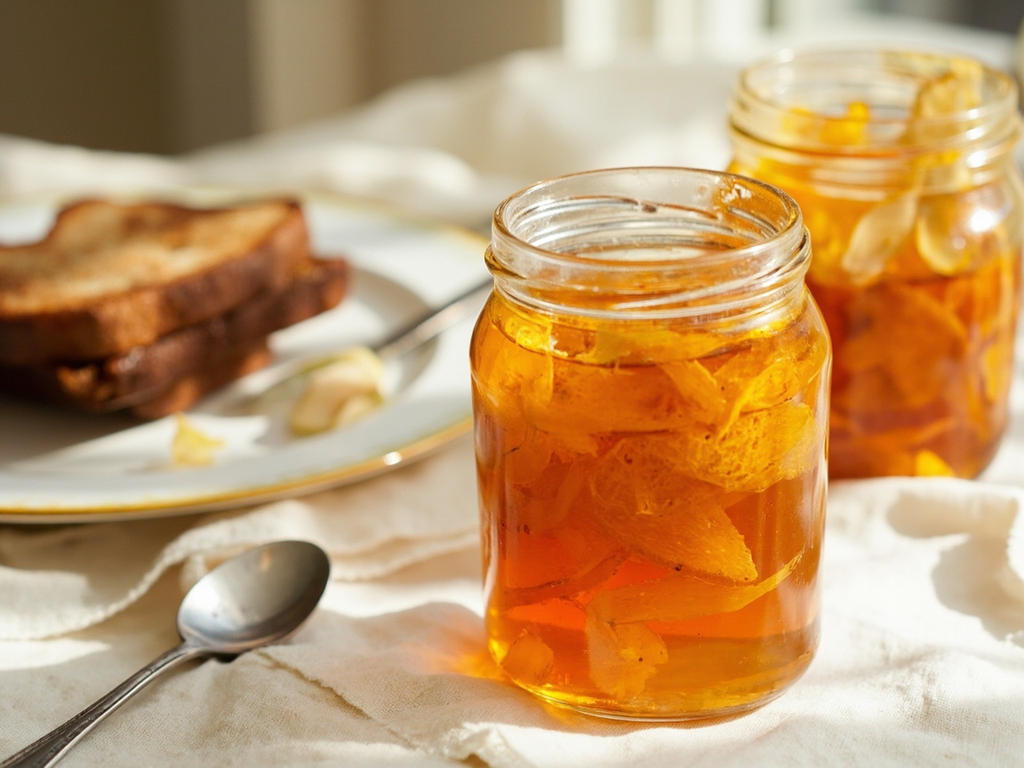
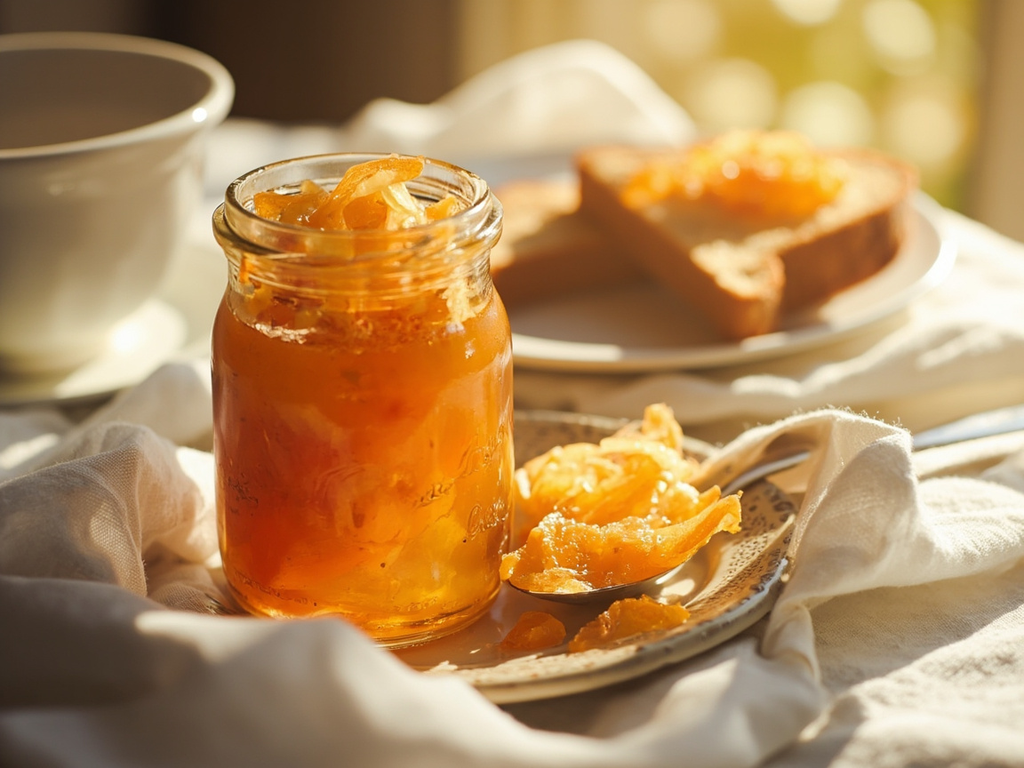
An amber, translucent preserve dotted with thin strips of peel, where the bitterness of the Seville orange dances with sugar — the quintessence of the English breakfast.
I insist that a supply be made as early as January, for the bitter Seville orange appears but briefly on our stalls. The secret, believe me from experience, lies in the pips: tie them in a muslin bag, they give the marmalade the firmness one desires. I find singular satisfaction in watching the cloudy syrup become clear and set, like an equation finally solved. A little bitterness in the morning has never harmed the clarity of the mind.
- •Bitter Seville oranges — a dozen (fruit)
- •Lemons — two (pectin and acidity)
- •Sugar — equal weight to juice and fruit (preservation)
- •Water — to cover (cooking)
Seville Orange Marmalade
An amber, translucent preserve dotted with thin strips of peel, where the bitterness of the Seville orange dances with sugar — the quintessence of the English breakfast.
Why this dish? Seville orange marmalade, a British glory, was made in winter when Seville oranges briefly appeared on the markets. Jars were filled for the whole year. On Ada's breakfast buffet, it invariably accompanied toast and tea.
I insist that a supply be made as early as January, for the bitter Seville orange appears but briefly on our stalls. The secret, believe me from experience, lies in the pips: tie them in a muslin bag, they give the marmalade the firmness one desires. I find singular satisfaction in watching the cloudy syrup become clear and set, like an equation finally solved. A little bitterness in the morning has never harmed the clarity of the mind.
Ingredients (period version)
- Bitter Seville oranges — a dozen (fruit)
- Lemons — two (pectin and acidity)
- Sugar — equal weight to juice and fruit (preservation)
- Water — to cover (cooking)
Ingredients
- Bitter Seville oranges — 1 kg (fruit)
- Lemons — 2 (pectin and acidity)
- Granulated sugar — 2 kg (preservation)
- Water — 2.5 litres (cooking)
Method
- Wash the oranges and lemons, cut in half, squeeze the juice, and reserve the pips.
- Tie the pips and membranes in a muslin bag (they are rich in pectin).
- Finely slice the peels, place them with the juice, water, and the bag, and let soak overnight.
- Boil everything until the peels are tender (about 1 hour), then remove the bag, squeezing it well.
- Add the sugar, stir to dissolve, then boil rapidly until setting point is reached (about 105°C, a drop sets on a cold plate).
- Pour into sterilized jars, seal immediately, and store away from light.
How it was made : Marmalade takes its name from Portuguese marmelada (quince paste). Bitter Seville oranges, too tart to eat raw, arrive only in the depths of winter: housewives made large batches of marmalade to preserve this ephemeral fruit for the whole year in sealed jars.
The contemporary twist : A dash of Highland whisky at the end of cooking, for a "Sunday" marmalade reserved for grand toasts.
Sources : Eliza Acton, Modern Cookery for Private Families (1845) · Mrs Beeton, Book of Household Management (1861)
Ada Lovelace · Charactorium