
Henry John Drewal is an American art historian, a recognized specialist in the arts of Africa and the African diaspora, particularly Yoruba art. A professor at the University of Wisconsin-Madison, he profoundly renewed the study of African visual cultures.
Henry Drewal(1943 — ?)
Henry John Drewal
États-Unis
6 min read
Frequently asked questions
Key Facts
- Specialist in Yoruba art (West Africa, notably Nigeria and Benin)
- Professor of African art history at the University of Wisconsin-Madison
- Author of major works on the cult of Mami Wata and the water deities of the African diaspora
- Developed the concept of “sensiotics,” an approach to art that engages all of the senses
- A central figure in the study of the arts of Africa and its diaspora in the late 20th century
Works & Achievements
Landmark study, co-written with Margaret Thompson Drewal, on the Gelede masked spectacle and the power of women in Yoruba society.
Major exhibition and catalogue tracing nine centuries of Yoruba creativity, which helped secure recognition of this art in the world's leading museums.
Book and exhibition exploring the figure of the water spirit Mami Wata and her journey between Africa and the Americas.
A theoretical approach proposing to study art as a multisensory, embodied experience rather than a purely visual one.
Trained several generations of African art historians, helping to institutionalize this discipline in the United States.
Anecdotes
To understand Yoruba art, Henry Drewal didn't just read books: he went to live in Nigeria in the early 1970s and learned the Yoruba language to talk directly with sculptors and priests. He often says that a mask can only be understood once you've seen it dance, accompanied by drums, songs, and the crowd.
With his wife Margaret Thompson Drewal, he studied the Gelede festival, where men wear colorful masks to honor the power of the “mothers,” the elderly women whom the Yoruba consider holders of great spiritual power. Their joint 1983 book remains a global reference on the subject.
Drewal coined the word “sensiotics” to defend a simple but new idea: you don't look at an African artwork only with your eyes, you experience it with your whole body — the smell of incense, the sound of drums, the touch of materials. He invites us to study art with all five senses, not just sight.
He devoted years to the figure of Mami Wata, a water spirit who is half-woman, half-fish, venerated in West Africa and as far as the Americas. In 2008, he organized a major traveling exhibition showing how this image journeyed across the ocean with the African diaspora.
As a professor at the University of Wisconsin-Madison, Drewal trained dozens of students in African art history and helped to have these arts recognized as worthy of study in universities and display in major museums, on the same footing as European art.
Primary Sources
The book presents the Gelede spectacle as a public tribute to the “awon iya wa” (“our mothers”), combining carved masks, dance, and song to honor the spiritual power of women among the Yoruba.
An exhibition catalog tracing nine centuries of Yoruba creation, from the bronzes of Ife to ritual objects, in order to show the historical depth and coherence of an African artistic tradition.
The study follows the image of Mami Wata, a water spirit, from West Africa all the way to the Americas, showing how the peoples of the diaspora reinvented this figure over the course of their migrations.
In it, Drewal proposes studying art as a multisensory and embodied experience, refusing to reduce works to their visual appearance alone.
Key Places
University where Drewal pursued his graduate studies and earned his doctorate in art history in the early 1970s.
Region in southwestern Nigeria where Drewal carried out extensive field research on Yoruba masks, festivals, and rituals.
University where Drewal taught as the Evjue-Bascom Professor and trained many specialists in African arts.
Museum of world art where the major touring exhibition *Mami Wata*, curated by Drewal, opened in 2008.
Sacred Yoruba city, famous for its medieval bronze heads, at the heart of Drewal's research into the long history of Yoruba art.
Typical Objects
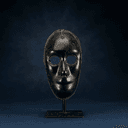
Carved and painted wooden mask, worn on top of the head during festivals honoring the power of the Yoruba “mothers.” It combines humor, beauty, and social messages.
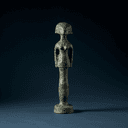
Painted or carved representation of a water spirit, often depicted as a woman accompanied by a snake. An object of devotion in West Africa and the diaspora.
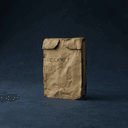
Notebook of notes, sketches, and observations filled in by the historian during his investigations in Nigeria. A basic tool of Drewal's ethnographic work.
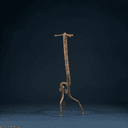
Camera used to document masks, dances, and ceremonies on site, preserving a record of objects and festivals that are sometimes fleeting.
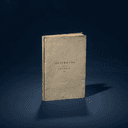
Richly illustrated book accompanying an exhibition, bringing together photographs and scholarly texts. It introduces African art to a wide audience.
Royal head in a copper alloy, a masterpiece from the city of Ife studied by Drewal to show the antiquity and refinement of Yoruba art.
School Curriculum
Vocabulary & Tags
Key Vocabulary
Tags
Daily Life
Morning
In the field in Nigeria, the morning begins early, before the heat: Drewal arrives at a village, greets the elders, and watches the preparations for a ceremony. At the university, the morning is instead spent in classes and meetings with students.
Afternoon
The afternoon is devoted to interviews: he questions sculptors, priests, and dancers, takes notes and photographs. During the teaching term, he works in the library or in the museum storerooms to study objects up close.
Evening
In the evening, he writes up his observations neatly, rereads his notebooks, and compares his ideas with those of his wife Margaret, also a specialist. It is also the time for the nighttime festivals where the masks dance.
Food
While doing fieldwork, he shares local meals based on pounded yam, rice, plantain, and spicy sauces. Back in the United States, his diet returns to that of an ordinary academic.
Clothing
In the field, he wears light, practical clothing suited to the tropical climate, sometimes fabrics given to him by his hosts. In class, he dresses in academic attire, plain and understated.
Housing
During his fieldwork, he stays with local families or in modest lodgings near the communities he studies. The rest of the year, he lives in Madison, in a house close to the university campus.
Historical Timeline
Period Vocabulary
Liens externes & ressources
Références
Œuvres
Gelede: Art and Female Power among the Yoruba
1983
Yoruba: Nine Centuries of African Art and Thought
1989
Mami Wata: Arts for Water Spirits in Africa and Its Diasporas
2008
Concept de « sensiotics »
2005
Carrière d'enseignant à Madison
1991-2010s