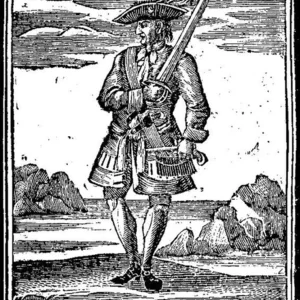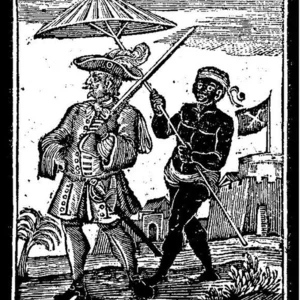

Henry Every, nicknamed “Long Ben,” was an English pirate of the late 17th century. In 1695, he seized the Ganj-i-Sawai, a ship of the Grand Mughal, pulling off one of the largest hauls in the history of piracy. Actively hunted, he vanished without ever being captured.
Henry Every(1659 — 1699)
Henry Every
royaume d'Angleterre
7 min read
Frequently asked questions
Key Facts
- 1694: leads a mutiny aboard the Charles II and renames the ship the Fancy, becoming a pirate captain
- 1695: captures the Ganj-i-Sawai, a pilgrimage ship of the Grand Mughal Aurangzeb, one of the richest hauls in the history of piracy
- 1696: his prize sparks a diplomatic crisis between England and the Mughal Empire, threatening the trade of the East India Company
- 1696: England launches one of the first international manhunts, never managing to capture him
- After 1696: vanishes from history, becoming a legendary figure of piracy
Works & Achievements
The bloodless seizure of a warship at A Coruña and its turn to piracy. This founding act launched Every's career.
The gathering of several crews, including that of Captain Thomas Tew, to lie in wait for the Grand Mughal's fleet. This alliance made the attack possible.
The capture of a first ship of the Mughal fleet, which yielded an already substantial haul. It came before the assault on the flagship.
One of the largest hauls in the history of piracy, taken from the ship of Emperor Aurangzeb. This spectacular feat had major diplomatic consequences between England and the Mughal Empire.
A rare written document attributed to Every, left for the English ships he claimed he would spare. It is one of the only direct traces in his own hand.
Despite an international manhunt, Every evaded all capture. His unknown fate made him a legendary figure for the generations that followed.
Anecdotes
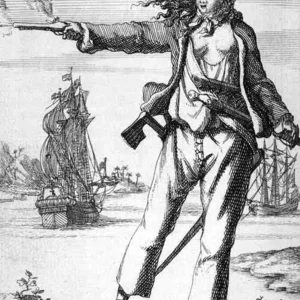
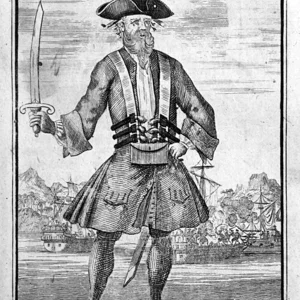
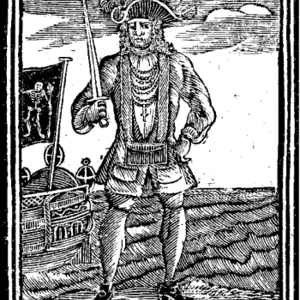
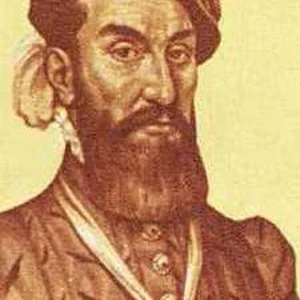
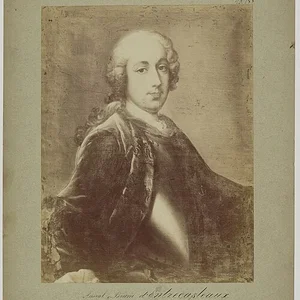
Henry Every was nicknamed “Long Ben” by his men, and the pamphlets of the day were quick to crown him “the king of pirates” or “the arch-pirate.” This reputation grew even though no one really knew what he looked like, which fed a true legend in his own lifetime.
In May 1694, at A Coruña in Spain, the crew of the Charles II had gone unpaid for months. Under cover of night, Every and a few accomplices seized the ship almost without bloodshed, renamed it the Fancy, and set a course for the Indian Ocean to “seek their fortune.”
On 7 September 1695, Every captured the Ganj-i-Sawai, an enormous ship belonging to the Mughal emperor Aurangzeb, laden with gold, silver, and pilgrims returning from Mecca. The haul, estimated at several hundred thousand pounds, was one of the largest in the whole history of piracy; but the violence inflicted on the passengers set off a huge scandal.
Enraged, the Mughal emperor threatened to drive the English merchants out of India. To appease him, the Crown and the East India Company put a bounty on Every's head: it was one of the very first worldwide manhunts.
Every was never caught. Six of his men were tried and hanged in London in 1696, but he himself vanished without a trace. One legend has it that merchants from Bristol, to whom he supposedly entrusted his jewels, stripped him of everything and that he died poor in Devon — but no one knows the truth.
Primary Sources
To all English Commanders... I have never as yet wronged any English or Dutch, nor ever intend whilst I am commander. ... for my men are hungry, stout and resolute, and should they exceed my desire I cannot help myself. As yet an Englishman's friend. Henry Every.
Records of the trial charging Every's crew with piracy for the seizure of the “Gunsway” (Ganj-i-Sawai); after an initial acquittal, the men were retried and six of them were condemned and hanged.
A proclamation offering a reward for the capture of Every and his men, branded as pirates; the East India Company added its own bounty, turning the manhunt into an affair of state.
The Mughal chronicler recounts the capture of the Ganj-i-Sawai by European raiders, the plundering of its treasure and the violence inflicted on its passengers over several days, kindling Emperor Aurangzeb's anger against the English.
Key Places
Coastal region in southwest England where Henry Every is thought to have been born around 1659. Devon was a land of sailors and seafaring folk.
Port where the unpaid crew of the Charles II mutinied in 1694. Every took command there and renamed the ship the Fancy.
Indian Ocean island that served as a stopover and base for pirates. In 1695, Every left there a famous letter addressed to English ships.
Area where the Grand Mughal's fleet returning from Mecca was intercepted and captured in September 1695. This is where the Ganj-i-Sawai was seized.
Pirate haven in the Caribbean where Every and his men took refuge in 1696. There they bought the goodwill of Governor Nicholas Trott.
Merchant port where, according to legend, Every was stripped of his jewels before dying in poverty. His true fate there remains uncertain.
Typical Objects

A fast, well-armed warship that Every seized during the mutiny of 1694, capable of carrying 46 guns. Lightened to gain speed, it became one of the most feared pirate ships in the Indian Ocean.

A deck artillery piece used to bombard and cripple enemy ships before boarding. The Fancy's large number of cannons made it a formidable opponent against merchant vessels.

A short, sturdy blade ideal for close combat on crowded decks. It was the iconic weapon of pirates when boarding a ship.

An individual firearm that pirates often carried in pairs, since they could not reload quickly. Loud and impressive, it served as much to fight as to intimidate.

An iron hook thrown with a rope to snag the enemy ship and pull it closer. It allowed the crew to cross from one deck to the other to attack.

A colossal haul of gold and silver coins and jewels taken from the Grand Mughal's ship in 1695. Divided among the pirates, it made each man a small fortune and made Every famous.

A flag hoisted to signal an attack and terrify the opponent; the one attributed to Every bears chevrons on a light background. Raised on approach, it often invited the enemy to surrender without a fight.
School Curriculum
Vocabulary & Tags
Key Vocabulary
Tags
Daily Life
Morning
At dawn, the captain would inspect the ship and take stock of the situation with his quartermaster. Men were posted as lookouts to scan the horizon, watching for the slightest sail near a trade route.
Afternoon
The afternoon was devoted to maintaining the ship: repairing the sails and rigging, cleaning the cannons, and weapons drills. When a target was spotted, the whole crew feverishly prepared to board.
Evening
In the evening, the crew shared a meal, played dice or cards, and sang. Among pirates, major decisions and the division of the loot were often settled by a common vote of the crew.
Food
On board, the crew lived mainly on hardtack, salted meat and fish, washed down with beer, wine, or rum. During stops on islands, they sought out fresh fruit, water, and turtles to ward off scurvy.
Clothing
Sailors wore a linen shirt, wide trousers, a short jacket, and a scarf, with a knife and pistols at their belt. A captain might sport finer clothes and a hat to mark his rank.
Housing
The captain had a cabin at the stern of the ship, with a chest, maps, and navigation instruments. The rest of the crew slept in hammocks crammed below deck, amid the noise and damp.
Historical Timeline
Period Vocabulary
Liens externes & ressources
Références
Œuvres
Mutinerie du Charles II et naissance du Fancy
mai 1694
Constitution d'une flottille pirate dans l'océan Indien
été 1695
Capture du Fateh Muhammed
septembre 1695
Capture du Ganj-i-Sawai
7 septembre 1695
Lettre de Johanna
février 1695
Disparition et évasion réussie
1696