
Anne Bonny was a pirate of Irish origin active in the Caribbean in the early 18th century. The companion of the pirate Calico Jack Rackham, she fought at his side and became one of the few known women of the “Golden Age of Piracy.” Captured in 1720, she escaped hanging by declaring herself pregnant.
Anne Bonny(1697 — ?)
Anne Bonny
royaume d'Irlande
6 min read
Frequently asked questions
Key Facts
- Born around 1697-1700 in Ireland (County Cork), she emigrated with her family to the American colonies
- Around 1718-1720, she joined the crew of the pirate John “Calico Jack” Rackham in the Caribbean
- She fought alongside Mary Read, another female pirate, aboard the same ship
- In October 1720, the crew was captured near Jamaica by the pirate hunter Jonathan Barnet
- Sentenced to death in November 1720, she escaped execution by pleading pregnancy; the rest of her life remains uncertain
Works & Achievements
By joining the pirate John Rackham, Anne Bonny became one of the very few women to serve actively aboard a pirate ship.
With Calico Jack's crew, she took part in plundering small merchant ships and fishing boats around Jamaica and the Bahamas.
Facing Jonathan Barnet's attackers, Anne Bonny and Mary Read fought on while the rest of the crew hid below, a fact reported during the trial.
By declaring herself pregnant, Anne Bonny secured a stay of her execution, illustrating a loophole in the English law of the time.
Described in *A General History of the Pyrates*, Anne Bonny has become a lasting symbol of women pirates in popular culture.
Anecdotes
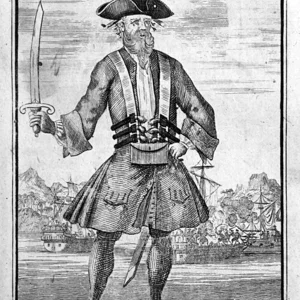
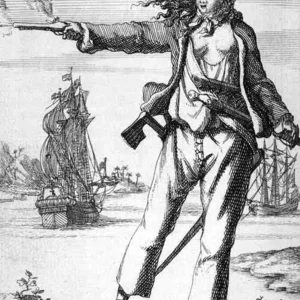
In battle, Anne Bonny dressed as a man: trousers, a sailor's jacket, and weapons at her belt. This allowed her to wield the cutlass and pistol alongside the crew, at a time when women were generally forbidden from boarding pirate ships.
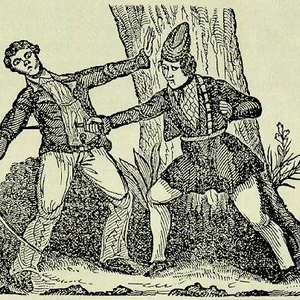
When Calico Jack's ship was captured in October 1720, most of the pirates, drunk, hid in the hold. According to accounts from the time, Anne Bonny and her friend Mary Read were among the only ones to stay on deck and fight to the very end.
Sentenced to death in November 1720, Anne Bonny escaped the gallows by revealing that she was pregnant: English law forbade the execution of a pregnant woman. This stratagem was known as “pleading the belly.”
According to “A General History of the Pyrates” (1724), Anne is said to have told Calico Jack before his execution: “Had you fought like a man, you need not have been hang'd like a dog.” This famous remark captures her fearless character.
Anne Bonny's ultimate fate remains a mystery: after her imprisonment in Jamaica, she vanishes from the records. Neither the date nor the place of her death is known, which has fueled her legend for three centuries.
Primary Sources
Anne Bonny... was of a fierce and courageous temper. Her last words to Rackam were, that she was sorry to see him there, but if he had fought like a man, he need not have been hang'd like a dog.
Anne Bonny and Mary Read, alias Mary Read, being severally indicted for Piracy... were found Guilty. Both pleaded their Bellies, being Quick with Child, and prayed that Execution might be stayed.
Key Places
Region in the south of Ireland where Anne Bonny is said to have been born around 1697. Her family reportedly experienced a scandal there before emigrating.
Colonial port in North America where Anne's family settled and where she grew up before heading to the Caribbean.
The main haven for Caribbean pirates in the early 18th century. It was here that Anne Bonny met Calico Jack Rackham.
Maritime area where Calico Jack's ship was captured by pirate hunter Jonathan Barnet in October 1720.
Former colonial capital of Jamaica, where Anne Bonny was tried and sentenced to death in November 1720.
English port and naval base where Calico Jack Rackham was hanged on 18 November 1720, his body displayed as a warning.
Typical Objects
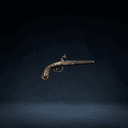
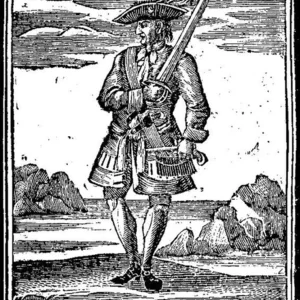
A portable firearm that fired only a single shot before a long reload. Pirates often carried several at once, slung from ribbons worn across the chest.
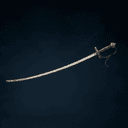
A short saber with a broad, sturdy blade, ideal for fighting in the cramped space of a ship's deck. It was the emblematic weapon of boarding actions.
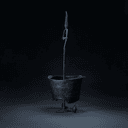
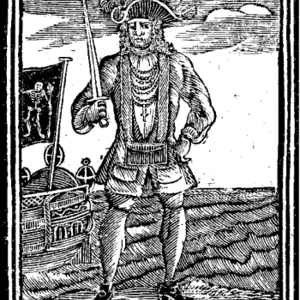
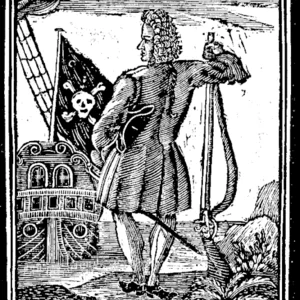
A flag that pirates raised to terrify their prey and drive them to surrender without a fight. Calico Jack's bore a skull above two crossed sabers.
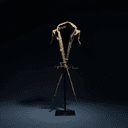
Loose trousers, a shirt, and a jacket worn by Anne Bonny so she could fight like the men of the crew. This disguise let her conceal that she was a woman.
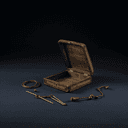
Tools essential for finding one's way on the open sea, far from any coast. Pirates were glad to seize them whenever they captured a ship.
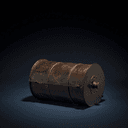
An alcoholic drink made from West Indian sugarcane, found everywhere aboard pirate ships. Heavy drinking on the night of the capture helped the pirate hunters overpower Calico Jack's crew.
School Curriculum
Vocabulary & Tags
Key Vocabulary
Tags
Daily Life
Morning
On board, the day began early with an inspection of the ship and maintenance of the rigging. Anne Bonny, dressed like the men, took part in the chores and in watching the horizon for a potential prey.
Afternoon
The afternoon was spent working the sails, repairing equipment or training in the handling of weapons. During a chase, the crew prepared to board, cutlass and pistol in hand.
Evening
In the evening, the pirates shared the loot, played cards or dice, and drank rum. These drinking bouts could be dangerous: they weakened the crew on the night of its capture.
Food
They ate mostly hard sea biscuits, salted meat, fish and sometimes turtles or fruit gathered ashore. Water spoiled quickly, so they drank plenty of rum and beer.
Clothing
Anne Bonny wore men's clothing: a loose shirt, sailor's trousers and a jacket, with a belt lined with weapons. This outfit gave her freedom of movement and concealed her identity.
Housing
A pirate's “home” was the ship itself, cramped and noisy. They slept in hammocks or right on the deck; stopovers took place in hideouts like Nassau, among shacks and taverns.
Historical Timeline
Period Vocabulary
Liens externes & ressources
Références
Œuvres
Ralliement à l'équipage de Calico Jack
1719
Raids et prises dans les Caraïbes
1719-1720
Résistance lors de la capture
octobre 1720
Le plaidoyer du ventre au procès
novembre 1720
Postérité littéraire et légendaire
à partir de 1724