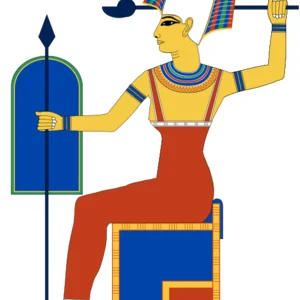
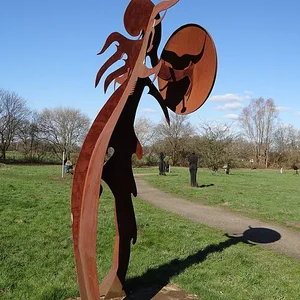
Hiʻiaka is a goddess of Hawaiian mythology, the younger sister of the volcano goddess Pele. Patron of hula dancers, of chant, and of medicine, she is the heroine of a cycle of epic chants recounting her journey across the archipelago.
Hiʻiaka
Hiʻiaka
7 min read
Frequently asked questions
Key Facts
- Hiʻiaka is the youngest and the favorite of the sisters of Pele, goddess of fire and volcanoes
- According to the myth, she was born in the form of an egg that Pele carried under her armpit during the voyage to Hawaii
- She is the protective deity of hula, the sacred Hawaiian dance accompanied by chants (mele)
- Her legendary cycle tells of her perilous journey to bring back Lohiʻau, Pele's lover, confronting moʻo (lizard spirits) and demons
- She embodies the powers of healing, of chant, and of the arts of enchantment in Hawaiian culture
Works & Achievements
The central feat of the saga: Hiʻiaka crosses the entire archipelago in forty days, defeating demons and giant lizards. This journey shapes the sacred geography of Hawaiʻi.
Through her chants and her healing plants, Hiʻiaka reassembles and revives the body of Lohiʻau, demonstrating her power of healing and return to life.
Hiʻiaka is honored as the patron of the hula dance, which she is said to have practiced with Hōpoe. The hālau (schools) still invoke her today.
A series of victories against the lizard-spirits (Pana-ewa, Mahiki…) that blocked the paths of the archipelago, making Hiʻiaka a protector of travelers.
A body of poetic chants attributed to the goddess, celebrating the landscapes of Hawaiʻi; they stand as a monument of Hawaiian literature.
Upon her return, Pele's betrayal in burning the forest of Puna mythologically establishes the eternal opposition between lava and lush flora.
Anecdotes
According to Hawaiian mythology, Hiʻiaka was born from an egg that her elder sister Pele carried under her armpit throughout the entire journey from Tahiti to Hawaiʻi, keeping it warm with her body heat until it hatched. This detail explains her full name, Hiʻiaka-i-ka-poli-o-Pele, which means “Hiʻiaka carried in the bosom of Pele.”
The great myth devoted to her tells how Pele sent her to fetch her lover Lohiʻau on the island of Kauaʻi, granting her only forty days to complete the mission. During this perilous journey, Hiʻiaka faced numerous moʻo (lizard spirits) and demons that blocked the roads of the archipelago.
Hiʻiaka is regarded as the patron of the hula, the sacred Hawaiian dance. Tradition holds that she learned this art from her friend Hōpoe, on the shores of Puna, by imitating the swaying of the waves and the palm trees.
She is credited with powers of healing: armed with medicinal plants and chants (oli), she is said to have brought the dead back to life several times during her journey, notably by reassembling and reviving Lohiʻau after he had perished.
Hiʻiaka's journey ended in conflict: upon her return, seeing that her deadline had passed, Pele covered the ʻōhiʻa forest with lava and killed Hōpoe, her sister's friend. This betrayal mythologically explains the eternal rivalry between the forces of volcanic fire and those of lush vegetation.
Primary Sources
The epic cycle recounts the journey of Hiʻiaka, sent by Pele to bring back Lohiʻau, punctuated by chants (mele) and battles against the moʻo.
A collection of chants and tales in which Hiʻiaka appears as Pele's favorite younger sister, patroness of the hula and a sorceress capable of defeating malevolent spirits.
A compilation of Hawaiian traditions gathered in the 19th century, featuring the genealogies and exploits of the deities of Pele's clan, including Hiʻiaka.
The chants associated with Hiʻiaka celebrate the landscapes of Puna, the ʻōhiʻa lehua forests, and the healing power of song and dance.
Key Places
Region of ʻōhiʻa lehua forests where Hiʻiaka danced the hula with her friend Hōpoe. It is the mythical home of the goddess.
Active volcano regarded as the home of Pele and her entire clan, including Hiʻiaka. The starting point of the mission entrusted to the goddess.
The northernmost island of the archipelago and the destination of Hiʻiaka's journey: it was there that Lohiʻau lived, Pele's lover whom she was to bring back.
Coastal village on Kauaʻi where, according to the saga, Lohiʻau died of grief and where Hiʻiaka brought him back to life through her chants.
Mythical ancestral land from which Pele's clan migrated to Hawaiʻi. Tradition holds that Hiʻiaka was born there, in the form of an egg brooded by her sister.
A sacred valley, one of the places crossed during Hiʻiaka's journey, peopled with spirits and moʻo that she had to confront.
Typical Objects

A garment made of bark cloth (kapa) that Hiʻiaka wears in battle; in the myth, her magical pāʻū shoots lightning bolts to strike down the moʻo. It is also the traditional attire of the hula.

A creeping seaside vine of the Hawaiian shores named after the goddess; legend says that Pele covered the infant Hiʻiaka with it to protect her from the sun while she went fishing.

A garland woven from the red blossoms of the ʻōhiʻa lehua tree, associated with the forest of Puna so dear to Hiʻiaka. Picking these flowers is said to bring rain, the tears of separated lovers.

A percussion instrument made of two gourds joined together, used to keep the beat for the hula and chanting. Hiʻiaka, patroness of dance, is invoked through these beats.

A sacred stone used in kahuna healing rites; Hiʻiaka, goddess of medicine, calls upon such objects and her chants (oli) to revive the dead in the saga.

The collection of healing herbs (kava, wild ginger, ti leaves) that Hiʻiaka uses throughout her journey to heal and protect. She embodies Hawaiian medical knowledge.
School Curriculum
Vocabulary & Tags
Key Vocabulary
Daily Life
Morning
In the saga's imagined world, Hiʻiaka awakens on the shores of Puna, among the ʻōhiʻa lehua trees. She greets the sunrise with an oli (chant) and gathers flowers to weave lei.
Afternoon
The afternoon is devoted to hula and to learning the sacred movements with her friend Hōpoe, on the sand or at the water's edge. When she travels, she walks from district to district, ready to face the moʻo that spring up in her path.
Evening
In the evening, around the fire, people recite the genealogies and the deeds of the gods. Hiʻiaka heals the wounded with her curative chants and watches over the sleepers, guarding them against the spirits of the night.
Food
The diet reflects that of the ancient Hawaiians: taro pounded into poi, sweet potato (ʻuala), breadfruit (ʻulu), fish and seafood. The kukui nut and the banana round out the meals, all in keeping with the kapu (sacred prohibitions).
Clothing
Hiʻiaka wears the pāʻū, a skirt of dyed beaten-bark cloth (kapa) adorned with patterns. She decks herself with lei of lehua flowers around her neck and on her head, and with a lei of leaves about her ankles for the dance.
Housing
The deities of Pele's clan dwell in the burning crater of Halemaʻumaʻu. In the human world, the typical dwelling is the hale, a house with a wooden frame covered in thatch of pili grass.
Historical Timeline
Period Vocabulary
Liens externes & ressources
Références
Œuvres
Le voyage vers Kauaʻi pour ramener Lohiʻau
récit mythique
La résurrection de Lohiʻau
récit mythique
L'invention et la transmission du hula
récit mythique
Les combats contre les moʻo
récit mythique
Les mele et oli du cycle de Hiʻiaka
tradition orale, fixée vers 1860-1915
La fondation de la rivalité feu / végétation
récit mythique