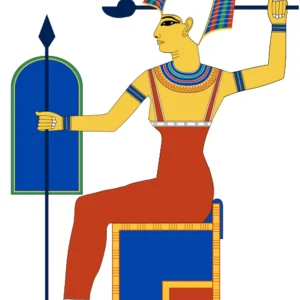
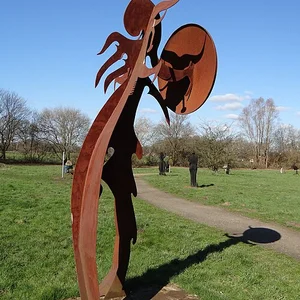
Hinetītama is the “dawn maiden” in the Māori mythology of New Zealand. The daughter of the god Tāne, she becomes Hine-nui-te-pō, the great goddess of night and of the dead, after discovering that he was also her father.
Hinetītama
Hinetītama
6 min read
Frequently asked questions
Key Facts
- Daughter of the god Tāne and of Hineahuone, the first woman shaped from the red earth.
- Becomes Tāne's wife without knowing that he is her father.
- On discovering the truth, she flees to the underworld (Rarohenga) out of shame.
- She transforms into Hine-nui-te-pō, guardian and goddess of the dead.
- She awaits humans in the afterlife, establishing the mortality of humankind.
Works & Achievements
The first woman born of a union rather than fashioned, Hinetītama inaugurates the natural generation of human beings.
By becoming Hine-nui-te-pō, she establishes Rarohenga as the welcoming home of the dead, guaranteeing a continuity after death.
Her choice to receive her children in death transforms mortality from a curse into a return to the original mother.
By killing the hero who sought to abolish death, she permanently fixes the mortal condition of humanity.
Passing from the maiden of the dawn to the lady of the night, she personifies the rhythm of day and night, of life and death.
Anecdotes
In Māori tradition, Hinetītama was born from the union of Tāne, god of the forests, and Hineahuone, the very first woman shaped from the red clay of Kurawaka. She is therefore regarded as the first woman to be born naturally, rather than created.
When Hinetītama asked who her father was, she learned with horror that her husband Tāne was also the one who had begotten her. Devastated, she chose to flee to the underworld rather than stay, turning her shame into a founding act.
As she left the world of light, she told Tāne to remain and raise their children while she would welcome them in death. This is how she became Hine-nui-te-pō, the great lady of the night, guardian of the realm of the dead (Rarohenga).
According to legend, the hero Māui tried to defeat death by crawling inside the body of Hine-nui-te-pō while she slept, in order to become immortal. Woken by the laughter of a little bird, she closed around him and killed him: this is why humans remain mortal.
Her name Hinetītama means “maiden of the dawn,” while her name as goddess of the night embodies twilight: she thus symbolizes the perpetual passage between day and night, life and death.
Primary Sources
Hinetītama, upon learning that Tāne was her father, told him to remain in the world to raise their offspring there, while she would descend into the night to receive them once their lives were over.
She became Hine-nui-te-pō, the great lady of the night, and it is she who draws all her descendants to herself once their lives are complete.
Tāne searched for his daughter as far as the gates of Rarohenga, but she answered that he should return to the world of light and let the path of death belong to her.
Māui entered the body of Hine-nui-te-pō to win immortality, but the laughter of the tiwaiwaka woke her and she crushed him, sealing the mortal fate of humankind.
Key Places
A mythical place, the genitals of the Earth-mother Papatūānuku, where the red clay was taken to shape the first woman, mother of Hinetītama.
The world of the living bathed in light, where Hinetītama was born and lived as the maiden of the dawn before her flight.
The realm of the dead to which Hinetītama descended to become Hine-nui-te-pō. Unlike the Western underworlds, it is not described as a place of punishment.
The shadowy domain over which Hine-nui-te-pō reigns, toward which the spirits of the dead return at the end of their lives.
The northern tip of Aotearoa from which, according to the Māori, the souls of the dead leap toward the world of the ancestors and the goddess of the night.
Typical Objects

Sacred red-colored earth taken from Kurawaka, the pubis of the Earth-mother Papatūānuku, with which Tāne shaped the first woman. It symbolizes the carnal origin of humankind.

The vital breath blown by Tāne into the nostril of the clay being to animate it, triggering the first sneeze and the first human breath.

A Māori pendant of jade (pounamu) depicting a human figure, often associated with ancestors and female fertility. It evokes the bond between the living and the original figures such as Hinetītama.

A small forest bird whose laughter or chirping woke Hine-nui-te-pō, causing the death of Māui. It became an omen and a messenger in Māori folklore.

In tradition, the thighs of the goddess of night were armed with sharp obsidian teeth, which crushed Māui. The black, cutting stone symbolizes the goddess's deadly power.
School Curriculum
Vocabulary & Tags
Key Vocabulary
Daily Life
Morning
As the dawn maiden, Hinetītama embodies the breaking of day: her morning awakening merges with the first light that touches the forest of her father Tāne. The stories describe her as radiant, associated with the dew and the first birdsong.
Afternoon
In the world of light, she lives alongside Tāne and their offspring, sharing the life of the first beings. Her days unfold amid the abundance of the forests and the primordial gardens of Aotearoa.
Evening
After her transformation, the evening becomes her domain: Hine-nui-te-pō reigns over the night and watches over the welcome of the spirits who leave the world of the living at dusk.
Food
Mythology does not describe the diet of a goddess, but the traditional Māori context relied on the fruits of the forest, ferns (aruhe), birds, fish and kūmara (sweet potatoes). Offerings to the deities fell under the tapu (sacred).
Clothing
Māori female figures wore garments woven from New Zealand flax (harakeke): cloaks (kākahu) and skirts (piupiu), sometimes adorned with feathers. Hine-nui-te-pō is often imagined wrapped in the darkness of the night.
Housing
As a young woman, she dwells in the luminous world of Te Ao Mārama, among the forests of Tāne. Having become a goddess, she resides in Rarohenga, the underworld, a vast abode of spirits and not a place of torment.
Historical Timeline
Period Vocabulary
Liens externes & ressources
Références
Œuvres
Naissance de l'humanité naturelle
Temps mythique
Fondation du royaume des morts
Temps mythique
Promesse d'accueillir les descendants
Temps mythique
Défaite de Māui
Temps mythique
Incarnation du cycle aube-crépuscule
Temps mythique