 flip
flipMaza, the Aoidos' Barley Flatcake
Maza, the Aoidos' Barley Flatcake
Why this dish? The wandering aoidos like Homer lived on hospitality: everywhere in Ionia, the first thing set before him was the maza, this unleavened barley flatcake that fed the Greek people long before the wheat bread of the rich. It was the daily bread, the one carried on the roads from Chios to Smyrna.
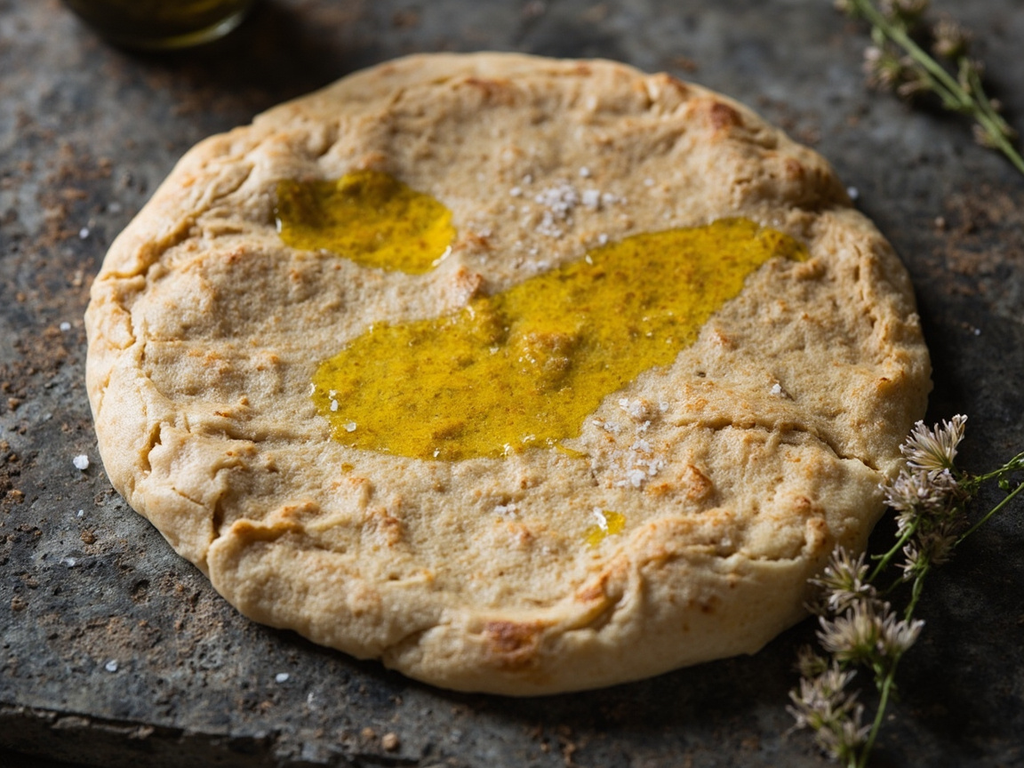
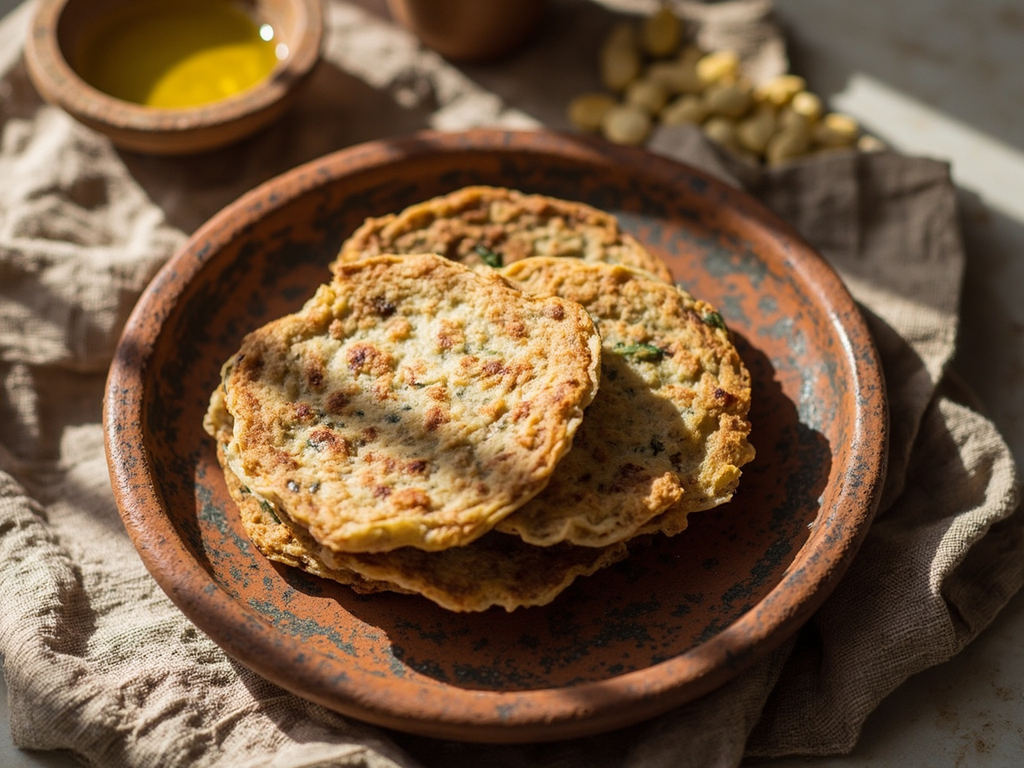
A rustic flatcake of toasted and kneaded barley, dense and nourishing, which served both as food and as a plate for soaking up oil and olives.
Approach, stranger, and do not disdain this humble flatcake. Before my voice rises to sing the wrath of Achilles, it is this that sustains my strength. We toast the barley on the embers, we crush it between two stones, then we knead it with a little water and oil until it holds in the palm. Dip it in the golden oil, stranger: it is the gift of Demeter, and no aoidos sings on an empty belly.
- •Toasted barley flour (alphita) — two full handfuls (base)
- •Spring water — as needed (binder)
- •Olive oil — a drizzle (binder and flavor)
- •Sea salt — a pinch (seasoning)
Maza, the Aoidos' Barley Flatcake
A rustic flatcake of toasted and kneaded barley, dense and nourishing, which served both as food and as a plate for soaking up oil and olives.
Why this dish? The wandering aoidos like Homer lived on hospitality: everywhere in Ionia, the first thing set before him was the maza, this unleavened barley flatcake that fed the Greek people long before the wheat bread of the rich. It was the daily bread, the one carried on the roads from Chios to Smyrna.
Approach, stranger, and do not disdain this humble flatcake. Before my voice rises to sing the wrath of Achilles, it is this that sustains my strength. We toast the barley on the embers, we crush it between two stones, then we knead it with a little water and oil until it holds in the palm. Dip it in the golden oil, stranger: it is the gift of Demeter, and no aoidos sings on an empty belly.
Ingredients (period version)
- Toasted barley flour (alphita) — two full handfuls (base)
- Spring water — as needed (binder)
- Olive oil — a drizzle (binder and flavor)
- Sea salt — a pinch (seasoning)
Ingredients
- Barley flour — 200 g (base)
- Warm water — 80 to 100 ml (binder)
- Extra virgin olive oil — 2 tbsp (binder and flavor)
- Salt — 1 pinch (seasoning)
Method
- Toast the barley flour in a dry pan for a few minutes until it smells nutty (this step mimics the ancient toasted barley).
- Mix the flour, salt, and oil, then add the water gradually until you get a firm but pliable dough.
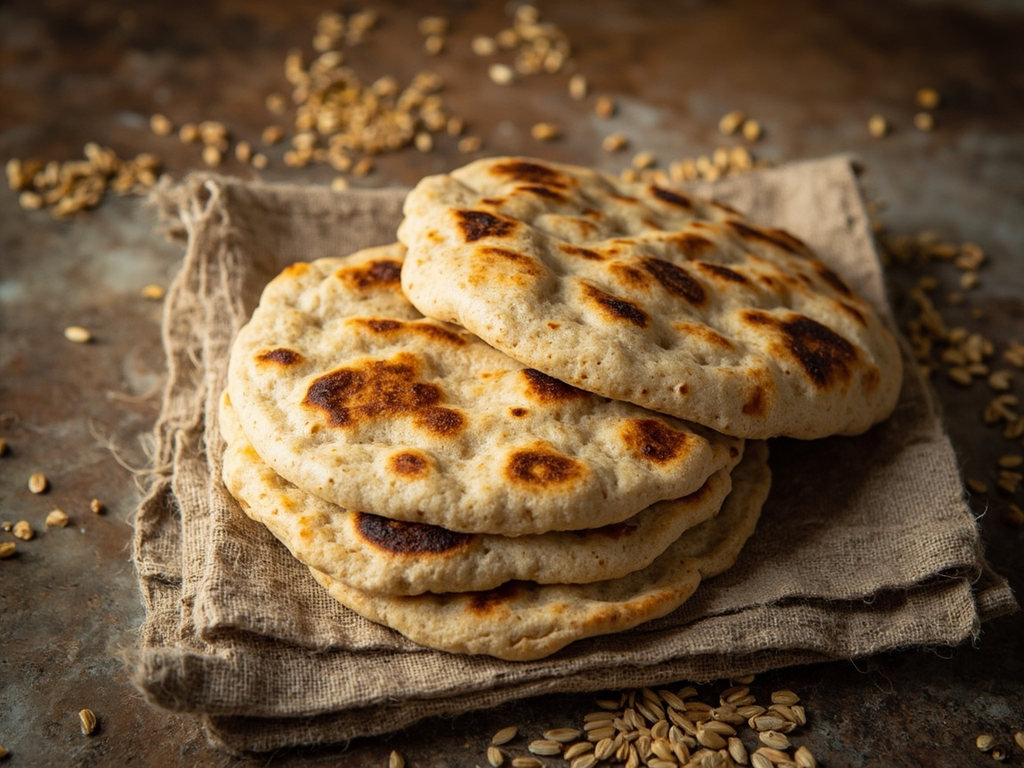
- Form flat cakes about one centimeter thick.
- Cook on a hot stone or dry pan for 4 to 5 minutes on each side.
- Serve warm, to dip in olive oil.
How it was made : Barley was the everyday grain in archaic Greece, more rustic and more widespread than wheat. It was toasted before grinding, which allowed a quick 'cooking' without an oven: the maza could even be eaten raw, simply kneaded, making it the ideal traveler's food.
The contemporary twist : Serve as mini appetizer flatcakes with a dip of olive oil, fresh oregano, and a little crumbled feta — a nod to today's Greek meze.
Sources : Homer, the Iliad and the Odyssey (mentions of barley and maza) · A. Dalby, Siren Feasts: A History of Food and Gastronomy in Greece
Homer · Charactorium