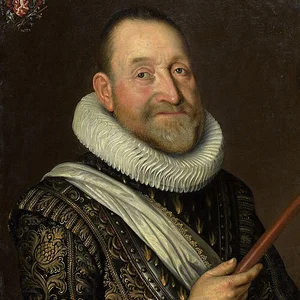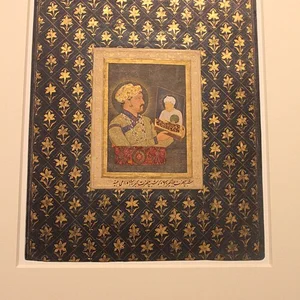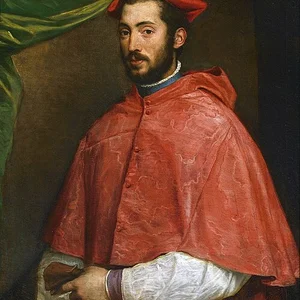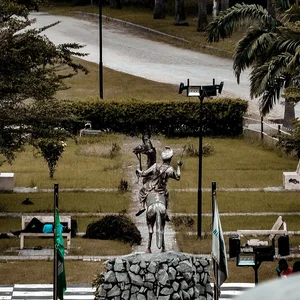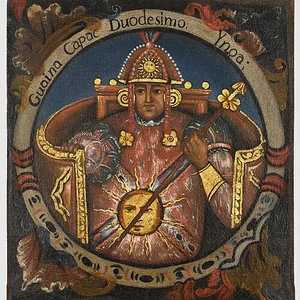

Huayna Cápac was the eleventh Sapa Inca, ruler of the Inca Empire (Tahuantinsuyu) at its greatest territorial extent. He reigned from roughly 1493 to 1527 and expanded the empire northward as far as present-day Ecuador. His death, probably caused by an epidemic that arrived from Europe, triggered a war of succession between his sons Huáscar and Atahualpa.
Huayna Cápac(1464 — 1525)
Huayna Capac
Empire inca
6 min read
Frequently asked questions
Key Facts
- The eleventh Sapa Inca, he ruled from roughly 1493 to 1527 over the Inca Empire at its greatest extent
- Continued the empire's expansion northward, conquering the region of Quito (present-day Ecuador)
- Established a second imperial capital at Quito, alongside Cuzco
- Died around 1527, probably from an epidemic (smallpox or measles) spread through European contact
- His death without a clear successor triggered the civil war between his sons Huáscar and Atahualpa (around 1529-1532)
Works & Achievements
Under his reign, the Inca Empire reached its greatest extent, from Colombia to central Chile. He was the last ruler to govern a united empire.
Long campaigns against the Cañari and the Caranqui that incorporated present-day Ecuador into the empire. These wars mobilized the imperial army for years.
Transformation of the city into a great northern capital, endowed with palaces and temples. It became an administrative center rivaling Cuzco.
Extension of the Inca road network toward the new northern provinces, with bridges, way stations (tambos) and chasqui relay posts. A key tool for the empire's cohesion.
Appointment of governors, resettlement of populations (mitimaes) and tribute systems to integrate the conquered peoples. It strengthened central control over an immense territory.
Construction and use of fortified positions to subdue and hold the rebellious regions of the north. A testament to the military effort of his reign.
Anecdotes
Huayna Cápac was born, according to tradition, in Tomebamba (present-day Cuenca, in Ecuador), a city he later had enlarged to make it a second capital rivalling Cuzco. He loved this northern region so much that he spent the greater part of his reign there, far from the historic heart of the empire.
To feed his armies on campaign and connect the far reaches of the empire, Huayna Cápac had the Inca road network, the Qhapaq Ñan, extended over thousands of kilometres. Runners called chasquis relayed along these paths and could carry a message — or even fresh fish from the coast — all the way to Cuzco in a few days.
Like all Sapa Incas, Huayna Cápac was regarded as the son of the sun god Inti. No one was allowed to look him in the face, people spoke to him with their eyes lowered, and any food he did not finish was burned so that no one else could touch it.
His death around 1525-1527, probably caused by a smallpox epidemic that reached the Andes from Europe even before the conquistadors, was a disaster: the empire was immediately torn apart by a civil war between his sons Huáscar and Atahualpa, which greatly eased the Spanish conquest a few years later.
Upon his death, his body was mummified according to Inca custom. The royal mummies (mallqui) were not shut away: they were brought out during festivals, offered food and drink, and consulted as though the deceased rulers still lived among the living.
Primary Sources
Huayna Cápac was the most beloved and most feared of all the Inca kings, and the one who pushed the boundaries of his empire the farthest, reaching as far as the lands of Quito to the north.
It is said that Huayna Cápac, seeing his end approaching, foretold the coming of foreign men who would take possession of his kingdom and his religion.
Huayna Cápac had great buildings and palaces erected at Tomebamba, and dwelt there a long while with his wives and lords.
While in Quito, Huayna Cápac was struck by a pestilential fever from which he died, leaving the empire divided in turmoil among his sons.
Key Places
A city that tradition holds to be the birthplace of Huayna Cápac and which he developed into the empire's second capital. He lived there for much of his reign.
The historical and religious capital of the Inca Empire, the heart of the Tahuantinsuyu. The center of power from which the dynasty of the Sapa Inca radiated.
A major center in the north of the empire where Huayna Cápac led his final campaigns and where he died, probably from the epidemic that came from the north.
An agricultural and residential region near Cuzco, dotted with royal estates and terraces. The emperors owned properties and sanctuaries there.
A northern lake where tradition places the crushing of the Caranqui revolt by the armies of Huayna Cápac. Its name is said to mean “lake of blood.”
Typical Objects
A fringe of red wool adorned with feathers and gold threads, worn across the forehead, the supreme symbol of the Sapa Inca's power. Only the reigning emperor was allowed to wear it.
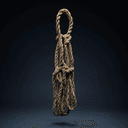
A set of knotted cords in various colors used to record numbers, censuses, tributes and perhaps narratives. Managed by specialists known as quipucamayocs.
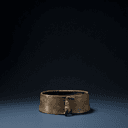
A close-combat weapon with a star-shaped head of bronze or stone, mounted on a wooden handle. Used by the warriors of the Inca imperial army.
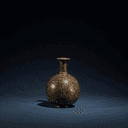
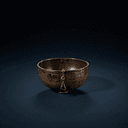
A flared drinking vessel made of painted wood or gold, used to share chicha (maize beer) during banquets and rituals. Drinking together sealed alliances and loyalty.
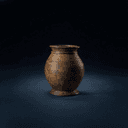
A ceremonial tunic woven from cumbi, a fine vicuña-wool cloth decorated with geometric motifs (tocapus). Reserved for the elite, it signaled the rank of its wearer.
A portable throne richly decorated with gold and feathers on which the Sapa Inca was carried on men's shoulders during his travels. Ordinarily no one walked beside him at his level.
School Curriculum
Vocabulary & Tags
Key Vocabulary
Daily Life
Morning
The Sapa Inca awoke in his palace surrounded by servants and the women of his court. The morning blended rituals in honor of the sun god Inti with the first affairs of state, relayed by messengers and officials.
Afternoon
The afternoon was devoted to governing: audiences, judgments, military decisions, and the reception of lords who came from across the empire. On campaign, he oversaw his armies and inspected the newly conquered provinces.
Evening
In the evening, banquets and feasts gathered the nobility around chicha drunk from keros. Musicians and reciters celebrated the dynasty's exploits, and the mummies of the ancestors were sometimes consulted.
Food
The diet relied on maize, the potato, quinoa, and Andean vegetables, accompanied by the meat of llama and guinea pig (cuy). Chicha, a fermented maize beer, was the drink of feasts and rituals.
Clothing
The emperor wore tunics (uncu) made of cumbi, a precious cloth of vicuña wool decorated with geometric patterns. His head bore the mascapaicha, the red fringe that was the emblem of power, and his ears were adorned with golden jewels.
Housing
He lived in palaces of finely fitted stone, their walls sometimes clad with sheets of gold, at Cuzco and Tomebamba. Each emperor owned his own estates, which his descendants kept after his death.
Historical Timeline
Period Vocabulary
Liens externes & ressources
Références
Œuvres
Extension maximale du Tahuantinsuyu
vers 1493-1525
Conquête du nord (Équateur)
vers 1500-1515
Développement de Tomebamba
vers 1505
Prolongement du Qhapaq Ñan
règne (vers 1493-1525)
Réorganisation administrative des provinces
règne (vers 1493-1525)
Forteresse de Pambamarca et ouvrages du nord
vers 1500-1520