 flip
flipMélikraton — Light Honey-Water (Hydromel)
Mélikraton — Light Honey-Water (Hydromel)
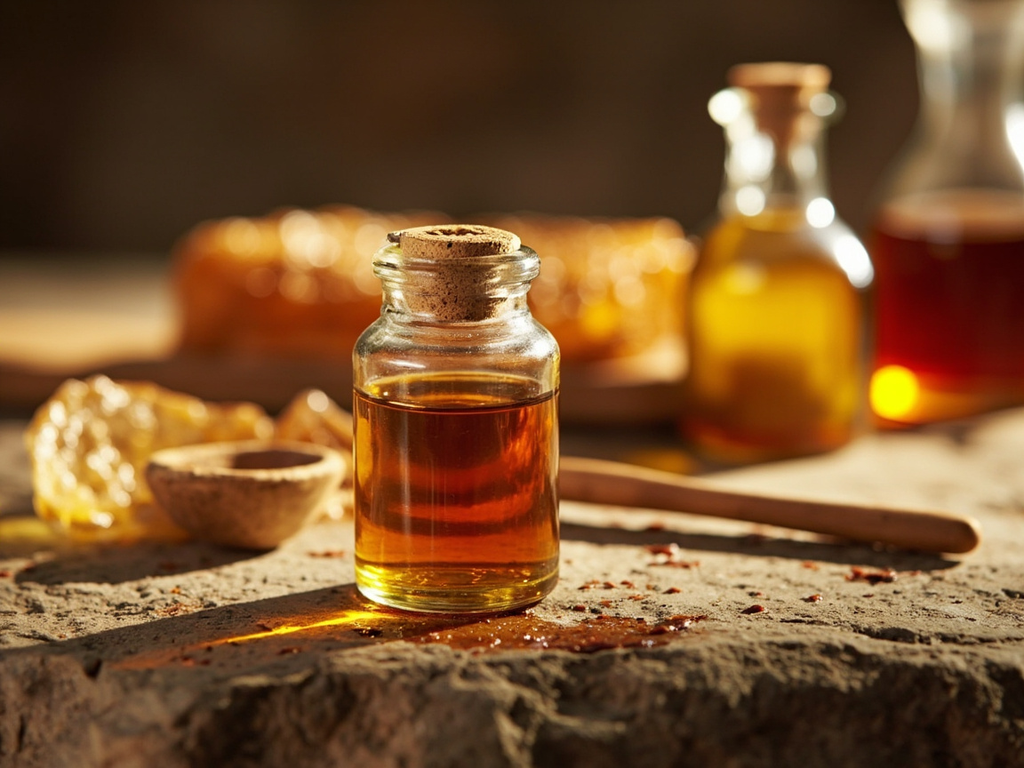
Why this dish? Greek physicians prescribed mélikraton — honey diluted in water — as a sweet and fortifying drink. Hypatia, heir to a scholarly culture where medicine, philosophy, and mathematics coexisted, would have known this preparation both as a bodily remedy and as a sweetness for the symposion, the conversation that extended the meal.
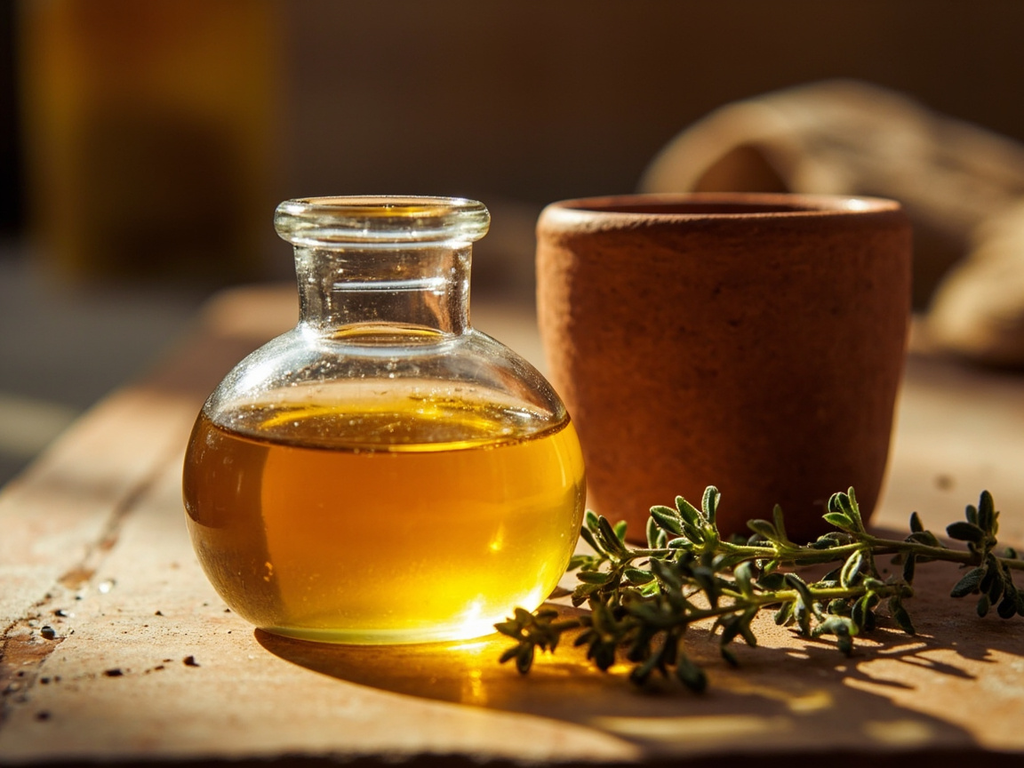
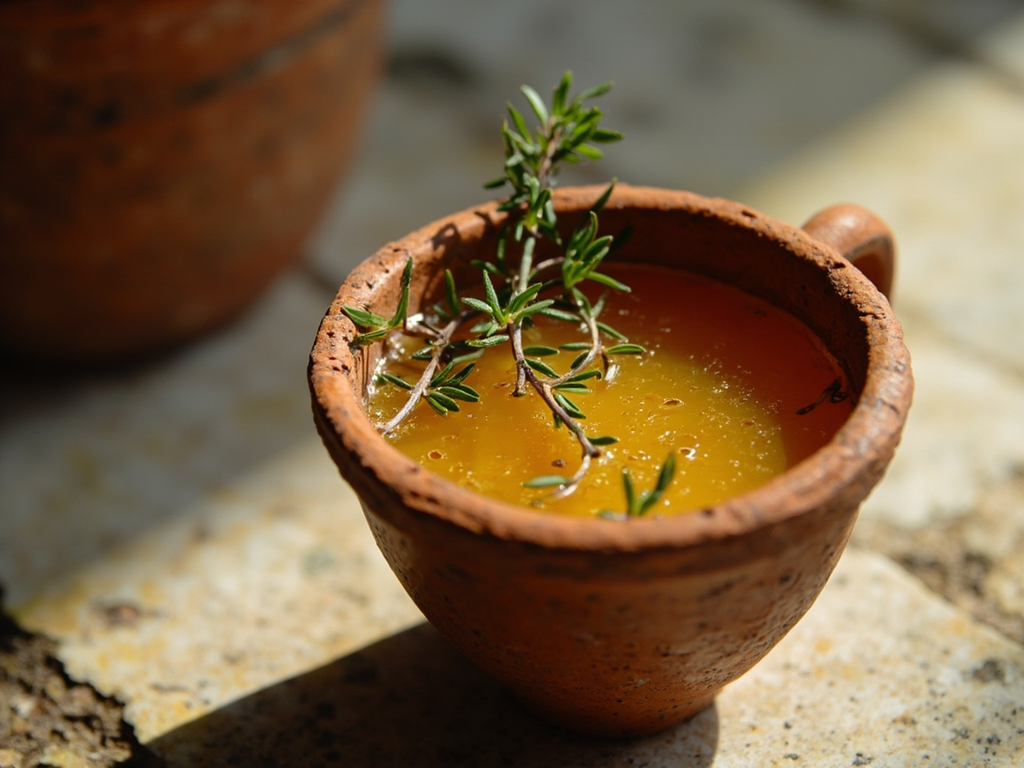
A simple ancient drink: honey slowly dissolved in water (sometimes warm), served as a light refreshment or comforting potion. It can be flavored with a little vinegar for the medicinal version (oxymel).
When the body is weary or the throat dry, take what our physicians call mélikraton: nothing but the honey of our hives melted in pure water. Dissolve it patiently, for honey, like truth, does not yield in haste. Drink it warm in the evening, when the discussion calms and the stars rise above Alexandria; add, if you feel feverish, a few drops of vinegar, and you will have oxymel, which loosens the humors. It is the humblest of my drinks, and perhaps the wisest.
- •Honey — a good part (sweet base)
- •Spring water — three to four parts (dilution)
- •Wine vinegar — a few drops (oxymel version) (medicinal acidity)
Mélikraton — Light Honey-Water (Hydromel)
A simple ancient drink: honey slowly dissolved in water (sometimes warm), served as a light refreshment or comforting potion. It can be flavored with a little vinegar for the medicinal version (oxymel).
Why this dish? Greek physicians prescribed mélikraton — honey diluted in water — as a sweet and fortifying drink. Hypatia, heir to a scholarly culture where medicine, philosophy, and mathematics coexisted, would have known this preparation both as a bodily remedy and as a sweetness for the symposion, the conversation that extended the meal.
When the body is weary or the throat dry, take what our physicians call mélikraton: nothing but the honey of our hives melted in pure water. Dissolve it patiently, for honey, like truth, does not yield in haste. Drink it warm in the evening, when the discussion calms and the stars rise above Alexandria; add, if you feel feverish, a few drops of vinegar, and you will have oxymel, which loosens the humors. It is the humblest of my drinks, and perhaps the wisest.
Ingredients (period version)
- Honey — a good part (sweet base)
- Spring water — three to four parts (dilution)
- Wine vinegar — a few drops (oxymel version) (medicinal acidity)
Ingredients
- Honey — 3 tbsp (sweet base)
- Water (warm or cool) — 500 ml (dilution)
- Cider or wine vinegar — 1 tsp (optional, oxymel version) (acidity)
- Mint leaf (optional) — a few (freshness)
Method
- Warm a portion of the water (do not boil).
- Dissolve the honey in it, stirring until fully incorporated.
- Add the rest of the water, either cold or warm depending on the season.
- For the oxymel (medicinal) version, add the vinegar and taste: the balance should remain sweet with a tangy edge.
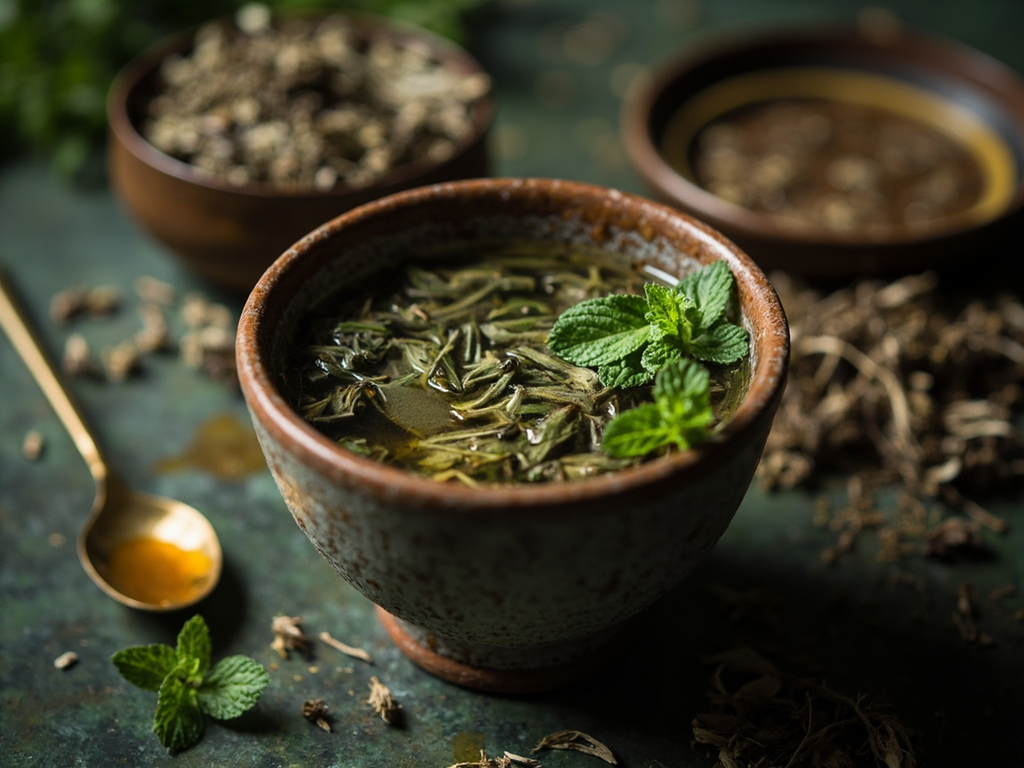
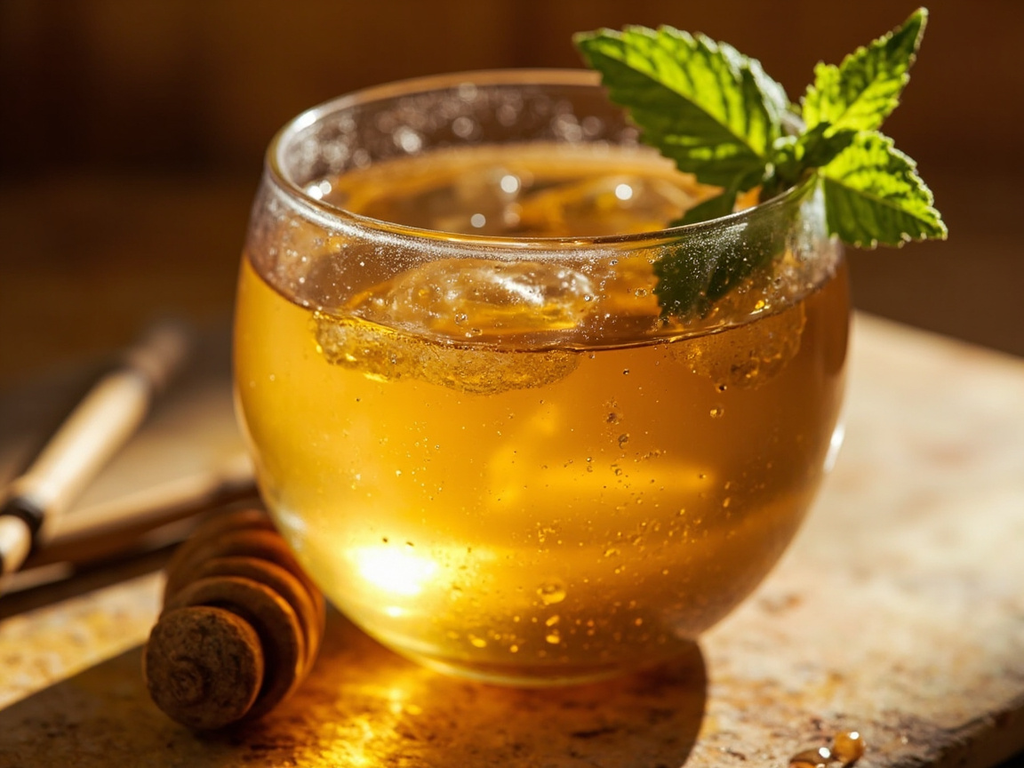
- Serve cool as a symposion drink, or warm as a comforting potion; optionally add a mint leaf.
How it was made : Mélikraton (honey-water) and oxymel (honey + vinegar) are abundantly cited in the Hippocratic Corpus and by Galen as therapeutic drinks. Honey was one of the main sweeteners of antiquity, cane sugar remaining rare and exotic.
The contemporary twist : Summer iced version, like an ancient lemonade, with fresh mint and ice cubes — a "non-alcoholic hydromel" to offer children.
Sources : Hippocratic Corpus (uses of mélikraton and oxymel) · Galen, dietary treatises
Hypatia of Alexandria · Charactorium