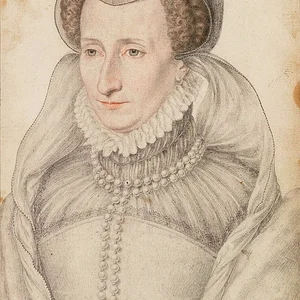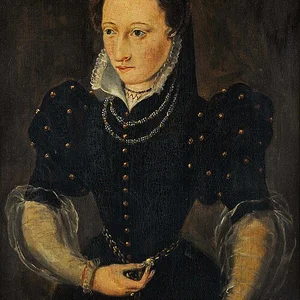

Idelette de Bure was the wife of the reformer John Calvin. The widow of an Anabaptist who had converted to Calvinism, she married Calvin in Strasbourg in 1540 and accompanied him through the decisive years of the Protestant Reformation in Geneva.
Idelette de Bure(1506 — 1549)
Idelette de Bure
principauté de Liège
6 min read
Frequently asked questions
Key Facts
- Born around 1500 in Liège, into a family from the Southern Netherlands
- First married to an Anabaptist, Jean Stordeur, who later converted to Calvinism
- Married John Calvin in Strasbourg in August 1540, on the recommendation of Martin Bucer
- Followed Calvin to Geneva in 1541 and shared her life with him there until her death
- Died in Geneva in 1549, leaving Calvin a widower and inconsolable
Works & Achievements
Idelette ran the reformer's home, welcoming refugees, visitors, and theologians from all over Europe. This household was a true crossroads of the Reformation.
She brought up the children born of her union with Jean Stordeur in the Reformed faith. Calvin testified that he never had cause to complain about their conduct.
During epidemics, she visited the sick and supported the needy, embodying the charity expected of a pastor's wife.
By taking care of daily life and the stability of the household, she allowed Calvin to devote himself to his biblical commentaries and his correspondence. Her role remained in the shadows but was essential.
Her life of modesty, piety, and devotion made her a figure of reference for the emerging Protestant model of marriage. The Reformation valued the marriage of pastors as an honorable estate.
Anecdotes
Idelette de Bure was first married to Jean Stordeur, an Anabaptist from Liège. It was while trying to persuade this couple to leave Anabaptism that John Calvin first met them in Strasbourg: he eventually won them over to the Reformation... and then married the widow a few years later.
Calvin was wary of marriage and had drawn up a list of requirements for his future wife: he wanted a woman who was “modest, thrifty, patient” and mindful of his health. His friends introduced him to several candidates, but in the end it was Idelette, already a mother and a widow, whom he chose in 1540.
In 1542, Idelette gave birth to a premature son, Jacques, who died after only a few days. The couple had no other surviving child, an ordeal Calvin alluded to in his letters by saying that God had given him “sons” through the thousands of believers.
When Idelette died in 1549, Calvin, normally austere and undemonstrative, wrote to his friends that he had lost “the best companion of his life,” the one who would never have abandoned him in exile or in death. It is one of the rare moments when the reformer let his grief show.
During the plague epidemics that struck Geneva, Idelette visited the sick and the poor, taking on the role expected of a pastor's wife. Her fragile health, already strained by her pregnancies, never truly recovered.
Primary Sources
I have been deprived of the excellent companion of my life, of one who, had it been necessary, would have followed me not only into exile and poverty, but even into death itself.
I have not yet found any wife, and I doubt whether I should seek one any further. I am none of those foolish lovers who, smitten by a pretty face, cherish even its faults.
She never caused me the slightest trouble concerning her children; my grief is therefore no ordinary one. I was forced to stifle my sorrow so as not to neglect my duty.
Key Places
Home city of the Stordeur family, Idelette's first husband; the cradle of her life before the Reformation. The region was then experiencing a strong Anabaptist ferment.
Imperial city where Calvin led the community of French refugees and where he married Idelette in 1540. A major center of the Rhineland Reformation.
City of the Reformation where the couple settled in 1541 and where Idelette died in 1549. There Calvin built a model church organization.
The main church, which became a Reformed temple where Calvin preached. The spiritual center of Protestant Geneva, attended by Idelette.
The presumed burial place of Calvin's relatives, in a Reformed Geneva that rejected ostentatious graves. Protestant burials were deliberately plain and anonymous.
Typical Objects

Translation of the Scriptures read and meditated upon daily in the Reformed household. Personal reading of the Bible was at the heart of Protestant piety.

Collection of the psalms set in verse and music, sung by the faithful. The singing of psalms became a marker of Reformed identity in Geneva.

Plain headwear worn by married women, in keeping with the modesty championed by the Reformation. Reformed dress rejected luxury and ostentation.

Needles, thread, and cloth used to maintain the household's linen and clothing. Running the home fell largely to the pastor's wife.

Small slanted piece of furniture on which Calvin wrote his correspondence and commentaries. The reformer's home was also a place of intense intellectual work.

Utensils used to prepare the household's simple meals and to feed passing guests. The parsonage took in many refugees and visitors.
School Curriculum
Vocabulary & Tags
Key Vocabulary
Tags
Daily Life
Morning
Idelette would rise early for prayer and the reading of Scripture, then see to the preparation of the household. The day began with a time of family devotion, in keeping with Reformed piety.
Afternoon
The afternoon was devoted to managing the household, welcoming the many refugees and visitors, and caring for the children. Calvin's parsonage was never empty.
Evening
Evenings gathered the household around a simple meal and another Bible reading. Calvin often worked late on his correspondence while Idelette finished the domestic tasks.
Food
Meals were plain and frugal, a reflection of Geneva's austerity: bread, soups, vegetables, a little meat or fish, and wine cut with water. The Reformation condemned gluttony and excess at the table.
Clothing
Idelette wore dark, modest clothing, a linen coif, and a gown without costly ornaments. Geneva regulated luxury in dress and championed sobriety.
Housing
The couple lived in a house in Geneva's old town, provided by the city for its pastor. It was a place of work and hospitality as much as a family home.
Historical Timeline
Period Vocabulary
Liens externes & ressources
Références
Œuvres
Tenue du foyer pastoral de Calvin
1540-1549
Éducation des enfants de son premier mariage
1540-1549
Assistance aux malades et aux pauvres de Genève
1542-1549
Soutien à l'œuvre théologique de Calvin
1540-1549
Modèle de l'épouse réformée
1540-1549