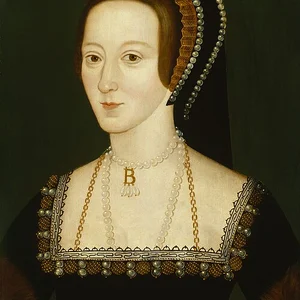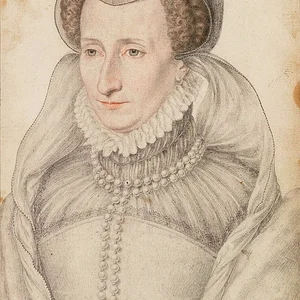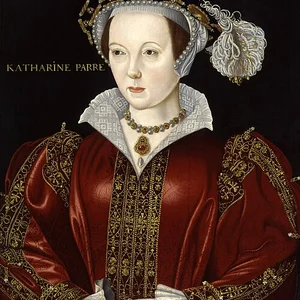

Sixth and last wife of King Henry VIII of England, whom she married in 1543. A cultured woman with reformist convictions, she was the only one of the six wives to outlive the king. She served as Regent of England in 1544 during Henry VIII's French campaign.
Catherine Parr(1512 — 1548)
Catherine Parr
royaume d'Angleterre
5 min read
Frequently asked questions
Key Facts
- Becomes the sixth and last wife of King Henry VIII of England in 1543
- Appointed Regent of England in 1544 during Henry VIII's military campaign in France
- Publishes 'Prayers or Meditations' in 1545, becoming one of the first English women to publish under her own name
- The only one of Henry VIII's six wives to outlive him, the king dying in January 1547
- Dies in 1548 shortly after her remarriage to Thomas Seymour
Works & Achievements
A collection of prayers in English, the first book published by an English queen under her own name.
A reformist devotional work asserting salvation through faith, a major testament to her Protestant thinking.
Governing the kingdom during Henry VIII's French campaign, proof of her political competence.
She encouraged and supported the English translation of Erasmus's biblical commentaries, spreading religious knowledge.
She oversaw the instruction of Edward, Mary and Elizabeth, contributing to the formation of the future Elizabeth I.
Anecdotes
Catherine Parr was the sixth and final wife of Henry VIII
and the only one to outlive him. The fate of the king
s six wives is often summed up by the English rhyme: "divorced
beheaded
died
divorced
beheaded
survived
— Catherine being the one who
survived".
Before marrying the king in 1543, Catherine had already been widowed twice. She was in love with Thomas Seymour, but when Henry VIII proposed marriage, she could not refuse a king. She eventually married Seymour shortly after Henry's death.
In 1546, her Catholic enemies at court tried to have her arrested for heresy because of her reformist ideas. According to the story handed down, Catherine saved her head by convincing Henry that she discussed religion only to distract him and to learn from him, not to contradict him.
A highly educated woman, she was the first queen of England to publish books under her own name. She also played the role of a caring stepmother, helping to educate the royal children, including the future Queen Elizabeth I.
In 1544, Henry VIII named her regent of the kingdom while he campaigned in France — an exceptional mark of trust that showed how much he valued her political intelligence.
Primary Sources
A reformist devotional work in which the queen confesses her sins and exalts salvation through faith and the grace of Christ, a sign of her Protestant convictions.
A collection of prayers and meditations in English meant to guide readers' piety, the first book published by a Queen of England under her own name.
Letters exchanged with Thomas Seymour revealing her feelings and her role after the death of Henry VIII.
Key Places
Region in the north of England associated with the Parr family, from which Catherine was descended.
Henry VIII's grand royal residence where Catherine lived as queen and took part in court life.
The place where Catherine Parr married Henry VIII in 1543 and the centre of Tudor royal power.
The home where Catherine lived with Thomas Seymour, gave birth to her daughter and died in 1548; she is buried there.
Liens externes & ressources
Références
Œuvres
Prayers or Meditations (Prières ou Méditations)
1545
The Lamentation of a Sinner (Lamentation d'une pécheresse)
1547
Régence d'Angleterre
1544
Patronage de la traduction des Paraphrases d'Érasme
1545-1548
Éducation des enfants royaux
1543-1548