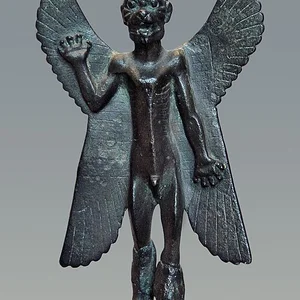
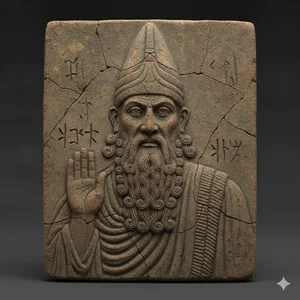
Inanna (Sumerian) or Ishtar (Akkadian) is the great goddess of love, war, and fertility in ancient Mesopotamia. She stands at the heart of many foundational myths, including the famous Descent into the Underworld. Her cult, one of the most important in the ancient Near East, spans more than three millennia.
Inanna / Ishtar
Inanna / Ishtar
10 min read
Frequently asked questions
Key Facts
- Attested as early as the 4th millennium BCE at Uruk under the name Inanna, principal Sumerian goddess
- Identified with Ishtar in the Akkadian pantheon from the 3rd millennium BCE onward
- Protagonist of the myth of Inanna's Descent into the Underworld, one of the oldest known literary texts
- Appears in the Epic of Gilgamesh (c. 2100 BCE) as a divine figure rejected by the hero
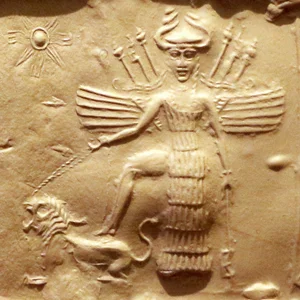
- Her symbol, the eight-pointed star, has been found on numerous Mesopotamian monuments and cylinder seals
Works & Achievements
A long hymn in Sumerian composed by Enheduanna, high priestess of Ur and daughter of Sargon of Akkad. The first signed literary text in human history, it celebrates Inanna's universal power over all the divine Me and presents her as the absolute mistress of the cosmos.
A central Sumerian myth recounting Inanna's journey into the realm of the dead, her execution by Ereshkigal, and her resurrection. One of the most complete mythological narratives of the ancient world, it has been analyzed by scholars as a metaphor for cosmic cycles and the death-rebirth pattern.
A cycle of lyric poems celebrating the union of Inanna and the shepherd Dumuzi, among the oldest known love poems. They were likely recited during sacred marriage rituals (*hieros gamos*) that symbolically united the king with the goddess to ensure the fertility of the land.
A Sumerian myth recounting how Inanna stole the decrees of civilization from Enki and brought them to Uruk. A foundational text that explains Uruk's cultural supremacy and reveals ingenuity and cunning as divine attributes of the goddess.
A pivotal episode in the great Akkadian epic in which Ishtar proposes marriage to Gilgamesh, who rejects her and triggers her vengeful wrath. The episode explores themes of divine pride, mortal condition, and the consequences of spurning a deity.
A major architectural monument erected by Nebuchadnezzar II, adorned with 120 lions, dragons, and bulls rendered in cobalt-blue glazed brick. A masterpiece of Neo-Babylonian art, it bears witness to Ishtar's importance as the protective goddess of Babylon at the height of its power.
Anecdotes
In the myth of the Descent to the Underworld, Inanna decides to visit the realm of the dead ruled by her sister Ereshkigal. She passes through seven successive gates, surrendering at each one a royal ornament — crown, necklace, belt — until she stands naked and stripped bare. Killed in the depths, she is resurrected thanks to the wise Enki, who sends emissaries bearing the food and water of life. This tale, one of the oldest in human history, symbolizes the cycles of nature and the renewal of spring.
According to a delightful Sumerian myth, Inanna stole the “Me” from Enki, the god of wisdom. The Me are the divine decrees governing all of civilization: writing, kingship, war, love, the weaver’s arts, and even intoxication. She plied Enki with drink until he gave them to her freely. By the time he wished to reclaim them, Inanna was already on her way back to Uruk with the entire inheritance of civilization, making her city the center of the Sumerian world.
In Tablet VI of the Epic of Gilgamesh, the goddess Ishtar offers marriage to the great hero, who rejects her scornfully. He reminds her of the fate of her former lovers: the shepherd Dumuzi condemned to the underworld, the bird with broken wings, the wounded lion, the horse worn out by war. Consumed by rage, Ishtar obtains the Bull of Heaven from her father Anu to take revenge. This episode illustrates that even the gods could be humiliated in Mesopotamian literature.
The love poems of Inanna and the shepherd Dumuzi are among the oldest romantic texts in human history. Yet after her descent to the Underworld, forced to provide a substitute to take her place among the dead, Inanna chose Dumuzi — whom she found far too little grieved by her absence. Each year, his death was marked by ritual lamentations throughout the ancient Near East: this is the origin of the name Tammuz, still used in the Hebrew calendar.
Babylonian astronomers had identified Inanna/Ishtar with the planet Venus long before the Greeks. They had observed that the morning star and the evening star were the same celestial body — a discovery recorded on clay tablets as early as the 2nd millennium BCE. Her symbol, an eight-pointed star, appeared on royal stelae and cylinder seals. This dual celestial aspect perfectly captured her contradictory nature: goddess of tender love and merciless war.
Primary Sources
Queen of all the Me, of the resplendent light, woman clothed in terror, beloved of Heaven and Earth, hierodule of An, adorned with many adornments, loving the holy rites... you are great, you are exalted!
From the Great Heaven toward the Great Below, she set her mind. Inanna abandoned heaven, abandoned earth, descended to the Underworld. She abandoned the role of high priestess, abandoned the role of queen, and descended to the Underworld.
Enki said to holy Inanna: In the name of my power, in the name of my abzu, I offer you the Me of truth, the Me of judgment, the Me of descent to the Underworld, the Me of ascent from the Underworld.
Lift your eyes, Gilgamesh, king of Uruk: I would be your bride. Give me your caresses. Let your hand rest upon me. May you be my husband, may I be your wife.
Ishtar, daughter of Sin, turned her ear toward the Land of No Return, toward the dark dwelling, dwelling of Irkalla, toward the house from which those who enter never leave, toward the road from which there is no return.
Key Places
The sacred city of Inanna and one of the earliest great cities in history, with the Eanna temple as the goddess's main sanctuary. Active from 3500 BCE until the early centuries of the Common Era, this monumental complex served as the center of Inanna's cult for three millennia.
A major Mesopotamian holy city housing an important temple of Inanna and a center for preserving Sumerian mythological texts. Most of the clay tablets recounting the myths of Inanna were discovered in its archives.
The Ishtar Gate (c. 575 BCE), built by Nebuchadnezzar II, formed the monumental northern entrance to the sacred city, decorated with lions and dragons in blue glazed brick. Part of it has been reconstructed and is now on display at the Pergamon Museum in Berlin.
A city whose shrine of Ishtar was particularly venerated by Assyrian kings, who consulted its oracles before their military campaigns. The prophecies of Ishtar of Arbela were preserved in the library of Ashurbanipal.
The subterranean realm of the dead, ruled by Ereshkigal, Inanna's sister, and the setting at the heart of the myth of the Descent into the Underworld. This imaginary place structured Mesopotamian cosmology and provided an explanation for the cycles of vegetation and the seasons.
Typical Objects
The principal symbol of Inanna/Ishtar, representing the planet Venus. This motif adorns cylinder seals, royal stelae, and temple gates across more than three millennia, attesting to the continuity and universality of her cult.
Ishtar's sacred animal, symbol of her warlike and royal power. The goddess is often depicted standing atop two lions or holding lions on leashes, as seen in the 120 lions of the famous Ishtar Gate of Babylon.
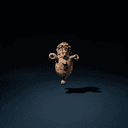
Mystical tablets containing all the knowledge and powers of civilization — writing, kingship, priesthood, war, music. Inanna stole them from Enki to bring them to Uruk, making her city the heart of Sumerian civilization.

The oldest pictographic ideogram for Inanna (c. 3500 BCE), depicting a bundle of reeds knotted at the top. This symbol is one of the earliest known writing signs to represent a deity.
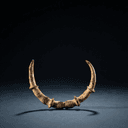
A divine headdress featuring multiple pairs of bull's horns, a mark of Inanna's divinity. In the myth of the Descent to the Underworld, it is the first adornment she surrenders at the first gate, signaling the beginning of her dispossession.
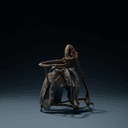
A weapon associated with Ishtar's warrior aspect as protector of Assyrian armies. The kings of Assyria invoked Ishtar before their military campaigns and dedicated their victories to her with votive offerings in her temples.
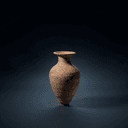
An alabaster vase 90 cm tall discovered at Uruk (c. 3200 BCE), depicting a procession of offerings to Inanna. It is one of the earliest narrative relief representations in the history of world art.
School Curriculum
Vocabulary & Tags
Key Vocabulary
Tags
Lieu
Daily Life
Morning
At the break of day, Inanna manifested as the morning star (the planet Venus), guiding the priestesses of her Eanna temple in the dawn rituals. The officiants lit incense, arranged offerings of barley bread, beer, and lapis lazuli, and sang hymns to call the goddess's blessing upon the city of Uruk and its inhabitants.
Afternoon
At the brightest hour of the day, Inanna reigned over human affairs from her celestial throne. Her priests and priestesses delivered oracles, received offerings from the faithful, and oversaw the rituals of the sacred marriage (hieros gamos) through which the king symbolically united with the goddess to ensure the fertility of the fields and herds.
Evening
At sunset, Inanna reclaimed her brilliance as the evening star, presiding over feasts, songs, and banquets. The Eanna temple became the site of lively nocturnal celebrations, torch-lit processions, and love songs in honor of the divine union of Inanna and Dumuzi, marking the rhythm of the city's festival calendar.
Food
Offerings made to Inanna included barley bread, beer — the Sumerian national drink —, sesame oil, dates, and sacrificed animals. In the myths, it was by plying Enki with drink during a lavish banquet that Inanna managed to steal the precious Me from him, with beer playing a key role in divine diplomacy.
Clothing
In mythological texts, Inanna wears seven divine ornaments: the bull-horned crown, a lapis lazuli wig, a necklace of precious stones, gold clasps on the chest, a bracelet, a royal kilt, and a court garment. During the Descent to the Underworld, she is forced to abandon each one at a gate, symbolizing the complete stripping away of divine power.
Housing
The great Eanna temple (“House of Heaven”) in Uruk was Inanna’s earthly dwelling. This monumental complex covered several hectares and included temples, storehouses, and quarters for hundreds of officiants. The cult statue in wood covered with gold and gems was enthroned in the inner sanctum, accessible only to the high priests and priestesses.
Historical Timeline
Period Vocabulary
Liens externes & ressources
Références
Œuvres
Nin-me-šara (L'Exaltation d'Inanna)
vers 2285 av. J.-C.
La Descente d'Inanna aux Enfers
vers 2000 av. J.-C. (mise par écrit)
Inanna et Dumuzi — Chants d'amour sumériens
vers 2000 av. J.-C.
Inanna et Enki — Le transfert des Me
vers 2000 av. J.-C.
Épopée de Gilgamesh, Tablette VI
vers 1250 av. J.-C. (version standard)
La Porte d'Ishtar de Babylone
vers 575 av. J.-C.