 flip
flipPilau wa nyama — spiced rice with meat
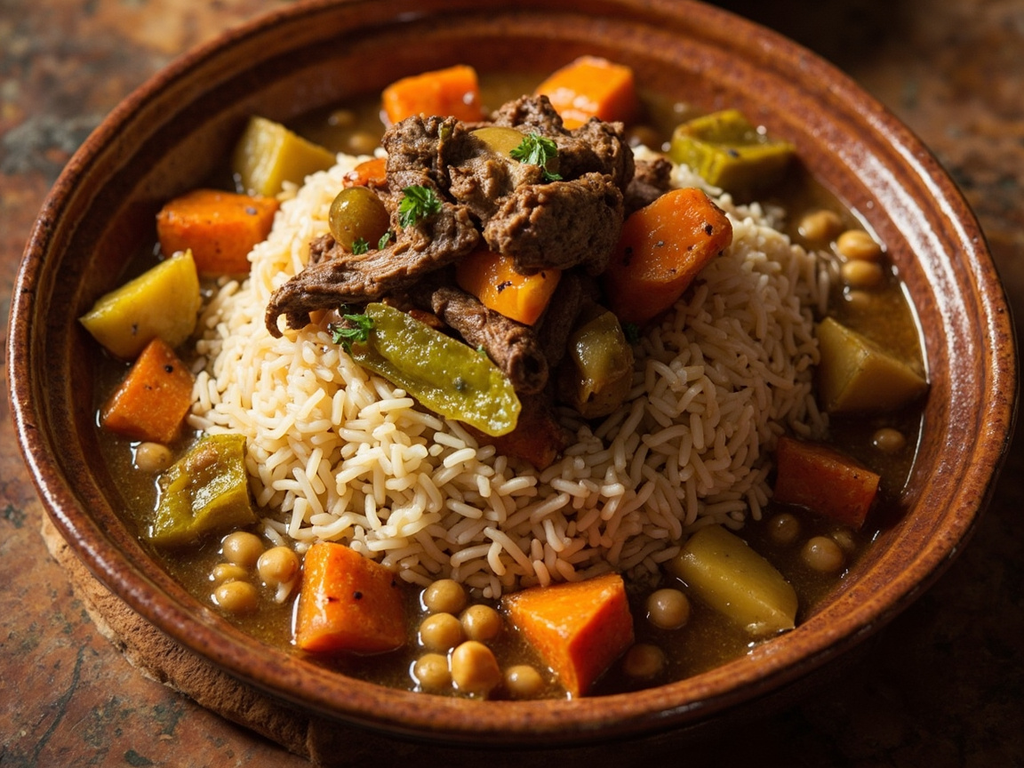
Pilau wa nyama — spiced rice with meat
Why this dish? When Allen stayed in Zanzibar or Mombasa to collect tendi manuscripts, pilau was the dish for great occasions and invitations from his Swahili informants — exactly the kind of table where the poems he transcribed were shared.
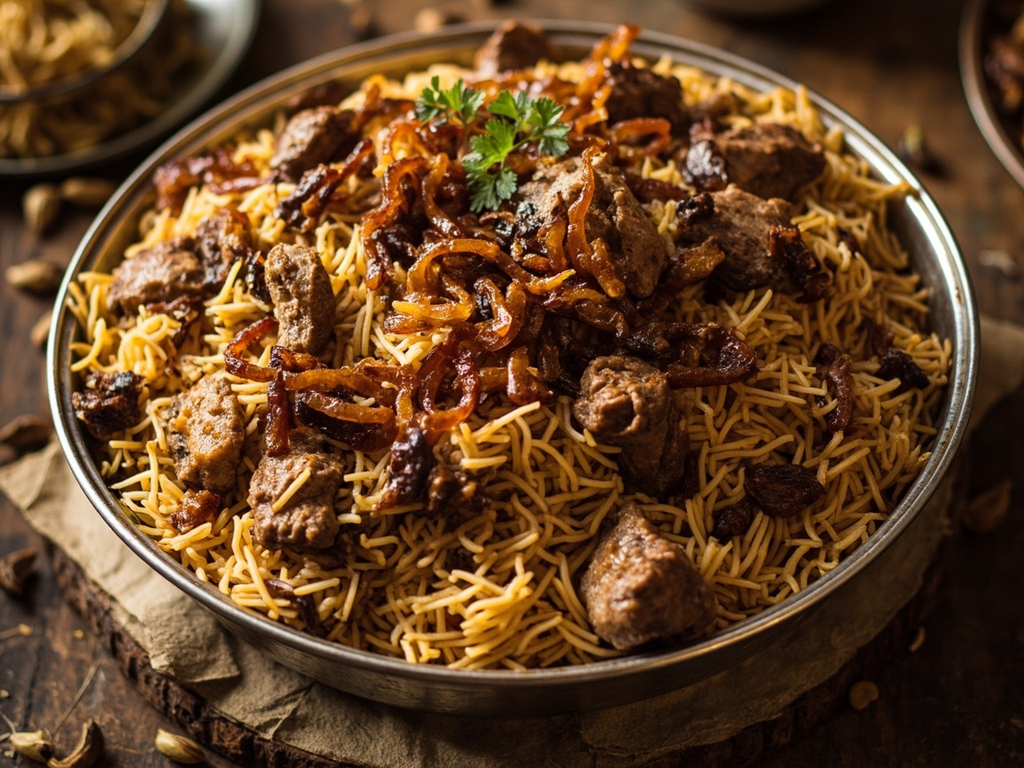
A golden long-grain rice, slowly simmered with meat, caramelized onions, and a blend of spices (clove, cardamom, cumin, cinnamon) typical of the East African coast. The grains remain separate and fragrant to the core.
You see, pilau is not served on an ordinary day: it is the dish for weddings, religious festivals, and honored guests. I learned in Zanzibar that you must first brown the onion patiently, almost to dark, for that is where all the color lies — no saffron, contrary to what Europeans believe. You throw in the island's cloves and cardamom, drown the rice in meat broth, then let it rest on the embers. Believe a man who has shared many meals on those mats: a good pilau is known by every grain remaining whole and free.
- •Good quality long-grain rice — a large measure (base)
- •Mutton or beef with bone — in proportion (protein and broth)
- •Onions — in abundance (caramelized base (color))
- •Zanzibar cloves — a pinch (signature spice)
- •Cardamom, cumin, cinnamon, black pepper — to taste (bizari ya pilau)
- •Pounded garlic and ginger — a knob (aromatics)
- •Ghee or oil — as needed (fat)
Pilau wa nyama — spiced rice with meat
A golden long-grain rice, slowly simmered with meat, caramelized onions, and a blend of spices (clove, cardamom, cumin, cinnamon) typical of the East African coast. The grains remain separate and fragrant to the core.
Why this dish? When Allen stayed in Zanzibar or Mombasa to collect tendi manuscripts, pilau was the dish for great occasions and invitations from his Swahili informants — exactly the kind of table where the poems he transcribed were shared.
You see, pilau is not served on an ordinary day: it is the dish for weddings, religious festivals, and honored guests. I learned in Zanzibar that you must first brown the onion patiently, almost to dark, for that is where all the color lies — no saffron, contrary to what Europeans believe. You throw in the island's cloves and cardamom, drown the rice in meat broth, then let it rest on the embers. Believe a man who has shared many meals on those mats: a good pilau is known by every grain remaining whole and free.
Ingredients (period version)
- Good quality long-grain rice — a large measure (base)
- Mutton or beef with bone — in proportion (protein and broth)
- Onions — in abundance (caramelized base (color))
- Zanzibar cloves — a pinch (signature spice)
- Cardamom, cumin, cinnamon, black pepper — to taste (bizari ya pilau)
- Pounded garlic and ginger — a knob (aromatics)
- Ghee or oil — as needed (fat)
Ingredients
- Basmati rice — 400 g, rinsed (base)
- Lamb shoulder or stewing beef — 600 g, cubed (protein)
- Onions — 4 large, sliced (caramelized base)
- Cloves — 6 (signature spice)
- Green cardamom — 5 pods (spice)
- Ground cumin — 2 tsp (spice)
- Cinnamon — 1 stick (spice)
- Black pepper — 1 tsp (spice)
- Garlic + ginger — 3 cloves + 1 piece, made into paste (aromatics)
- Ghee or neutral oil — 4 tbsp (fat)
- Salt — to taste (seasoning)
Method
- Slowly fry the onions in ghee until dark brown: this is the key to pilau's color.
- Add garlic-ginger paste and all spices, heat for a minute to release aromas.
- Add the meat, sear, then cover with water and simmer until tender (45 min to 1 hour).
- Pour in the rinsed rice, adjust broth to 2 cm above the rice, season with salt.
- Cover and cook on very low heat for 15-20 min, without stirring, until liquid is fully absorbed.
- Let rest off the heat for 10 min, then fluff gently with a fork and serve on a large platter.
How it was made : In those days, pilau was cooked in a cast-iron pot (sufuria) placed on embers, with more embers on the lid for even heat. Spices were bought at Darajani market in Zanzibar, the hub of Indian Ocean spice trade.
The contemporary twist : Served as a dome with a few golden fried onions (kachumbari on the side) and a lime half, modernized baraza table style.
Sources : J. W. T. Allen & collaborators, Swahili journal (Institute of Swahili Research, Dar es Salaam) · Documented cuisines of the Swahili coast (Zanzibar, Mombasa, Lamu)
J.W.T. Allen · Charactorium