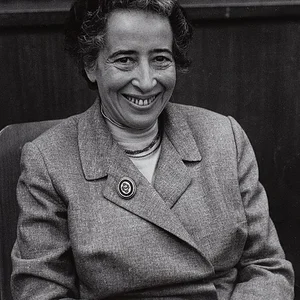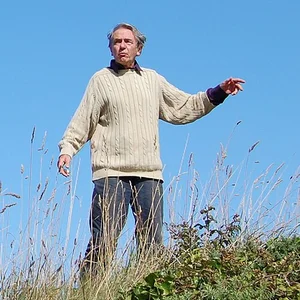

Jacques Rancière is a French philosopher born in 1940, a former student of Althusser from whom he later distanced himself. A thinker of emancipation, the equality of intelligences, and the distribution of the sensible, he brings together political philosophy and aesthetics.
Jacques Rancière(1940 — ?)
Jacques Rancière
France
6 min read
Frequently asked questions
Famous Quotes
« The whole art of the explicators is to redouble this alienation of intelligence from intelligence.»
« Politics exists when the natural order of domination is interrupted by the institution of a part of those who have no part.»
Key Facts
- Born on 10 June 1940 in Algiers.
- Contributed in 1965 to 'Reading Capital' directed by Louis Althusser, with whose thought he later broke after May 1968.
- Published 'The Ignorant Schoolmaster' (1987), a reflection on the equality of intelligences based on Joseph Jacotot.
- Developed the concept of the 'distribution of the sensible' in the 2000s, linking aesthetics and politics.
- Professor emeritus at the University of Paris VIII (Saint-Denis).
Works & Achievements
Collective Althusserian work on reading Marx, to which the young Rancière contributed before his theoretical break.
A critique of his former mentor that marks Rancière's intellectual independence after May 1968.
An investigation into workers' archives revealing the desire for intellectual emancipation among nineteenth-century laborers.
A foundational essay on the equality of intelligences, drawing on the pedagogy of Joseph Jacotot.
A major work in which politics is defined as the irruption of the “part of those who have no part.”
A key text linking aesthetics and politics around the question of what is visible and sayable.
A reflection on the active spectator, who thinks and interprets rather than passively submitting to the work of art.
Anecdotes
In 1965, the young Rancière, aged 25, took part in Louis Althusser's seminar and contributed a chapter to the collective book *Reading Capital*. A few years later, after May 1968, he broke with his mentor and published *Althusser's Lesson*, an intellectual settling of scores that marked his bid for independence.
To write *Proletarian Nights*, Rancière spent years in the archives reading the newspapers, poems, and letters written by nineteenth-century workers during their nights, instead of sleeping. He discovered that these laborers did not dream only of better wages, but wanted to think, write, and gain access to the culture of others.
In *The Ignorant Schoolmaster* (1987), Rancière tells the true story of Joseph Jacotot, a French teacher exiled in Belgium around 1818. Unable to speak Dutch, Jacotot had his pupils learn French without teaching them anything directly, using a bilingual book: he proved, according to Rancière, that everyone possesses the same intelligence.
Rancière coined the phrase “the distribution of the sensible” to explain that politics begins with a simple question: who has the right to be seen and heard? He likes to show that deciding who may speak in public or make art is never neutral, but always a matter of equality.
Long a professor at the University of Paris VIII (Vincennes, then Saint-Denis), a university born of May 1968 and renowned for its openness, Rancière taught aesthetics there for decades before becoming one of the most translated French philosophers and one of the most invited abroad.
Primary Sources
We must overturn the logic of the explicative system. Explanation is not necessary to remedy an inability to understand. On the contrary, it is this very inability that is the structuring fiction of the explicative conception of the world.
The workers' dream is not first of all that of another society, but that of another relationship to time: the time stolen from the nights of sleep in order to think, write, and discuss like everyone else.
Politics exists when the natural order of domination is interrupted by the institution of a part of those who have no part.
I call the distribution of the sensible that system of self-evident sensory facts which simultaneously reveals the existence of something in common and the divisions that define within it the respective places and parts.
Key Places
Birthplace of Jacques Rancière in 1940, then the capital of French Algeria.
The institution where Rancière studied and attended the teachings of Louis Althusser in the 1960s.
A university born of the spirit of May 68 where Rancière taught aesthetics and philosophy for most of his career.
The city where Rancière lives and writes most of his work, the center of French intellectual life.
Typical Objects

Newspapers, letters and poems written by workers, which Rancière combed through to write “The Nights of Labor.” They bear witness to their desire for culture and thought.

The main medium of Rancière's work, whose essays such as “The Ignorant Schoolmaster” or “Disagreement” spread his concepts.

A tool of the teacher he was at Paris VIII for decades. It symbolizes transmission, which Rancière reexamines through the idea of an “ignorant schoolmaster.”

Periodicals such as “Les Révoltes logiques,” founded by Rancière and his collective in the 1970s, where his ideas on the history of the dominated were developed.

Cinema and the visual arts become objects of analysis for Rancière, who examines the spectator's gaze in “The Emancipated Spectator.”
School Curriculum
Vocabulary & Tags
Key Vocabulary
Daily Life
Morning
Like many academics, Rancière devotes his mornings to reading and writing, often at home or in the library. Preparing his lectures and books sets the rhythm of these hours of solitary work.
Afternoon
The afternoon may be devoted to teaching at the University of Paris VIII, to seminars, and to exchanges with students and colleagues. He also continues his research in archives and libraries.
Evening
The evenings of a Parisian intellectual often blend lectures, public debates, and visits to cinemas or exhibitions, which serve as sources for his reflections on aesthetics.
Food
Rancière leads the everyday life of a French person of the late twentieth and early twenty-first centuries, with no particular known diet. His meals fit within the ordinary urban habits of his era.
Clothing
He dresses with the discreet sobriety of a contemporary university professor: jackets, shirts, and ordinary civilian attire, far from any solemn academic uniform.
Housing
Rancière lives in Paris, in an urban apartment typical of the capital's intellectual life, close to libraries, universities, and cultural venues.
Historical Timeline
Period Vocabulary
Liens externes & ressources
Références
Œuvres
Lire le Capital (contribution)
1965
La Leçon d'Althusser
1974
La Nuit des prolétaires
1981
Le Maître ignorant
1987
La Mésentente. Politique et philosophie
1995
Le Partage du sensible
2000
Le Spectateur émancipé
2008