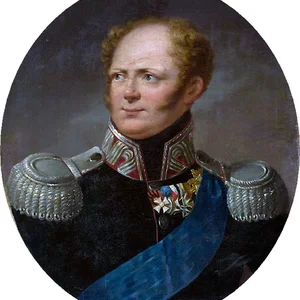
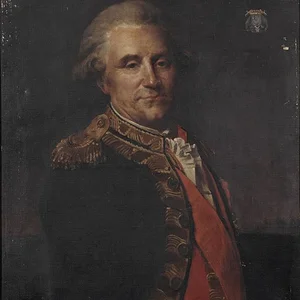
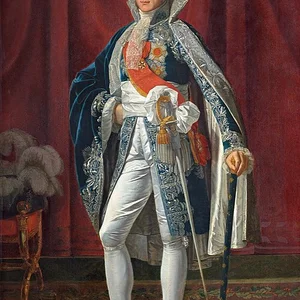
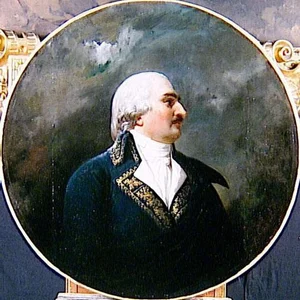
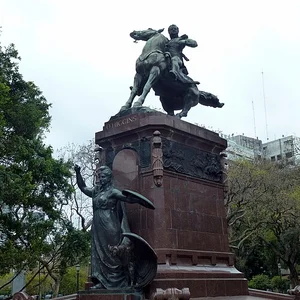
A French general of the First Empire, Jean-Ignace Jacqueminot de Ham took part in the great Napoleonic campaigns. He later became a senator and peer of France under the Restoration and the July Monarchy.
Jean-Ignace Jacqueminot de Ham
Jean-Ignace Jacqueminot de Ham
8 min read
Frequently asked questions
Key Facts
- Division general under the First Empire, he took part in the Napoleonic military campaigns
- Appointed senator under the First Empire
- Peer of France under the Restoration and the July Monarchy
- His name is associated with the Jacqueminot Law of 1832 on military recruitment
- He contributed to the reorganization of the French army after the Napoleonic Wars
Works & Achievements
Jacqueminot de Ham took part in the military operations in Prussia and Poland that led to the victory at Jena and the signing of the Treaty of Tilsit, cementing French dominance over Central Europe.
As a senator under the Empire, he participated in the work of the Conservative Senate, the institution responsible for overseeing the constitutionality of imperial government acts and ratifying treaties.
A Peer of France under the Restoration and then the July Monarchy, he contributed to debates on military legislation and army organization, drawing on his experience of the Napoleonic campaigns.
After the defeat of 1815, surviving generals took part in rebuilding an army reduced by the Treaties of Paris. Jacqueminot de Ham helped preserve the experience and traditions of the Imperial veterans within the new royal military institution.
Anecdotes
During the German campaigns of 1806–1807, the French generals were stunned by the speed of the Prussian collapse: within a few weeks of Jena and Auerstedt, the military power inherited from Frederick the Great crumbled entirely. Officers like Jacqueminot de Ham discovered that an army can be defeated not only on the battlefield, but in its very will to resist.
Under the Restoration, former Imperial generals had to adapt to a royal court that viewed their service records with suspicion. Jacqueminot de Ham, like many of his peers, had to skillfully navigate between loyalty to his fellow soldiers and the demands of the new regime in order to retain his position and rank.
The town of Ham, from which he took his name, held a singular place in French military history: its fortress, besieged several times over the centuries, had come to symbolize Picard resistance. For a general born beneath those ramparts, bearing that name in the antechambers of the Parisian Senate was a constant reminder of his provincial roots.
As a Peer of France under the July Monarchy, Jacqueminot de Ham sat in the Chamber of Peers in a chamber where Imperial veterans, rallied legitimists, and liberal bourgeois rubbed shoulders. These passionate debates over military legislation illustrated how deeply Louis-Philippe's France was still struggling to reconcile the contradictory legacies of the Revolution and the Empire.
Primary Sources
Le Moniteur Universel published the promotion and appointment decrees for general officers who had served in the major campaigns. The service records of generals of the First Empire were officially recorded there, along with their successive ranks.
Written under Napoleon's direct supervision, the Bulletins of the Grande Armée reported on troop movements during the Prussian and Polish campaigns and named the officers who had distinguished themselves during operations.
The minutes of the Sénat Conservateur and later the Chamber of Peers recorded the attendance, speeches, and votes of their members. These registers are the primary source for tracing the political careers of former Napoleonic generals who became peers of France.
Published annually, the Imperial Almanac (later the Royal Almanac under the Restoration) listed all divisional and brigade generals, their postings, and their ranks. It is a key reference tool for establishing the chronology of military careers of the period.
Key Places
Town in Picardy from which Jacqueminot de Ham originated and from which he took his noble name. Ham was known for its fortress, used as a state prison under several successive regimes.
Site of Napoleon's decisive victory over Prussia on 14 October 1806, in which many French generals took part during the operations of the German campaign.
Seat of the Chamber of Peers during the Restoration and the July Monarchy, where Jacqueminot de Ham sat and took part in legislative debates on military and political matters.
Institution founded by Louis XIV for wounded soldiers and war veterans, which became a symbol of French military glory. After 1840, it housed Napoleon's tomb, a place of pilgrimage for veterans of the Grande Armée.
Official residence of the French sovereigns under the Empire, the Restoration, and the July Monarchy. The centre of political power where generals and senior officials were received in audience.
Typical Objects

The regulation weapon of French generals, featuring a curved blade and gilded hilt adorned with military trophies. The saber was as much a symbol of rank as a weapon of combat during cavalry charges.

A blue coat with gold embroidery, epaulettes with gold fringe, and a bicorne hat topped with a tricolor cockade. The uniform immediately identified the wearer's rank and role on the battlefield.

A brass optical instrument used to observe enemy movements from a distance and from an elevated position. An indispensable tool for any senior officer seeking to direct operations and anticipate the enemy's maneuvers.

An official parchment, sealed and signed by the king, granting the title of Peer of France and the right to sit in the upper chamber. This document represented the crowning achievement of a career in service to the state.

A decoration created by Napoleon in 1802 to reward exceptional military and civilian service. The red cross on a red ribbon was a jealously guarded honor among Imperial veterans, who wore it under every regime that followed.

A detailed survey of terrain used to plan marches and battles. Napoleonic staff officers placed paramount importance on accurate cartography of their theaters of operation.
School Curriculum
Vocabulary & Tags
Key Vocabulary
Daily Life
Morning
The general began his day early, a habit ingrained by years of military campaigning in which dawn dictated troop movements. He read the gazettes — the *Journal des débats* or the *Moniteur universel* — to keep up with political affairs and foreign news, before receiving formal visitors or attending to his official duties.
Afternoon
Afternoons were devoted to sessions of the Chamber of Peers at the Palais du Luxembourg or to parliamentary committee meetings. Between sessions, he managed his estates and corresponded with former comrades-in-arms scattered across France, maintaining the networks forged during the campaigns.
Evening
Evenings, particularly under the July Monarchy, were spent frequenting the salons of Parisian high society, where former Napoleonic nobles, rallied legitimists, and liberal bourgeoisie mingled together. These informal gatherings played a considerable political role in a regime built on compromise.
Food
The table of a Peer of France under the July Monarchy reflected comfortable bourgeois prosperity: roasted meats, poultry, seasonal vegetables, Burgundy or Bordeaux wines. Far from the campaign rations he had once wolfed down between forced marches, the general savored the refined French cuisine that his social standing now afforded him.
Clothing
In civilian dress, Jacqueminot de Ham wore the dark coat characteristic of the prosperous bourgeoisie — black frock coat, light trousers, white cravat tied with care. For official occasions, the silver-embroidered uniform of a Peer of France was required, worn alongside the Légion d'honneur and the decorations earned over the course of his military career.
Housing
Like many ennobled Napoleonic generals, he resided in a Parisian townhouse (*hôtel particulier*), most likely in the neighborhoods close to the political institutions of the Left Bank. In the provinces, he doubtless kept a property in his native Picardy — a retreat between parliamentary sessions and a place to recover from the intrigues of the capital.
Historical Timeline
Period Vocabulary
Liens externes & ressources
Références
Œuvres
Service au Sénat conservatoire de l'Empire
1804-1814
Activité législative à la Chambre des pairs
1814-1848
Contribution à la réorganisation de l'armée post-Waterloo
1815-1820