 flip
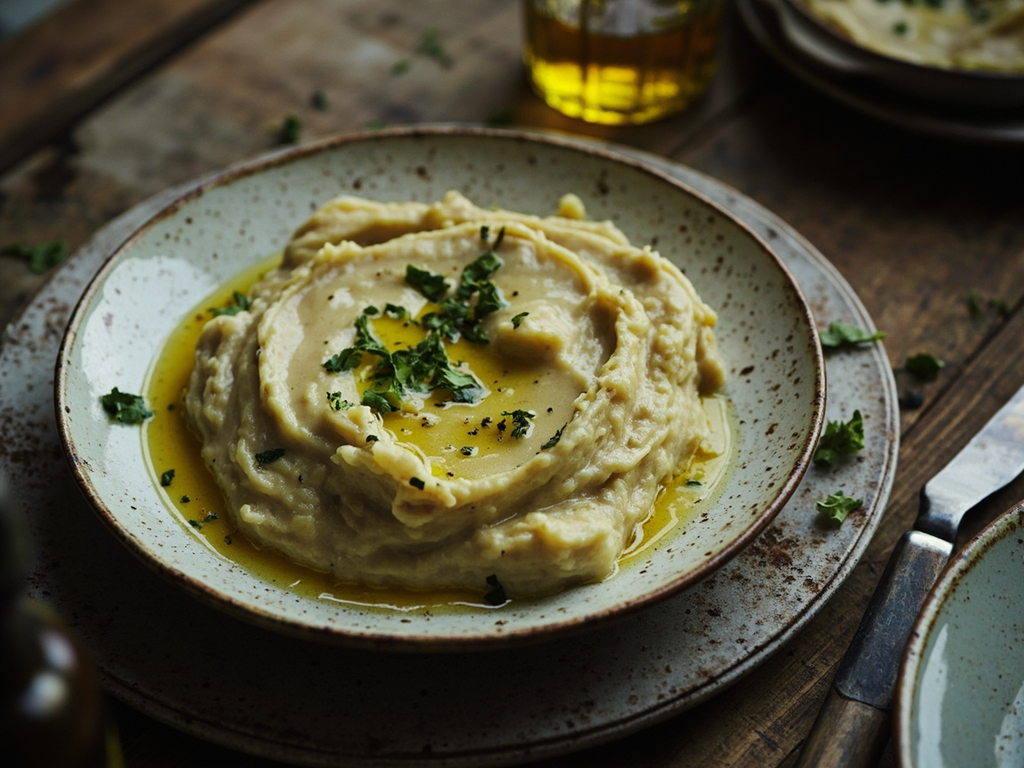
flipMashed Jerusalem artichokes with olive oil
Mashed Jerusalem artichokes with olive oil
Why this dish? Like all French people under the Occupation, Moulin endured strict rationing: poor-quality bread, root vegetables, almost no meat or fat. The Jerusalem artichoke, once fed to pigs, now fed people. His native South (Béziers) allowed him to enhance it with a drizzle of olive oil and garlic rather than ersatz margarine.
A bittersweet mash of Jerusalem artichokes, coarsely crushed, flavored with garlic and bound with olive oil instead of unavailable butter. The quintessential humble dish of those years, saved by the hand of the South.
You see, before the war they said this tuber was fit for beasts; today it is fit for us, and we make do without complaint. I boil it in plenty of water, mash it with a fork, and for lack of butter — which none of us see anymore — I pour in olive oil from home, a rubbed clove of garlic, a little salt if any remains at the bottom of the sachet. It is nothing, and yet it is the meal of a people who hold firm. Believe me, one learns to find taste in sobriety.
- •Jerusalem artichokes — a full basket (base of the dish)
- •Olive oil from the South — a drizzle (substitute fat)
- •Garlic — one or two cloves (flavor)
- •Salt — according to ration (seasoning)
Mashed Jerusalem artichokes with olive oil
A bittersweet mash of Jerusalem artichokes, coarsely crushed, flavored with garlic and bound with olive oil instead of unavailable butter. The quintessential humble dish of those years, saved by the hand of the South.
Why this dish? Like all French people under the Occupation, Moulin endured strict rationing: poor-quality bread, root vegetables, almost no meat or fat. The Jerusalem artichoke, once fed to pigs, now fed people. His native South (Béziers) allowed him to enhance it with a drizzle of olive oil and garlic rather than ersatz margarine.
You see, before the war they said this tuber was fit for beasts; today it is fit for us, and we make do without complaint. I boil it in plenty of water, mash it with a fork, and for lack of butter — which none of us see anymore — I pour in olive oil from home, a rubbed clove of garlic, a little salt if any remains at the bottom of the sachet. It is nothing, and yet it is the meal of a people who hold firm. Believe me, one learns to find taste in sobriety.
Ingredients (period version)
- Jerusalem artichokes — a full basket (base of the dish)
- Olive oil from the South — a drizzle (substitute fat)
- Garlic — one or two cloves (flavor)
- Salt — according to ration (seasoning)
Ingredients
- Jerusalem artichokes — 800 g (base of the dish)
- Extra virgin olive oil — 4 tbsp (binder and flavor)
- Garlic — 2 cloves (flavor)
- Salt, pepper — to taste (seasoning)
- Flat-leaf parsley — a few sprigs (fresh finish)
Method
- Scrub and peel the Jerusalem artichokes (a paring knife is enough; their skin is thin).
- Cut into pieces and cook for 20 to 25 minutes in boiling salted water, until easily crushed.
- Drain, then coarsely mash with a fork to keep some texture.
- Stir in the olive oil in a stream and the finely chopped garlic (or confit in warm oil for milder flavor).
- Season with salt and pepper, sprinkle with parsley, and serve hot.
How it was made : For lack of butter and milk (severely rationed), Occupation-era purées were made with cooking water, ersatz margarine, or, in the South, with olive oil still locally available. Jerusalem artichokes and swedes, 'fodder' vegetables, became the forced daily fare for millions of French people.
The contemporary twist : A spoonful of roasted Jerusalem artichokes kept crispy, placed on the smooth purée: the same vegetable, two textures, to reconcile generations with this historically unloved ingredient.
Jean Moulin · Charactorium