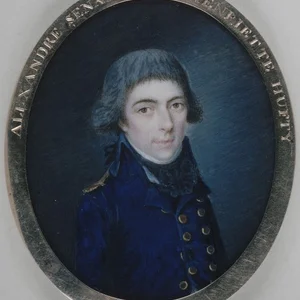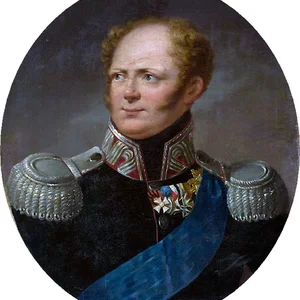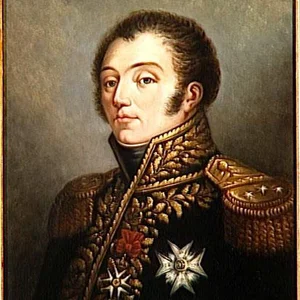

French divisional general of the Napoleonic Wars. He took part in the major campaigns of the Empire and died at Burgos in Spain during the Peninsular War.
Jean-Pierre Firmin Malher(1761 — 1808)
Jean-Pierre Firmin Malher
France
8 min read
Frequently asked questions
Key Facts
- Divisional general under the Napoleonic Empire
- Participated in French military campaigns across Europe
- Died at Burgos in Spain during the Peninsular War (1808–1814)
- Served as part of the French expeditionary force in the Iberian Peninsula
Works & Achievements
Malher took part in the Revolutionary Wars on the Rhine and Italian fronts, where he built his reputation as a courageous soldier and rose steadily through the ranks. These campaigns forged the generation of generals who would bring glory to the Empire.
Malher participated in the great Napoleonic campaigns against the European coalitions (Austria, Prussia, Russia), during which he commanded entire divisions and demonstrated his mastery of Napoleonic tactics.
Deployed to Spain during Napoleon's intervention to restore French dominance following the defeat at Bailén, Malher commanded a division in the operations to reconquer northern Spain until his death at Burgos on 19 October 1808.
Anecdotes
Jean-Pierre Firmin Malher is one of those soldiers of the Revolution who climbed every rung of the military hierarchy through merit and bravery. Born in 1761, he enlisted as a common soldier before the French Revolution opened the doors of command to men of the people, replacing the émigré noble officers with leaders risen from the ranks.
A divisional general under the Empire, Malher took part in the great Napoleonic campaigns across Europe, serving alongside the marshals and columns of the Grande Armée. His career perfectly embodies what Napoleon called the "marshal's baton in every soldier's knapsack" — the idea that any courageous soldier could theoretically rise to the highest ranks.
In 1808, Napoleon decided to install his brother Joseph as King of Spain, triggering fierce popular resistance. Malher was sent to the Iberian Peninsula with the French army, in what many officers quickly came to see as an endless grinding conflict. He died at Burgos on October 19, 1808, carried off by disease or combat, far from the glorious battlefields of Austerlitz or Jena.
The Peninsular War
which Napoleon himself would describe from Saint Helena as the Spanish ulcer (
the ulcer that destroyed me
)
claimed the lives of dozens of French generals like Malher. These men
hardened by conventional European battles
found themselves helpless against guerrilla warfare: armed peasants striking from ambush
backed by Wellington
s British forces and an entire nation in revolt."
Primary Sources
The movement orders and situation reports transmitted by the imperial headquarters mention the divisional generals engaged in the Spanish campaign in the autumn of 1808, including the forces operating around Burgos and the Ebro valley.
Accounts by imperial staff officers present in Spain in 1808 describe the conditions of the campaign, Spanish resistance, and the losses suffered by the French army in the north of the peninsula, particularly around Burgos.
The service records held at Vincennes document the campaigns, promotions, and circumstances of death of divisional generals of the Republic and the Empire, making it possible to trace Malher's complete career.
The official bulletins published by the imperial secretariat report on military operations in Spain and mention senior officers put out of action during battles and sieges in the Burgos and Castile region.
Key Places
City in northern Spain where Malher died on October 19, 1808. Burgos was a major strategic hub on the road to Madrid; its fortress and Gothic cathedral made it a coveted position, the scene of fierce fighting during the Peninsular War.
Institution founded by Louis XIV, which became under the Revolution and the Empire the foremost seat of the French army. The names of generals who died for France are inscribed there, and great military figures such as Malher are honored in this national memorial.
The theater of the early Revolutionary Wars, where soldiers of the Republic first proved themselves against the coalition armies of Austria and Prussia. It was on these fronts that men like Malher demonstrated their abilities and climbed the military ranks.
Spanish capital where the Dos de Mayo uprising broke out on May 2, 1808, against the French occupation. This popular revolt marked the beginning of the Peninsular War, in which Malher was engaged during his final campaign.
Typical Objects

National blue coat with gold embroidery on the collar, lapels and sleeves, gold-fringed epaulettes indicating rank. The major general is distinguished by his two stars and tricolor sash worn en sautoir.

Curved sabre with a slightly curved blade, gilt brass hilt, and sharkskin-wrapped grip. Both a parade weapon and a combat arm, it was the symbol of authority carried by general officers on horseback.

Two-cornered hat worn front-facing or sideways depending on rank, adorned with a blue-white-red cockade and sometimes a plume. A distinctive mark of Napoleonic army officers, made famous by Napoleon's own hat.

Copper-engraved map of the theatre of operations, essential for a general planning troop movements, selecting positions and coordinating columns. Maps of Spain in 1808 were often incomplete, hampering French commanders.

Standard flintlock pistol of the French army, with a smooth barrel of approximately 20 cm, wooden stock and steel lock. Carried in pairs in the saddle holsters, it served as the close-range defensive weapon of the mounted officer.

Monocular brass telescope with sliding tubes, allowing a general to observe the battlefield from an elevated position. An essential tool of Napoleonic command for assessing enemy positions and directing movements.

Official document signed by the First Consul and later the Emperor, confirming appointment to the rank of major general. These parchment commissions bore the imperial seal and Napoleon's signature, bearing witness to the military meritocracy of the era.
School Curriculum
Vocabulary & Tags
Key Vocabulary
Daily Life
Morning
General Malher rises before dawn during campaigns, as most officers of the Grande Armée do. He receives overnight reports from his aides-de-camp, studies maps, and drafts movement orders for the brigades under his command. Coffee, scarce and precious in the field, is a luxury that generals allow themselves thanks to their quartermasters.
Afternoon
Afternoons on campaign are devoted to mounted reconnaissance, troop inspections, and coordination with other divisions. At garrison or headquarters, the general receives his officers, relays directives from the army corps, and corresponds with the imperial staff. In Spain in 1808, these afternoons are often shadowed by anxiety: the roads are unsafe, and guerrillas can strike from anywhere.
Evening
Napoleonic generals typically dine at the army corps commander's table or in their own officers' mess. Meals are an opportunity to discuss the military situation and the next day's plans. Like his peers, Malher dictates personal correspondence to his secretary and may read newspapers or letters from France when dispatches manage to reach the Spanish front.
Food
On campaign, the general's diet depends on what his foragers and personal quartermaster can find. In Spain in 1808, supplies are difficult to secure: the French armies suffer from guerrilla activity that cuts their supply lines. Generals eat coarse bread, salt meat, local vegetables, and drink requisitioned Spanish wine. At garrison, meals are more refined — roast meat, thick soups, and white bread.
Clothing
On duty, the general wears the full uniform of a divisional general: blue coat with gold embroidery, white breeches or grey riding trousers, and riding boots. On campaign, he often adopts a grey greatcoat or overcoat to protect against the elements, much like Napoleon himself. The upkeep of one's uniform is a matter of authority: a poorly dressed general loses the respect of his troops.
Housing
In Paris or at garrison, divisional generals lodge in private townhouses or bourgeois apartments rented at their own expense, sometimes in requisitioned military buildings. On campaign, they occupy the finest houses in a town or village — sometimes requisitioned châteaux or convents. In Spain, where the population is often hostile, French generals sleep in hastily fortified buildings, with a permanent guard to protect against nighttime guerrilla attacks.
Historical Timeline
Period Vocabulary
Liens externes & ressources
Références
Œuvres
Campagnes des armées de la République (1792-1799)
1792-1799
Campagnes de l'Empire en Europe centrale
1805-1807