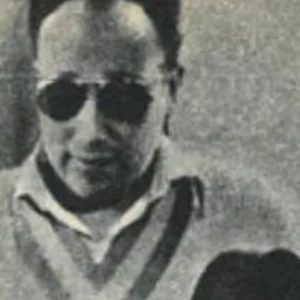

Jean-Pierre Melville, whose real name was Jean-Pierre Grumbach, was a French filmmaker and a major figure of film noir and the French crime film. Independent and ahead of his time, he had a profound influence on the French New Wave.
Jean-Pierre Melville(1917 — 1973)
Jean-Pierre Melville
France
6 min read
Frequently asked questions
Key Facts
- Born in 1917 in Paris under the name Jean-Pierre Grumbach, died in 1973
- A volunteer soldier during World War II and a member of the Resistance, he adopted the pseudonym “Melville” in tribute to the American writer Herman Melville
- Directed “The Silence of the Sea” (1949), an adaptation of Vercors's novel about the Resistance
- Filmed “Le Samouraï” (1967) with Alain Delon, a cult classic of minimalist crime cinema
- Created his own studios on the Rue Jenner in Paris, a symbol of his independence from the system
Works & Achievements
A striking first feature film, adapted from Vercors and shot almost clandestinely; it established Melville as an independent and demanding filmmaker.
An adaptation of Jean Cocteau's novel, with Cocteau himself contributing to the screenplay; an intense work about childhood and emotional confinement.
A Parisian crime film shot in Montmartre and Pigalle, often cited as a direct precursor to the French New Wave.
A film noir starring Jean-Paul Belmondo, exploring deception and loyalty within the criminal underworld, with a title drawn from slang.
Starring Lino Ventura, a high point of Melvillian crime cinema centered on honor and betrayal among gangsters.
Starring Alain Delon as a solitary, silent hitman, this cult film's pared-down style influenced cinema worldwide.
A tribute to the French Resistance, drawn from his own experience as a fighter, considered one of his masterpieces.
A major success bringing together Delon, Bourvil, and Montand around a meticulous heist; the peak of his formal mastery.
Anecdotes
Born Jean-Pierre Grumbach, the filmmaker chose the pseudonym “Melville” out of admiration for the American writer Herman Melville, author of Moby Dick. A passionate lover of American literature and cinema, he signed his entire career with this borrowed name.
During the Second World War, Grumbach, who came from an Alsatian Jewish family, joined the Resistance and then the Free French Forces. He took part in the Italian campaign and the 1944 landing in Provence: this experience would later feed into his film *Army of Shadows*.
Refusing the constraints of the big production houses, Melville set up his own Jenner Studios in Paris, on rue Jenner. In 1967, a fire ravaged the place where he shot his films and stored his archives, destroying part of his equipment and reels of film.
In 1960, the young Jean-Luc Godard gave him a small role in *Breathless*: Melville plays a famous writer, Parvulesco. When a journalist asks him about his greatest ambition, he answers, mischievously: “To become immortal… and then to die.”
Melville cultivated an instantly recognizable look, mirroring his crime-film heroes: a wide-brimmed Stetson hat, dark Ray-Ban glasses and a taste for big American cars. This cool elegance became the trademark of his cinema.
Primary Sources
There is no greater solitude than that of the samurai, unless it be that of a tiger in the jungle… perhaps.
— What is your greatest ambition in life? — To become immortal, and then to die.
A book of interviews in which Melville details his method, his admiration for American cinema, and his conception of the crime film as a tragedy of solitude.
A clandestine Resistance story that Melville brought to the screen, portraying the silence of an old man and his niece confronted with a German officer billeted in their home.
Key Places
Melville's birthplace and the city where he died, where he lived and worked his entire life. His films unfold a nocturnal, stylized Paris that feels almost unreal.
A film studio that Melville founded and ran himself in order to stay independent. A fire caused heavy damage there in 1967.
The region where Melville, serving in the Free French Forces, took part in the Allied landings and the liberation of southern France.
A stage in his service with the Free French during the war, where volunteers who had rallied to the fight against the occupier gathered.
Home of the international film festival, a showcase for auteur cinema where Melville's critical recognition was forged.
Typical Objects

A wide American felt hat that Melville wore at all times and imposed on many of his characters. It became the symbol of his cold elegance and of the world of film noir.

Dark sunglasses that Melville almost never took off, to the point of wearing them indoors. They reinforced his aura of mystery and that of his impassive heroes.

The pale trench coat, worn notably by Alain Delon in *Le Samouraï*, is the uniform of Melville's lone killer. It embodies the anonymous, unsettling silhouette of the crime thriller.

The central tool of his work, which he handled as an independent craftsman in his own studios. Melville crafted every frame with almost obsessive rigor.

A recurring weapon in his crime films, wielded by gangsters and cops torn by a code of honor. In Melville's work, the weapon speaks of fate more than of gratuitous violence.

Melville had a passion for American automobiles, a reflection of his love for the United States and their cinema. Vehicles hold an important place in the staging of his crime thrillers.
School Curriculum
Vocabulary & Tags
Key Vocabulary
Daily Life
Morning
Something of a night owl, Melville rose late and devoted the start of his day to reading scripts and scouting his projects. He liked to spend long hours on the phone with his collaborators preparing the work ahead.
Afternoon
Much of his afternoons unfolded at his Jenner Studios, where he oversaw shoots, editing, and lighting tests. A craftsman-filmmaker, he personally controlled every detail of how his films were made.
Evening
In the evening, he often carried his work late into the night, screening films — American ones in particular, of which he was a devoted fan. The nocturnal crime dramas he filmed mirrored his own rhythm of life.
Food
Like many Parisians of his time, he took his meals as the work allowed, often in brasseries or grabbed on the go between two scenes. Coffee and cigarettes accompanied his long days of shooting.
Clothing
His look had become legendary: a wide-brimmed Stetson hat, dark glasses, and a light-colored coat or raincoat. He cultivated an understated American elegance, much like the heroes of his films.
Housing
He lived and worked in Paris, as close as possible to his Jenner Studios, which formed the heart of his world. This Parisian anchoring, between apartment and studio, structured his entire existence as an independent author.
Historical Timeline
Period Vocabulary
Liens externes & ressources
Références
Œuvres
Le Silence de la mer
1949
Les Enfants terribles
1950
Bob le flambeur
1956
Le Deuxième Souffle
1966
L'Armée des ombres
1969