
Jean Rousseau (1644-1699) was a French musician and music theorist, specialist of the viola da gamba. He is the author of the *Traité de la viole* (1687), a landmark reference work on the technique and history of the instrument in the seventeenth century.
Jean Rousseau(1644 — 1699)
Jean Rousseau
France
8 min read
Frequently asked questions
Key Facts
- Born in 1644, probably in Paris
- Published the *Traité de la viole* in 1687, a major source on viola da gamba practice
- Active in Parisian musical circles during the reign of Louis XIV
- Died in 1699; not to be confused with Jean-Jacques Rousseau (1712-1778) or the senator of the same name under the First Empire
Works & Achievements
Jean Rousseau's masterwork, this treatise is the first comprehensive method in French devoted to the viol da gamba. In it he sets out the history of the instrument from its origins, the rules of its construction, playing techniques (bow hold, fingerings, ornaments) and the principles of basso continuo, making it an indispensable reference for musicologists and gambists to this day.
Anecdotes
Jean Rousseau published his *Traité de la viole* in 1687, the very year of Lully's death. Just as the 'superintendent of the king's music' had passed away, Rousseau chose to defend the viol da gamba against the growing rise of the violin, which he considered less noble and less expressive. This courageous stance reflects the intense musical debate stirring the court of Louis XIV.
In his *Traité*, Rousseau describes with remarkable precision the different sizes of viols that make up the instrument family: the treble, the tenor, and the bass viol. He devotes many pages to bowing technique and the art of ornamentation, arguing that mastering the viol requires years of study and a musical sensitivity that few instruments demand.
Rousseau was one of the first theorists to systematically document the history and craftsmanship of the viol da gamba. He gathered accounts of instrument construction from the luthiers of his day, making his treatise a valuable source not only for musicians but also for historians and instrument makers in the centuries that followed.
At a time when Louis XIV himself was passionately devoted to music and surrounded his court with the finest musicians in the kingdom, Jean Rousseau sought to convince aristocrats and discerning amateurs that the viol da gamba, with its soft and velvety tone, was the ideal instrument for expressing the most subtle feelings of the human soul.
Primary Sources
The Viol is without question the most perfect of all Instruments, not only because of the sweetness and pleasantness of its sound, but also because of the great range of its tones and the ease with which it adapts to all kinds of music.
The bow is the soul of the Viol: it is through the bow that one gives sound to the instrument, and it is through the manner of guiding it that one expresses the different characters of music — sweetness, tenderness, vivacity, and strength.
The bass viol is tuned in four minor thirds and two fourths: D, G, C, E, A, D. This tuning, different from that of the violin, gives the instrument a harmonic fullness that allows it to sustain a basso continuo on its own.
Ornaments are the adornment and soul of music. Without them, the melody remains bare and graceless; it is through them that the viol player touches the heart and holds the attention of those who listen.
Key Places
The center of French musical life in the 17th century, Paris is the city where Jean Rousseau worked as a musician and theorist. It is here that he published his *Traité de la viole* in 1687 with the printer Christophe Ballard, the king's official music publisher.
The royal residence of Louis XIV and the nerve center of French Baroque music. The Versailles court attracted the finest musicians in the kingdom and set the standard of musical taste that Rousseau sought to serve through his teaching.
An institution founded in 1669 by Louis XIV, and an emblematic venue of Parisian musical life during the Grand Siècle. Jean Rousseau moved in these official musical circles, where the viola da gamba held an important place as a continuo instrument.
Typical Objects

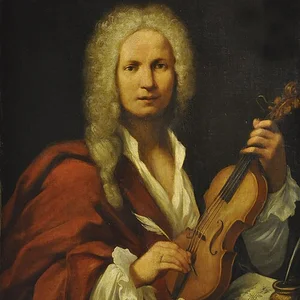
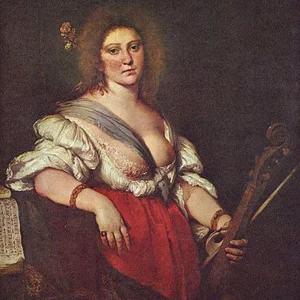
A bowed string instrument with six gut strings, held vertically between the legs (*da gamba*). It is Jean Rousseau's primary instrument, and he describes its construction, tuning, and technique in meticulous detail in his *Treatise*.

A wooden stick strung with horsehair, used to set the viol's strings in vibration. The 17th-century bow is slightly convex and shorter than its modern counterpart, producing the soft, silky tone characteristic of the French Baroque style.

A printed work published in Paris by Christophe Ballard in **1687**, and the first systematic method in French devoted to the viol. It covers the instrument's history, construction, tuning, and technique.

A system of musical notation specific to the viol, indicating which fingerings to use on the strings rather than abstract pitches. Inherited from the lute, tablature was still used in the 17th century to notate certain French pieces.

A plant-based resin applied to the bow hair to increase grip on the strings and produce a fuller sound. In his *Treatise*, Rousseau emphasizes the importance of regularly maintaining one's bow in order to preserve sound quality.

A piece of furniture on which the musician rests scores or tablatures while playing. In the 17th century, music stands were often ornately crafted and formed part of the refined furnishings found in aristocratic drawing rooms and royal chapels where concerts took place.
School Curriculum
Vocabulary & Tags
Key Vocabulary
Daily Life
Morning
Jean Rousseau begins his day by tending to his viola da gamba: he checks the tuning of the six gut strings, often thrown off by the fluctuations of temperature and humidity in Paris, and warms up his fingers with scales and technical exercises. In the noisy, bustling Paris of the seventeenth century, he seeks a quiet moment before receiving his students.
Afternoon
The afternoon is devoted to teaching and to writing his treatise. Rousseau receives students from the nobility or the cultivated bourgeoisie, who regard the viola da gamba as a mark of refinement and education. He teaches them the fundamentals of playing, bow technique, and the ornaments characteristic of the French style.
Evening
In the evening, Jean Rousseau takes part in private concerts in Parisian salons or the music academies that were flourishing at the time. These musical gatherings, organised by wealthy patrons, provide opportunities to perform chamber pieces combining voices, harpsichord, and stringed instruments, with the viola da gamba holding the basso continuo or carrying expressive solo parts.
Food
Like any professional Parisian musician of the seventeenth century, Jean Rousseau eats white bread, roasted meats, market vegetables, and wine diluted with water. Meals are taken at regular hours, often in the company of fellow musicians or students, in an atmosphere of conviviality and artistic discussion.
Clothing
As a professional musician who moves in salon circles and occasionally at court, Jean Rousseau wears the codified dress of the *Grand Siècle*: a justaucorps of wool broadcloth or velvet, silk stockings, a powdered wig, and a wide-brimmed hat. His careful appearance reflects the concern for social respectability among musicians who aspire to be recognised as fully-fledged artists.
Housing
Jean Rousseau most likely lives in a bourgeois dwelling in one of Paris's musical neighbourhoods, perhaps near the Faubourg Saint-Germain or the Marais, areas favoured by artists and men of letters. His apartment includes a workroom where his viola da gamba and scores take pride of place, as well as a small library of musical treatises and works of music theory.