 flip
flipSoupe au Vin Coupé d'Eau
Soupe au Vin Coupé d'Eau
Why this dish? Chroniclers report that Joan ate very sparingly: bread dipped in wine heavily diluted with water, refusing the feasts of the captains. This very simple gesture—dipping the 'soupe'—was the everyday fare of Lorraine peasants and hers even under arms.
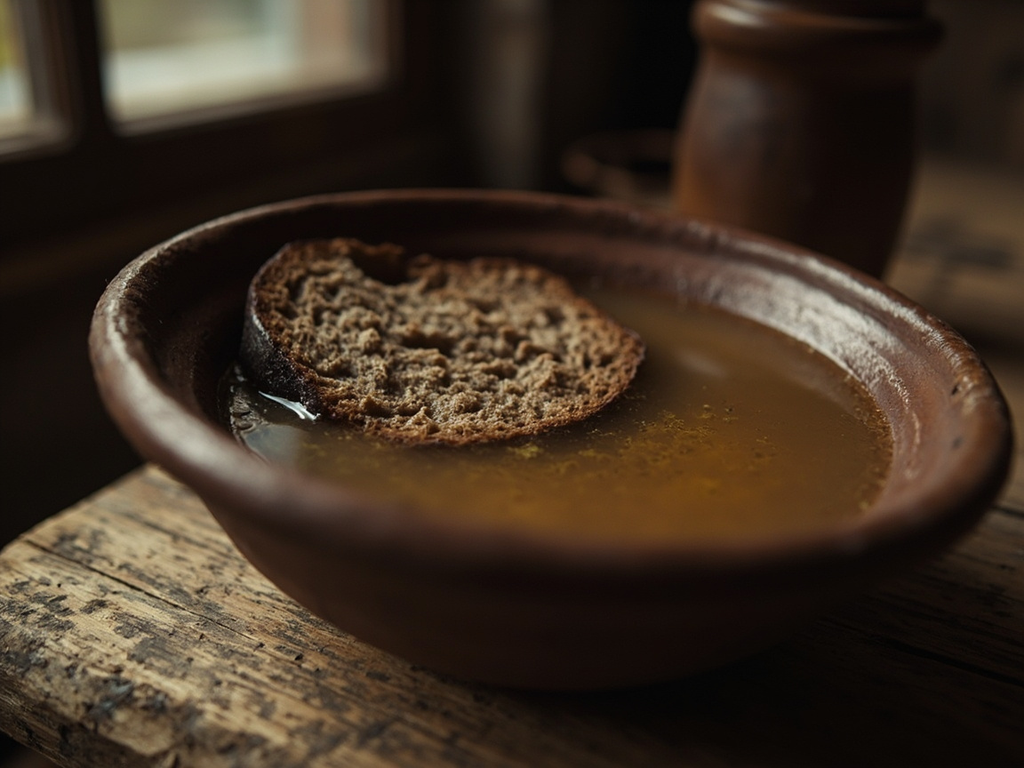
A thick slice of coarse rye bread placed at the bottom of a bowl, drizzled with red wine heavily diluted with water, left to soak until tender. Austere and thirst-quenching, it is less a dish than a daily ritual.
Messire Dieu first served, and the belly after. I am but a girl from the fields of Domrémy: a hunk of rye in the bottom of my bowl, wine so drowned with water that it cannot intoxicate, and that is my common fare. The captains pressed me to sit at their great tables, but I told them war is not won with a belly full of feasts. Dip your bread as I did, let it drink its fill, and eat while thinking of something greater than yourself.
- •Stale rye bread — one thick slice (base for soaking)
- •Red wine — a finger's depth in the bowl (soaking liquid)
- •Spring water — two to three times the wine (to cut the wine)
Soupe au Vin Coupé d'Eau
A thick slice of coarse rye bread placed at the bottom of a bowl, drizzled with red wine heavily diluted with water, left to soak until tender. Austere and thirst-quenching, it is less a dish than a daily ritual.
Why this dish? Chroniclers report that Joan ate very sparingly: bread dipped in wine heavily diluted with water, refusing the feasts of the captains. This very simple gesture—dipping the 'soupe'—was the everyday fare of Lorraine peasants and hers even under arms.
Messire Dieu first served, and the belly after. I am but a girl from the fields of Domrémy: a hunk of rye in the bottom of my bowl, wine so drowned with water that it cannot intoxicate, and that is my common fare. The captains pressed me to sit at their great tables, but I told them war is not won with a belly full of feasts. Dip your bread as I did, let it drink its fill, and eat while thinking of something greater than yourself.
Ingredients (period version)
- Stale rye bread — one thick slice (base for soaking)
- Red wine — a finger's depth in the bowl (soaking liquid)
- Spring water — two to three times the wine (to cut the wine)
Ingredients
- Sourdough rye bread (stale, one day old) — 2 thick slices (base)
- Light red wine — 10 cl (soaking liquid)
- Water — 25 cl (to cut the wine)
- Honey (optional) — 1 tsp (to sweeten, for children)
Method
- Cut the rye bread into thick slices and let them dry for a few hours.
- Mix the wine and water in a bowl: the mixture should be pale, barely tinted.
- Place the bread at the bottom of a deep bowl and pour the diluted wine over it.
- Let the bread absorb the liquid for 2 to 3 minutes, until tender.
- For a children's version, replace all the wine with grape juice diluted with water and a touch of honey.
How it was made : Dipping the 'soupe' (the word first meant the slice of bread, not the broth) was the universal meal of the medieval common people. Wine cut with water was not a luxury but a necessity: since pure water was often suspect, it was sanitized with a little wine. Joan's frugality, noted by her contemporaries, contrasted sharply with the gluttony of the camps.
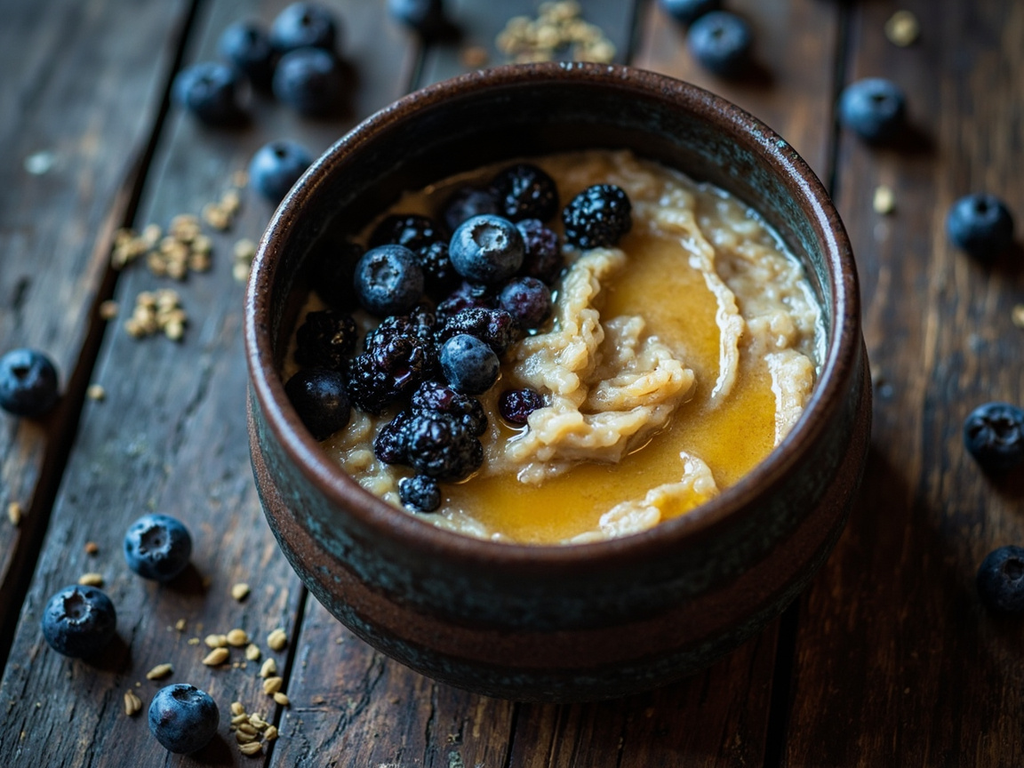
The contemporary twist : Serve a 'children's version' with warm grape juice and honey in a small terracotta bowl: a sweet 'golden soup' that tells the story of the Domrémy table.
Sources : Procès de réhabilitation de Jeanne d'Arc (témoignages sur sa sobriété) · Bruno Laurioux, Manger au Moyen Âge, Hachette, 2002
Joan of Arc · Charactorium