 flip
flipRiver Pike with Green Sauce
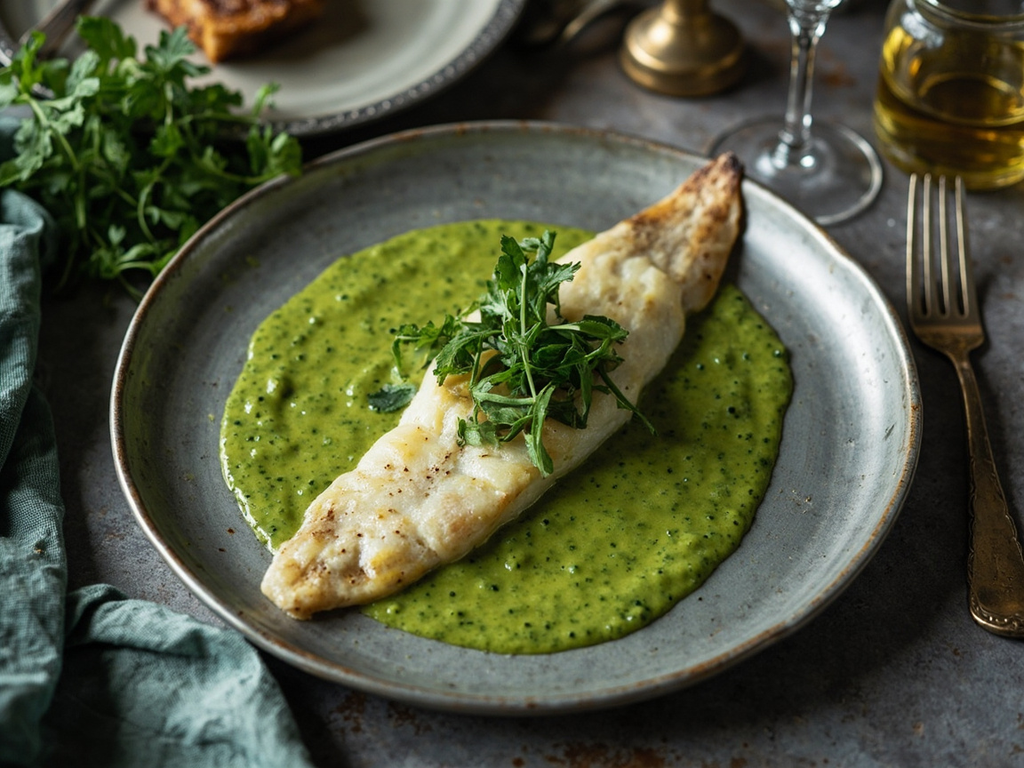
River Pike with Green Sauce
Why this dish? Louis IX fasted frequently and scrupulously observed lean days, multiplying abstinences beyond what the Church required. River fish with a tart green sauce made with verjuice was the everyday fare on these many meatless days, when the king set an example of Christian sobriety.
Poached freshwater fish, coated with a bright green sauce of fresh herbs (parsley, sage) bound with breadcrumbs and sharpened with verjuice, lively with ginger.
On those days that the Church commands to keep lean—and I keep them more often than required, for fasting tames the flesh and lifts the soul—no meat appears at my table. I am served pike taken from my rivers, and over it this green sauce that my people grind in a mortar: parsley, sage, breadcrumbs, and good sourness of verjuice that awakens the taste without offending abstinence. Believe me, simple is this dish, but no banquet equals the peace of a heart that knows how to deny itself.
- •Pike or tench from the river — a fine fish (base, permitted on lean days)
- •Parsley and sage — large handful (green color and flavor)
- •Breadcrumbs — a few crusts (sauce binder)
- •Verjuice — as needed (acidity)
- •Ginger — a pinch (warm spice)
- •Salt — as needed (seasoning)
River Pike with Green Sauce
Poached freshwater fish, coated with a bright green sauce of fresh herbs (parsley, sage) bound with breadcrumbs and sharpened with verjuice, lively with ginger.
Why this dish? Louis IX fasted frequently and scrupulously observed lean days, multiplying abstinences beyond what the Church required. River fish with a tart green sauce made with verjuice was the everyday fare on these many meatless days, when the king set an example of Christian sobriety.
On those days that the Church commands to keep lean—and I keep them more often than required, for fasting tames the flesh and lifts the soul—no meat appears at my table. I am served pike taken from my rivers, and over it this green sauce that my people grind in a mortar: parsley, sage, breadcrumbs, and good sourness of verjuice that awakens the taste without offending abstinence. Believe me, simple is this dish, but no banquet equals the peace of a heart that knows how to deny itself.
Ingredients (period version)
- Pike or tench from the river — a fine fish (base, permitted on lean days)
- Parsley and sage — large handful (green color and flavor)
- Breadcrumbs — a few crusts (sauce binder)
- Verjuice — as needed (acidity)
- Ginger — a pinch (warm spice)
- Salt — as needed (seasoning)
Ingredients
- Pike, zander, or trout fillets — 4 fillets (base)
- Flat-leaf parsley — 1 large bunch (color, flavor)
- Fresh sage — 6 leaves (aromatic bitterness)
- Stale breadcrumbs — 40 g, soaked (binder)
- Verjuice (or green grape juice / mild diluted vinegar) — 5 tbsp (acidity)
- Ground ginger — 1/2 tsp (spice)
- Salt — to taste (seasoning)
Method
- Poach the fish fillets for 5–6 minutes in simmering lightly salted water, then keep warm.
- In a blender (or mortar), blend the parsley, sage, squeezed breadcrumbs, verjuice, and ginger until a bright green, smooth sauce forms.
- Add salt; thin with a little cooking water if the sauce is too thick—it should coat a spoon.
- Arrange the warm fish (the green sauce is not heated, to preserve its color) and spoon generously over it.
How it was made : Green sauce ("vert-sauce") appears in all major medieval collections: it was served cold on fish on lean days. Verjuice—juice of unripe grapes—was the reigning souring agent of medieval cuisine, long before lemon and vinegar became widespread.
The contemporary twist : Blended smoother and emulsified with oil, this medieval green sauce is the direct ancestor of our herb sauces: drizzle it in a swoosh under a seared zander fillet.
Sources : Le Viandier, attributed to Taillevent · Jean de Joinville, Vie de saint Louis (on the king's piety and fasts)
Louis IX (Saint Louis) · Charactorium