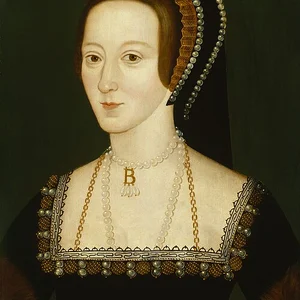

Castilian princess, acknowledged daughter of King Henry IV of Castile, claimant to the throne upon his death in 1474. Her contested legitimacy triggered a war of succession that pitted her against her aunt Isabella the Catholic. Defeated, she withdrew to Portugal where she ended her days.
Joanna la Beltraneja
Joanna of Castile, known as la Beltraneja (Juana la Beltraneja)
6 min read
Frequently asked questions
Key Facts
- Born in 1462, the official daughter of **Henry IV of Castile** and **Joanna of Portugal**.
- Nicknamed “la Beltraneja” by her opponents, who claimed she was the daughter of the royal favorite **Beltrán de la Cueva**, casting doubt on her legitimacy.
- On the death of Henry IV in **1474**, she was proclaimed queen against her aunt **Isabella**, triggering the War of the Castilian Succession (**1475-1479**).
- Backed by King **Alfonso V of Portugal** (whom she married), she was defeated, notably at the Battle of Toro in **1476**.
- The Treaty of Alcáçovas (**1479**) sealed her defeat; she retired to a convent in Portugal, where she died in **1530**.
Works & Achievements
The first official act recognizing her right to the throne, sworn to by the kingdom's nobles — the foundation of her future claim.
A dynastic alliance meant to unite Portugal to her cause and open her path to the Castilian throne.
In the name of her legitimacy, she became the banner of a noble faction and of the Portuguese army against Isabella and Ferdinand.
For half a century she went on signing “Yo la Reina”, keeping alive the challenge to Isabella's legitimacy.
A choice imposed by the Treaty of Alcáçovas, which ended her active political career while symbolically preserving her dignity.
Anecdotes
Her nickname "la Beltraneja" comes from a court rumor: her opponents claimed she was not the daughter of King Henry IV — reputed to be incapable of having children and mocked under the nickname "the Impotent" — but rather the daughter of Beltrán de la Cueva, one of the sovereign's favorites. This accusation, never proven, was nevertheless enough to ruin her legitimacy in the eyes of part of the nobility.
At her birth in 1462, **Henry IV** had her solemnly recognized as heir by the Cortes of Castile, and the nobles swore allegiance to her. A few years later, those same nobles retracted their oath and pinned their hopes on the king's half-sister, **Isabella**.
To defend her rights, Joanna married her own uncle in 1475, **King Alfonso V of Portugal**, who was over forty years old while she was thirteen. The marriage required a dispensation from the pope because of their very close kinship.
After her defeat, Joanna withdrew to a convent in Portugal but never gave up her title: until her death, she signed her letters "Yo la Reina" — "I, the Queen" — thus defying **Isabella**, who reigned over Castile.
The conflict over her throne was settled in part by treaty: the text of Alcáçovas (1479) gave her the choice of marrying the future heir of Castile (Isabella's still-infant son) or entering a convent. She chose the cloister, sealing her aunt's victory.
Primary Sources
The king had Princess doña Juana, his daughter, sworn in as queen and heiress of his kingdoms, and all the grandees and prelates pledged obedience and loyalty to her.
Many held it for certain that the queen's daughter was not the king's, and from this came the name by which the people called her.
The king of Portugal entered Castile with his army to defend the cause of doña Juana, whom he had taken as his wife.
It is agreed that doña Juana shall enter religious life in a monastery, or else that she shall wait to marry the heir-apparent of Castile.
Key Places
City in Castile where Joanna was born in 1462 and was first recognized as heir to the throne.
Site of the 1468 pact where Henry IV recognized his half-sister Isabella as heir, removing Joanna from the succession.
Scene in 1476 of the decisive battle of the War of Succession, exploited as a victory by Isabella's camp.
Portuguese town where the treaty ending the war and sealing Joanna's withdrawal was signed in 1479.
Portuguese convent where Joanna retired from 1480 onward, without renouncing her title of queen.
Portuguese capital where Joanna spent the end of her life and died in 1530.
Typical Objects

Personal document through which Joanna, withdrawn to Portugal, kept asserting her claim to Castile by signing as a reigning queen.

Symbol of the throne disputed between Joanna and her aunt Isabella. The object of the conflict that bloodied the peninsula from 1475 to 1479.

Papal document authorizing Joanna's union with her uncle Afonso V despite their close kinship. Its contested validity weakened the marriage's legitimacy.

A 1479 diplomatic parchment that ended the war of succession and sealed Joanna's fate by forcing the convent upon her.

The coarse woolen garment Joanna wore at the monastery of Coimbra, though she never took final vows nor relinquished her title.

A standard bearing the arms of Castile and León, raised by the Portuguese troops and their allies in Joanna's favor during the war.
School Curriculum
Vocabulary & Tags
Key Vocabulary
Daily Life
Morning
As a child and then a young woman of the court, Jeanne began her day with mass and prayers, followed by her grooming, attended to by her ladies-in-waiting. Her mornings were paced by lessons and the obligations of Castilian etiquette.
Afternoon
The afternoon was divided between instruction (reading, religion, deportment) and court audiences or receptions when her rank required it. During the war, her days were dominated by uncertainty and news from the battlefield.
Evening
Evenings were spent in formal meals, music, and conversation at court, under the watchful eye of her governesses. Once she withdrew to the convent, she followed the monastic schedule of the evening offices.
Food
At the Iberian royal table, meats were served (mutton, poultry, game), fish on days of abstinence, white bread, fruits, and preserves, all washed down with wine. Costly spices and sugar marked the rank of the guests.
Clothing
As a princess, she wore heavy gowns of velvet and brocade, adorned with embroidery and jewels, in keeping with the lavish Castilian fashion of the 15th century. At the monastery, she adopted the plain woolen habit of the Poor Clares.
Housing
She first lived in the alcázars and palaces of the Castilian court, with halls decorated with tapestries and azulejos. After 1480, her home was the cell and austere buildings of the Monastery of Santa Clara in Coimbra.
Historical Timeline
Period Vocabulary
Liens externes & ressources
Références
Œuvres
Reconnaissance comme héritière par les Cortès de Castille
1462
Mariage avec Alphonse V de Portugal
1475
Revendication du trône de Castille
1475-1479
Refus persistant d'abdiquer son titre
1479-1530
Retrait au monastère de Coimbra
1480