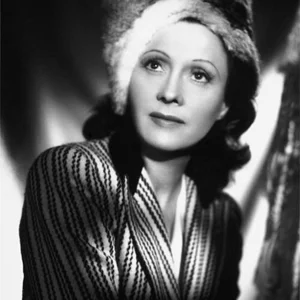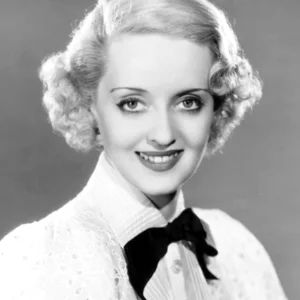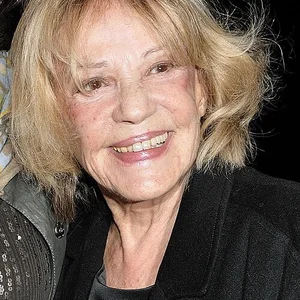

French actress, singer, and director (1928–2017), iconic figure of the French New Wave. Muse of François Truffaut and Louis Malle, she embodied a free and modern femininity in films that have become classics of world cinema.
Jeanne Moreau(1928 — 2017)
Jeanne Moreau
France
8 min read
Frequently asked questions
Famous Quotes
« True courage is to live.»
« I don't play roles, I live lives.»
Key Facts
- Born on January 23, 1928, in Paris; died on July 31, 2017.
- Iconic role in Jules and Jim by François Truffaut (1962).
- Collaboration with Louis Malle on Elevator to the Gallows (1958) and The Lovers (1958).
- Elected to the Académie des beaux-arts in 2000, the first actress to hold a seat there.
- Awarded an honorary César in 1995 and the Prix Lumière in 2016.
Works & Achievements
Jeanne Moreau's first major film role, directed by Louis Malle. A groundbreaking crime thriller whose score was improvised by Miles Davis while watching the rushes, it anticipated the French New Wave.
A Louis Malle film censored in several countries for its candid portrayal of female sexuality. It established Jeanne Moreau as a symbol of the modern, emancipated woman in world cinema.
A film by Peter Brook adapted from Marguerite Duras's novel. Jeanne Moreau won the Best Actress Prize at the Cannes Film Festival, cementing her status as an international actress.
A masterpiece by François Truffaut and an iconic film of the French New Wave. Moreau plays Catherine, a free-spirited and elusive woman, and performs the song 'Le Tourbillon de la vie,' which has become a classic.
An adaptation of Octave Mirbeau's novel by Luis Buñuel, showcasing the breadth of Jeanne Moreau's collaborations with Europe's greatest filmmakers.
An adventure comedy by Louis Malle in which Jeanne Moreau stars alongside Brigitte Bardot. This popular and subversive film was a major commercial success in France and abroad.
Jeanne Moreau's directorial debut, in which she also acts. She explores the lives of four actresses in this semi-autobiographical film, becoming one of the first women in French auteur cinema to step behind the camera.
Anecdotes
Jeanne Moreau was rejected twice by the entrance jury of the Conservatoire national supérieur d'art dramatique in Paris before finally being admitted in 1947. Far from being discouraged, she persevered and became one of the most celebrated actresses of the twentieth century, proving that early setbacks do not define one's destiny.
For Louis Malle's film 'Elevator to the Gallows' (1958), Jeanne Moreau wandered alone through the streets of Paris at night for several hours of filming, while Miles Davis improvised the score by watching the rushes in real time. This bold, experimental approach produced one of the most celebrated film scores in the history of French cinema.
In François Truffaut's 'Jules and Jim' (1962), Jeanne Moreau performs the song 'Le Tourbillon de la vie', composed by Serge Rezvani. The song became a timeless classic covered by generations of artists, illustrating just how thoroughly the French New Wave blended cinema, music, and literature in ways never seen before.
In 1971, Jeanne Moreau signed the 'Manifesto of the 343', published in Le Nouvel Observateur, alongside Simone de Beauvoir and hundreds of other women. By publicly declaring she had had an abortion — then illegal and liable to criminal prosecution — she took a considerable risk to defend women's rights, directly contributing to the shift that would lead to the Veil Act of 1975.
In 1976, Jeanne Moreau took the plunge into directing with 'Lumière', a film she wrote, directed, and starred in. She thus became one of the first French women to helm a feature film in auteur cinema, paving the way for a new generation of filmmakers.
Primary Sources
One million women have abortions every year in France. They do so in dangerous conditions due to the clandestinity to which they are condemned, even though this procedure, performed under medical supervision, is one of the simplest. I declare that I am one of them. I declare that I have had an abortion.
What interests me in cinema is the truth of the moment — that split second when something passes between the actor and the camera that cannot be manufactured. That is why we shoot dozens of takes.
Cinema gave me the freedom to be a woman at a time when that was far from self-evident, and the ability to travel across centuries and cultures. It is an inestimable gift.
I have always chosen my films based on what the character allowed me to explore within myself. Cinema is not a profession — it is a way of being in the world.
Key Places
Birthplace of Jeanne Moreau on January 23, 1928. She grew up in the French capital, which remained the center of her entire professional and artistic life until her death in 2017.
It was at this prestigious institution in the 9th arrondissement that Jeanne Moreau received her theatrical training from 1947 onward, having been rejected twice by the entrance jury.
Jeanne Moreau was a member of the Comédie-Française from 1949 to 1952, honing her craft in classical performance and repertoire before fully embracing cinema.
A landmark of French cinema, these studios hosted the filming of several movies featuring Jeanne Moreau, including some of the masterworks of the French New Wave.
Jeanne Moreau was a regular presence at the festival throughout her career, presenting major films and receiving honorary distinctions that reflected her international stature.
Typical Objects

Jeanne Moreau would read and reread her scripts, covering them with handwritten notes, seeking to understand every line in depth before setting foot on set.

A symbol of her era and of the freewheeling spirit of the New Wave, the cigarette is associated with several of her iconic roles — most notably in *Jules and Jim*, where she plays a woman unbound by convention.

An instrument of freedom central to New Wave filmmaking, the lightweight camera allowed directors such as Truffaut and Malle to shoot on location with Moreau, giving their films a vivid, spontaneous quality.

Jeanne Moreau was also a singer: she recorded several albums and performed "Le Tourbillon de la vie" in *Jules and Jim*, a song that has remained inseparable from her image ever since.

In a celebrated scene from *Jules and Jim*, Jeanne Moreau rides a bicycle — an image of freedom and carefree joy that has become one of the most iconic shots in the history of French cinema.

An emblematic object of filmmaking, the clapperboard marks the start of every take. Over the course of her career, Jeanne Moreau heard thousands of them, from Parisian sets to studios across Europe and America.
School Curriculum
Vocabulary & Tags
Key Vocabulary
Daily Life
Morning
On film sets, Jeanne Moreau rose early to memorize her lines and prepare her scenes in solitude. She placed great importance on concentration before stepping onto the set and refused to be disturbed during her inner preparation.
Afternoon
Afternoons were devoted to shooting, often on location — the New Wave rejected closed studio sets in favor of natural settings. Jeanne Moreau worked in close collaboration with directors, discussing each scene at length along with her character's motivations.
Evening
Night was for Jeanne Moreau a time of intense creative life. She read voraciously — literature, plays, screenplays — and loved hosting artists, writers, and filmmakers at her home. She frequented the cafés and intellectual circles of Saint-Germain-des-Prés, the heart of Parisian cultural life.
Food
Jeanne Moreau was known for her devotion to French gastronomy: she appreciated fine wines, carefully prepared dishes, and meals shared in good company. The table represented for her a place of conviviality and artistic exchange as much as of pleasure.
Clothing
In the 1960s, Jeanne Moreau favored a simple and elegant style, often dressed by leading couturiers such as Pierre Cardin. She embodied the "chic désinvolte" look characteristic of the New Wave: light dresses, well-cut trousers, and silk scarves tied with studied nonchalance.
Housing
Jeanne Moreau lived mainly in Paris, in apartments in the heart of the capital. She also owned a house in Touraine, in the Loire Valley, where she loved to retreat to read, write, and recharge away from the bustle of Parisian life.
Historical Timeline
Period Vocabulary
Liens externes & ressources
Références
Œuvres
Le Journal d'une femme de chambre
1964