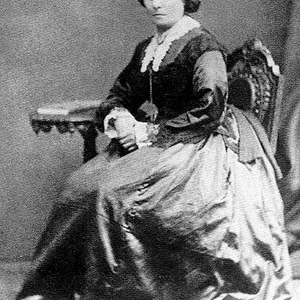

A Prussian aristocrat who became the wife and collaborator of Karl Marx, she shared the couple's exile and poverty in London. For nearly four decades she was the first reader, copyist, and secretary of Marx's work.
Jenny von Westphalen(1814 — 1881)
Jenny Marx
royaume de Prusse
6 min read
Frequently asked questions
Key Facts
- Born in 1814 in Salzwedel (Prussia) into an aristocratic family, the daughter of Baron Ludwig von Westphalen
- Married Karl Marx in 1843 after a long engagement
- Followed Marx into exile in Paris, Brussels, and then London from 1849 onward, living in great hardship
- Copyist and secretary of Marx's manuscripts, including passages of Das Kapital
- Died in December 1881 in London, two months before Karl Marx
Works & Achievements
Transcribing Marx's nearly illegible writing into texts that publishers could read. Invisible work, yet essential to spreading his ideas.
Writing and organizing exchanges with activists and publishers across Europe. Jenny served as secretary and relay for the movement.
Helping prepare clean copies of articles for the press, notably for the New-York Daily Tribune. Her pen helped support the family's income.
A personal account of the hardships of exile and the family's poverty. A precious testimony about daily life among the Marxes.
Maintaining a welcoming home for refugees and activists despite hardship. Liebknecht described her as “the soul of the house.”
Anecdotes
Jenny von Westphalen belonged to the Prussian aristocracy: her half-brother Ferdinand even became Minister of the Interior of Prussia, a political camp opposed to that of her husband. Yet she gave up this privileged milieu to marry Karl Marx, a young intellectual without a fortune, after a seven-year engagement.
For decades, Jenny copied out by hand the nearly illegible manuscripts of Karl Marx to make them readable for publishers. Without this tireless copyist, texts like the drafts of *Capital* would have been very difficult to publish.
In their London exile, the Marx family knew extreme poverty: of their seven children, four died in infancy, for lack of care and means. Jenny once had to pawn her family silver, marked with the Westphalen coat of arms, to buy something to eat.
Jenny did not merely copy: she debated the ideas, managed the political correspondence and sometimes represented Marx. According to Friedrich Engels himself, she was a genuine collaborator in the work, and not a mere self-effacing wife.
When Jenny died of cancer in December 1881, Karl Marx, himself ill, was unable to attend the funeral on his doctors' orders. Engels declared that day: “The Moor is dead too” — Marx survived her by only fifteen months.
Primary Sources
If only I had a little place by your side... but we are apart and I must content myself with writing to you.
Our situation was becoming more and more difficult; daily worries, debts, and illness weighed on us all.
What such a woman, with so clear and critical a mind, with such sure political tact, with such strong energy and passion, accomplished in the workers' movement has not come to light in the public eye.
Madame Marx was the soul of the household; despite their poverty, she knew how to keep it a welcoming home for refugees and friends.
Key Places
Town in northern Germany where Jenny von Westphalen was born in 1814. Her family belonged to the Prussian administrative nobility.
Rhineland city where Jenny spent her youth and met Karl Marx, a neighbor of the family. It was there that their bond first grew.
Refuge of the Marx couple after their expulsion from France in 1845. The city was then home to many German political exiles.
Poor neighborhood where the Marx family endured its deepest hardship in the 1850s. Several of their children died there.
Place where Jenny Marx was buried in December 1881, and where Karl Marx would later rest as well. Engels delivered her eulogy there.
Typical Objects

Everyday tools with which Jenny copied out Marx's manuscripts to make them legible. Her copying work was essential to the publication of his texts.

Cutlery engraved with the arms of her aristocratic family, evidence of her noble origins. Jenny often had to pawn it at the pawnshop to feed the family.

A receipt issued when valuables were pawned for money. These tickets set the rhythm of the Marx family's life in London poverty.

Countless letters exchanged with Karl, Engels and activists across Europe. Jenny often took charge of writing and sending them.

A long, fitted garment, sometimes patched for lack of means, which she kept up with care. It recalled her rank despite material hardship.

A source of light that made possible the long evenings of work and copying. Karl and Jenny often worked late into the night by its glow.
School Curriculum
Vocabulary & Tags
Key Vocabulary
Daily Life
Morning
Jenny rose early to take care of the children and organize the household with their faithful housekeeper Helene Demuth. A large part of the morning was spent managing debts, suppliers, and the bare necessities of the home.
Afternoon
The afternoon was often devoted to copying out Karl's manuscripts and putting his articles into final form. She also handled the correspondence with activists and publishers across Europe.
Evening
In the evening, the couple worked late by lamplight, discussing ideas and political strategy. The house frequently welcomed refugees and friends who came to debate.
Food
During the years of poverty, food was meager: bread, potatoes, and little meat. In more comfortable periods, thanks to inheritances or Engels's help, the meals became more decent.
Clothing
Jenny wore middle-class 19th-century dresses, long and fitted, which she maintained and patched for lack of means. She was determined to keep up a dignified appearance, a legacy of her aristocratic upbringing.
Housing
The family often lived in cramped and unhealthy lodgings, notably two overcrowded rooms in Soho. After an inheritance in 1856, she was able to settle into a healthier house in Kentish Town.
Historical Timeline
Period Vocabulary
Liens externes & ressources
Références
Œuvres
Copie des manuscrits de Karl Marx
1843-1881
Gestion de la correspondance politique
1849-1881
Articles et notes (contributions au travail journalistique de Marx)
années 1850
Esquisse d'une vie mouvementée (notes autobiographiques)
vers 1865
Tenue du foyer des exilés
1849-1881