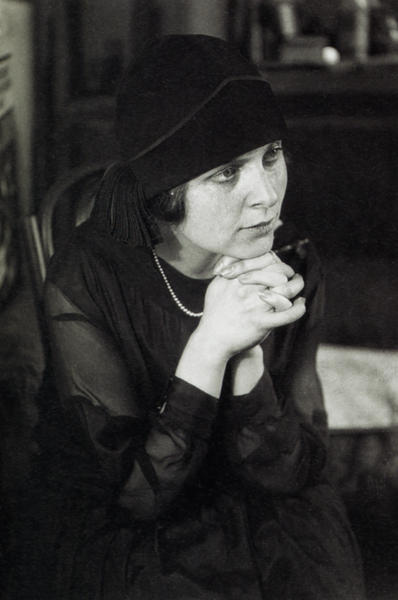
Joan Didion(1934 — 2021)
Joan Didion
États-Unis
9 min read
American writer and journalist (1934-2021), a leading figure of New Journalism. Author of incisive essays on Californian and American society, and of the memoir *The Year of Magical Thinking* on grief.
Frequently asked questions
Famous Quotes
« We tell ourselves stories in order to live.»
« I write entirely to find out what I'm thinking, what I'm looking at, what I see and what it means.»
Key Facts
- Born on December 5, 1934, in Sacramento, California
- Publishes *Slouching Towards Bethlehem* (1968), a landmark collection of New Journalism essays
- Co-writes several Hollywood screenplays with her husband John Gregory Dunne
- Publishes *The Year of Magical Thinking* (2005), National Book Award winner, on the sudden death of her husband
- Dies on December 23, 2021, in New York
Works & Achievements
Didion's first major essay collection, focused on California and the counterculture of the 1960s. It includes her landmark piece on Haight-Ashbury and stands as a classic of New Journalism.
A fragmented novel following Maria Wyeth, an actress adrift in Los Angeles in the late 1960s and early 1970s. Its shattered form and nihilistic tone have made it one of the defining dark novels of contemporary American literature.
Her second major essay collection, whose title essay dissects the unraveling of the 1960s dream. Its opening line — "We tell ourselves stories in order to live" — has become one of the most quoted in American literature.
A firsthand account of El Salvador during its civil war, in which Didion documents state violence and the failure of American policy in Central America. A rare example of political on-the-ground journalism in her body of work.
A collection of essays on American political life from 1988 to 2000, sharply critical of the media's complicity in the electoral spectacle. A piercing analysis of American democracy and its media stagecraft.
A memoir about grieving her husband, John Gregory Dunne, who died suddenly in 2003. Winner of the National Book Award and translated worldwide, it has become a landmark work on grief, memory, and the mind's resistance to accepting loss.
Her second memoir, dedicated to her adopted daughter Quintana Roo, who died in 2005 at the age of 39. Didion reflects on motherhood, aging, and the fragility of life.
Anecdotes
In 1967, Joan Didion traveled to the Haight-Ashbury neighborhood of San Francisco to observe the hippie counterculture. She brought along her five-year-old daughter, Quintana Roo. This piece of reportage, published in 'Slouching Towards Bethlehem', would remain one of the most lucid and unsettling accounts of that generation's illusions.
In 1956, while a student at Berkeley, Didion won the Prix de Paris writing contest organized by Vogue magazine. Her prize was a staff writer position in New York. She joined the editorial team and spent eight years at the magazine, learning the craft of stylistic precision under the constraints of limited space.
On December 30, 2003, her husband and lifelong collaborator, the writer John Gregory Dunne, died suddenly of a heart attack during dinner. Didion processed this grief by writing it: the result was 'The Year of Magical Thinking' (2005), which received the National Book Award. In it, she describes how the mind unconsciously refuses to accept the death of a loved one.
Joan Didion stood under five feet tall and weighed less than a hundred pounds, yet her presence in a literary salon or a newsroom was striking. She was known for carrying a black notebook everywhere, ceaselessly jotting down fragments of conversations, landscapes, and impressions — a working method she described as vital to her mental survival.
Following the September 11, 2001 attacks, Didion published 'Fixed Ideas' and then expanded her reflections in 'Political Fictions' and 'Where I Was From'. She openly criticized the patriotic rhetoric and media passivity in the face of the Bush administration, drawing accusations of anti-Americanism — which left her indifferent, true to her role as an unsparing observer.
Primary Sources
I am a native Californian, and I lose track of what is real. [...] We live entirely, especially if we are writers, on what others have thought; we read in order to know what we think.
Life changes fast. Life changes in the instant. You sit down to dinner and life as you know it ends. The question of self-pity.
We tell ourselves stories in order to live. [...] We interpret what we see, select the most workable of the multiple choices. We live entirely, especially if we are writers, by the imposition of a narrative line upon disparate images.
There is in our political life a growing disconnect between the electoral process as it is practiced and the real concerns of American citizens.
You were the one I wanted when I thought of a child. You were the one I imagined. And you are gone.
Key Places
Joan Didion's birthplace, where she grew up in an old white Protestant California family. Her ambivalent attachment to this state shapes her entire body of work, notably 'Where I Was From'.
Didion studied English there and won the 1956 Vogue contest that launched her career. Berkeley was then a thriving intellectual hub in the years before the great student protests of the 1960s.
The iconic neighborhood of hippie counterculture that Didion explored in 1967 for her landmark piece of journalism. Her lucid and disillusioned look at the Summer of Love in 'Slouching Towards Bethlehem' remains a major historical document.
Didion and her husband John Gregory Dunne settled in this residential neighborhood of Los Angeles in the 1970s. This California setting fed her novel 'Play It As It Lays' and her reflections on American society.
Didion settled in New York with her husband and stayed there until her death in 2021. It was in their New York apartment that John Gregory Dunne suddenly died in 2003, the central event of 'The Year of Magical Thinking'.