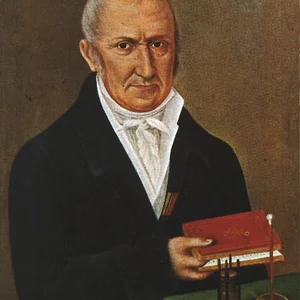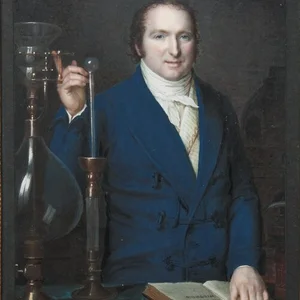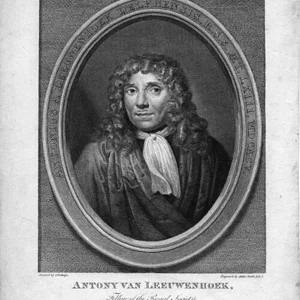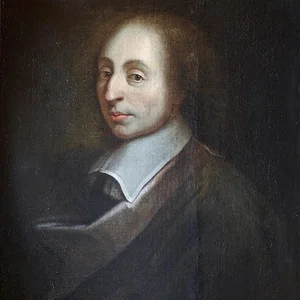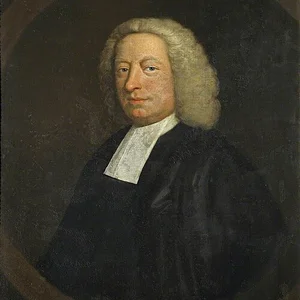

John Colson was an eighteenth-century British mathematician, Lucasian Professor of Mathematics at the University of Cambridge. He is best known for translating Newton's treatise on fluxions into English.
John Colson(1680 — 1760)
John Colson
royaume de Grande-Bretagne
5 min read
Frequently asked questions
Key Facts
- Born in 1680 in Lichfield, England
- Elected a Fellow of the Royal Society in 1713
- Appointed Lucasian Professor of Mathematics at Cambridge in 1739
- Published an annotated English translation of Newton's 'Method of Fluxions' in 1736
- Died in 1760
Works & Achievements
An early work presenting analytical and mechanical methods for solving certain equations, published in the Philosophical Transactions.
His most important work: he made Newton's treatise on the calculus of fluxions accessible in English, with abundant commentary.
A translation of Agnesi's great calculus textbook, for which Colson learned Italian; it remained unpublished until after his death.
As the first master of this school, he trained many pupils in mathematics applied to navigation.
He held one of the most prestigious chairs in the world, once occupied by Newton, until his death.
Anecdotes
Late in his life, when he was already a renowned professor, John Colson learned Italian for the sole purpose of translating the calculus textbook of the Italian mathematician Maria Gaetana Agnesi. This late curiosity shows that you can learn a new language at any age when the passion is there.
While translating Agnesi, Colson committed the most famous translation error in the history of mathematics: he confused the Italian word "la versiera
(the curve) with
l'avversiera
(the witch
the devil
s wife). Ever since
a mathematical curve still bears the strange name of the
witch of Agnesi".
John Colson held the prestigious Lucasian Chair of Mathematics at Cambridge — the same one held by Newton before him and, much later, Stephen Hawking. It is one of the most illustrious scientific posts in the world.
Colson rendered a tremendous service to English science by translating from Latin Newton's treatise on "fluxions
(the ancestor of differential calculus)
published in 1736. Thanks to him
readers who did not master Latin could finally access this revolutionary method.
Before teaching at Cambridge, Colson was the very first master of the Rochester mathematics school, founded to train young people destined for navigation and commerce. He thus spent a large part of his career passing on the sciences to pupils of modest means.
Primary Sources
The Method of Fluxions and Infinite Series; with its Application to the Geometry of Curve-Lines. By the Inventor Sir Isaac Newton. Translated from the Author's Latin Original not yet made publick.
Analytical Institutions, in four books: originally written in Italian, by Donna Maria Gaetana Agnesi... Translated into English by the late Rev. John Colson.
Colson's paper presenting a universal resolution, both analytical and mechanical, of cubic and biquadratic equations, published in the Transactions of the Royal Society.
Key Places
Small cathedral town in central England where John Colson was born in 1680.
Oxford college where Colson studied, though without obtaining a degree there.
School where Colson served as the first master, teaching the mathematics useful for navigation and commerce.
University where Colson held the Lucasian Chair of Mathematics from 1739 and where he died in 1760.
Prestigious British learned society that elected Colson as one of its members in 1713.
Typical Objects

Newton's original text on fluxions was written in Latin, the scholarly language of the time. Colson had to translate it word for word before adding his own commentary.

To write out his translations and calculations, Colson used a goose quill dipped in ink. Every page was the result of long, painstaking work by hand.

Once translated, the works were printed and bound for distribution. The printed book allowed Newton's knowledge to reach many English-speaking readers.

Before calculators, mathematicians and navigators used logarithm tables to simplify long calculations. Colson trained his pupils in Rochester to use them.

The compass and ruler were used to draw the curves studied in the calculus of fluxions. They were essential for illustrating proofs.

As a Cambridge professor in the 18th century, Colson wore a powdered wig and academic gown, marks of his scholarly status.
School Curriculum
Vocabulary & Tags
Key Vocabulary
Tags
Daily Life
Morning
Colson began his day early, in daylight, by reading and correcting mathematical texts in Latin or Italian. Mornings were devoted to intellectual work, when the mind was at its freshest.
Afternoon
In the afternoon, he taught his students or prepared his lessons and translations, pen in hand. At Cambridge, he also took part in the life of the college and in exchanges among scholars.
Evening
In the evening, by candlelight, he continued his translations and kept up a correspondence with other mathematicians. The long winter evenings lent themselves to patient writing.
Food
Like the English academics of his time, he took his meals in the college's common hall: roast meats, bread, light ale, and sometimes tea, then a fashionable drink. The food was plain but regular.
Clothing
He wore the dark attire of men of the Church and of learning: a long frock coat, a collared shirt, and for ceremonies the powdered wig and the academic gown. His dress signalled his rank as a professor.
Housing
As Lucasian Professor, he lodged in the college buildings at Cambridge, in rooms furnished plainly with books, a desk, and a fireplace for the winter.
Historical Timeline
Period Vocabulary
Liens externes & ressources
Références
Œuvres
Résolution universelle des équations cubiques et bicarrées (mémoire)
1707
Traduction anglaise de The Method of Fluxions de Newton
1736
Traduction des Analytical Institutions de Maria Gaetana Agnesi
achevée vers 1750, publiée en 1801
Enseignement à l'école de mathématiques de Rochester
à partir des années 1710
Chaire lucasienne de mathématiques à Cambridge
1739-1760