 flip
flipGulyásleves (herdsman's goulash soup)
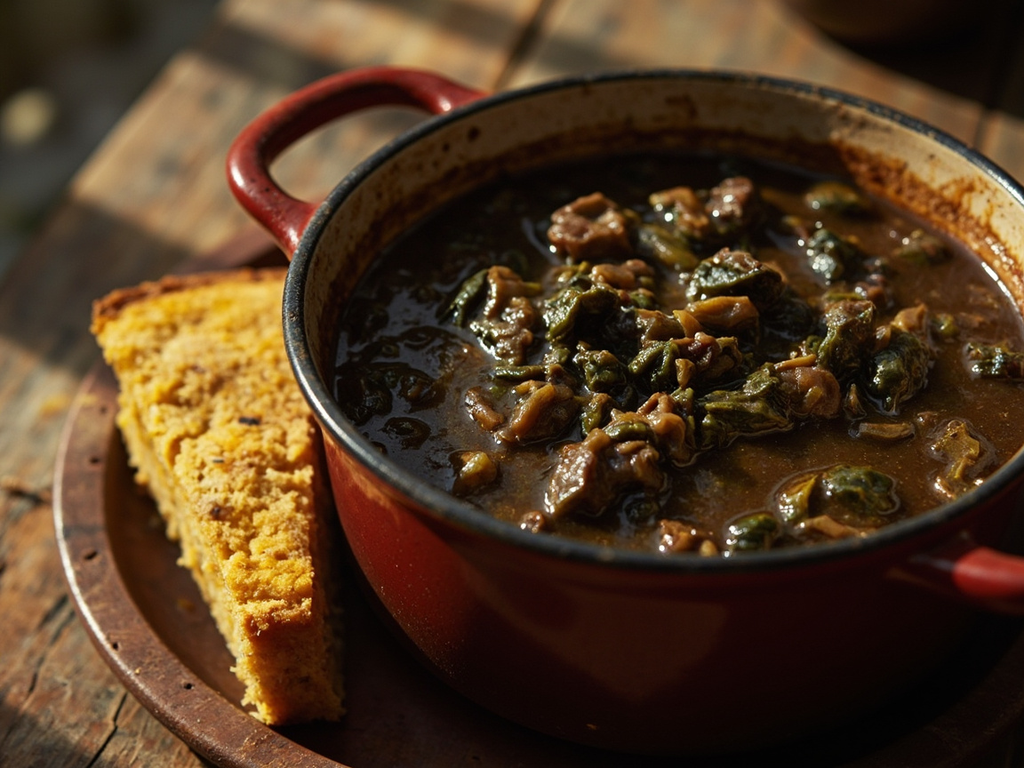
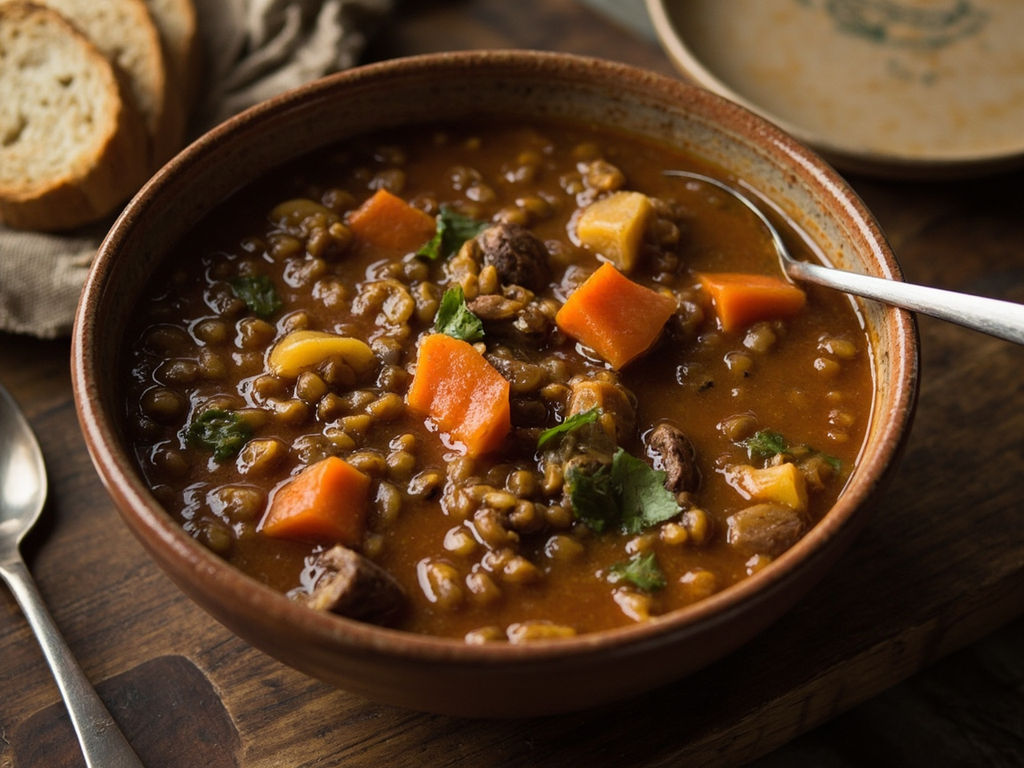
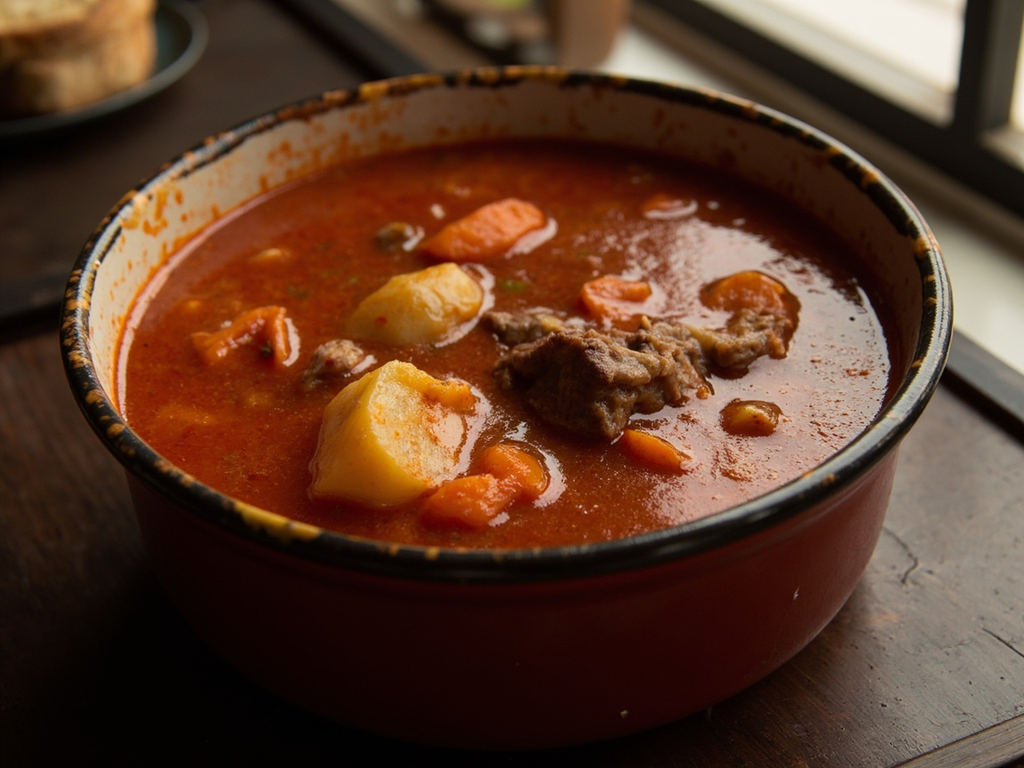
Gulyásleves (herdsman's goulash soup)
Why this dish? National Hungarian dish served in every home in Budapest; von Neumann grew up with this scent of paprika and melted onion. A comforting dish from his native land, which a Hungarian expatriate in America would seek with nostalgia.
A thick soup of beef slow-cooked with onions, paprika, and potatoes. Neither quite soup nor stew: you eat it with a spoon, rich and fragrant, like a complete meal.
You see, like a good Hungarian I can discuss automata and bombs for hours, but show me a bowl of steaming gulyás and I become little Jancsi from Budapest again. The secret, my grandmother drilled into me: you take the pot off the fire before adding the paprika, otherwise it turns bitter and everything is ruined — a rule as strict as an axiom. And above all, no haste: the meat must melt slowly, like a theorem left to mature. At Princeton, when I entertained, I loved surprising my American colleagues with this brilliant red; they thought it was a fierce chili and discovered a velvety sweetness.
- •Beef for braising (shank, chuck) — a nice piece (braised base)
- •Onions — equal quantity to the meat (melting base)
- •Szeged sweet paprika — generously (color and aroma)
- •Potatoes — a few (thickener)
- •Carrots and parsley root — as desired (sweetness)
- •Caraway, garlic, lard — to taste (seasoning)
Gulyásleves (herdsman's goulash soup)
A thick soup of beef slow-cooked with onions, paprika, and potatoes. Neither quite soup nor stew: you eat it with a spoon, rich and fragrant, like a complete meal.
Why this dish? National Hungarian dish served in every home in Budapest; von Neumann grew up with this scent of paprika and melted onion. A comforting dish from his native land, which a Hungarian expatriate in America would seek with nostalgia.
You see, like a good Hungarian I can discuss automata and bombs for hours, but show me a bowl of steaming gulyás and I become little Jancsi from Budapest again. The secret, my grandmother drilled into me: you take the pot off the fire before adding the paprika, otherwise it turns bitter and everything is ruined — a rule as strict as an axiom. And above all, no haste: the meat must melt slowly, like a theorem left to mature. At Princeton, when I entertained, I loved surprising my American colleagues with this brilliant red; they thought it was a fierce chili and discovered a velvety sweetness.
Ingredients (period version)
- Beef for braising (shank, chuck) — a nice piece (braised base)
- Onions — equal quantity to the meat (melting base)
- Szeged sweet paprika — generously (color and aroma)
- Potatoes — a few (thickener)
- Carrots and parsley root — as desired (sweetness)
- Caraway, garlic, lard — to taste (seasoning)
Ingredients
- Beef for braising, cubed — 600 g (braised base)
- Onions — 500 g (melting base)
- Ground sweet paprika — 2 tbsp (color and aroma)
- Potatoes — 500 g (thickener)
- Carrots — 2 (sweetness)
- Garlic — 2 cloves (seasoning)
- Caraway seeds — 1 tsp (aroma)
- Lard or oil — 2 tbsp (fat)
- Water or broth — 1.5 L (liquid)
Method
- Gently melt the sliced onions in lard until translucent and golden.
- Remove the pot from the heat, add the paprika and stir vigorously (this is the key step: on the heat it would burn).
- Add the meat, garlic, caraway, sauté for a minute, then moisten with a little water and simmer covered for 1.5 to 2 hours.
- Add the diced carrots and potatoes, top up with water, salt, and cook another 30 minutes until tender.
- Serve piping hot in a deep bowl, with fresh bread.
How it was made : Gulyás comes from the herdsmen (gulyás = cattle keeper) of the Hungarian plain, who cooked it in a cauldron (bogrács) suspended over the fire. By von Neumann's time, it had become the emblematic dish of all Hungary, from country inns to bourgeois tables in Budapest.
The contemporary twist : Serve it in a miniature cast-iron cauldron with grilled bread cubes on top, a nod to the bogrács of the plains.
Sources : George Lang, The Cuisine of Hungary, 1971 · Tradition culinaire hongroise documentée (gulyásleves)
John von Neumann · Charactorium