 flip
flipTepertős pogácsa (crackling scones)
Tepertős pogácsa (crackling scones)
Why this dish? Von Neumann crisscrossed the United States by train and Cadillac, from Princeton to Los Alamos via Aberdeen. Pogácsa is precisely the Hungarian snack you'd slip into a bag for the road, staying soft for hours.
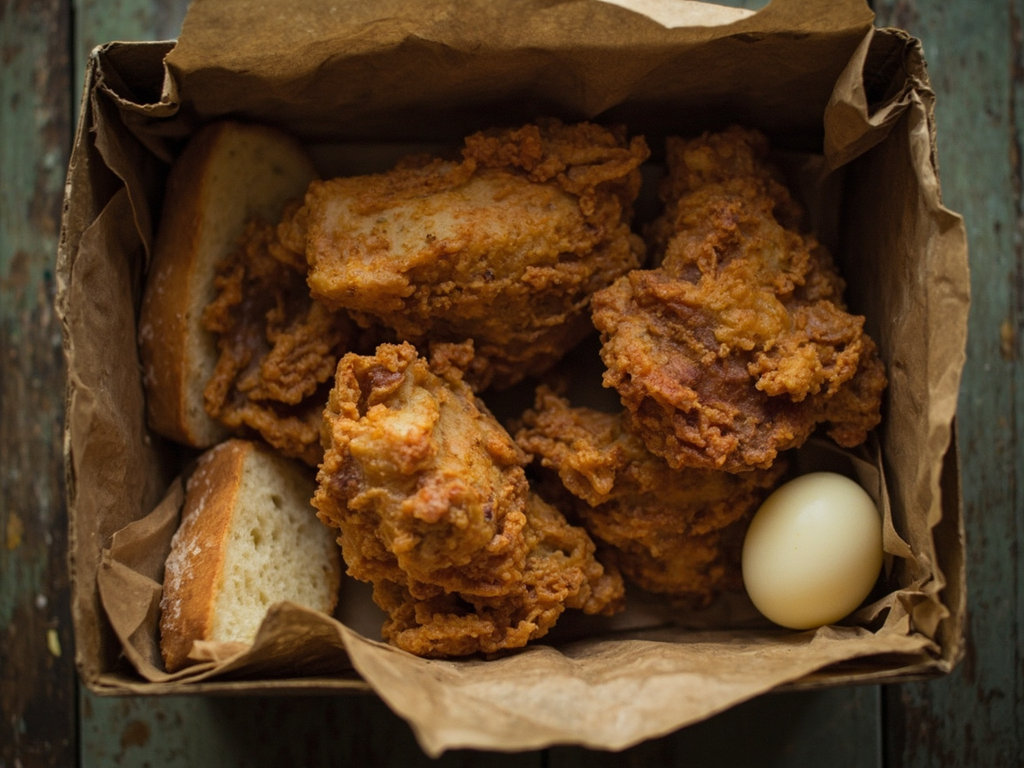
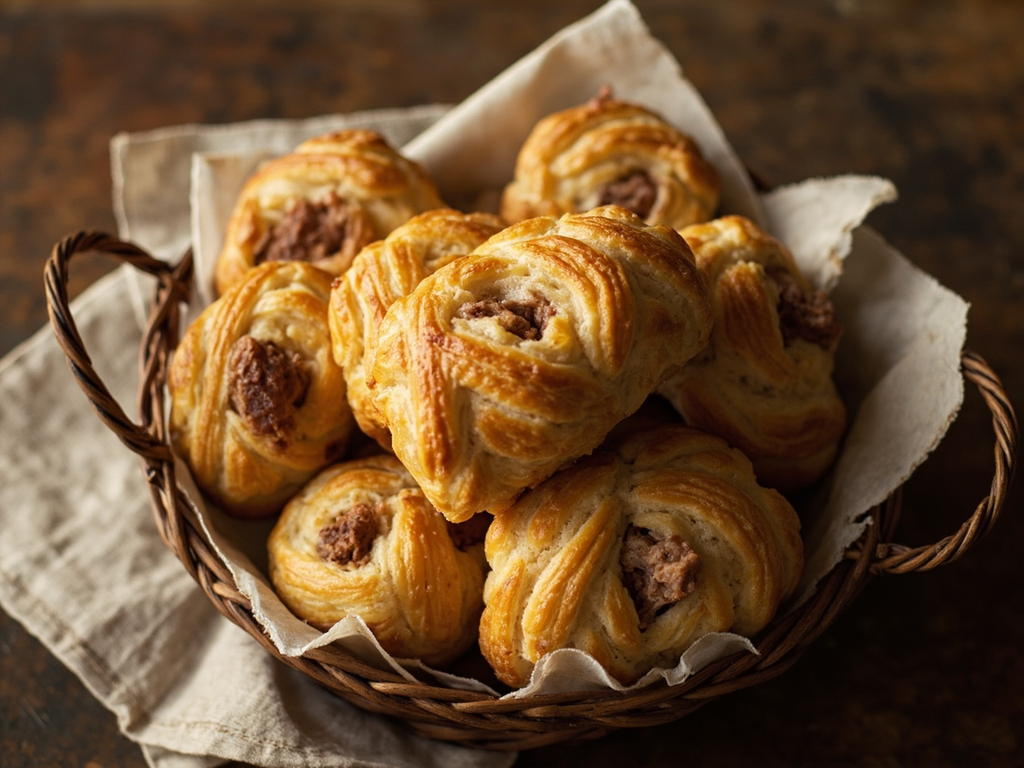
Small, flaky brioche-like buns topped with crispy pork cracklings, with a golden scored crust. Savory, rich, they're eaten cold and fit in a pocket: the perfect travel snack.
When I took the train to Aberdeen or drove halfway across the continent — always too fast, my friends will tell you — I had a bag of pogácsa in my pocket. My mother Margit would score the tops with a knife in a pretty lattice so they'd rise evenly: a combinatorial problem before its time, in a way. The trick is to chop the cracklings fine and let the dough rest in the cold, otherwise it won't flake. Believe me, nothing comforts a mathematician stuck on a calculation like a still-warm pogácsa.
- •Wheat flour — to measure (base)
- •Pork cracklings (tepertő) — a good handful (savory garnish)
- •Lard — generous (flakiness)
- •Baker's yeast — a piece (leavening)
- •Eggs, sour cream, salt — as needed (binder and flavor)
Tepertős pogácsa (crackling scones)
Small, flaky brioche-like buns topped with crispy pork cracklings, with a golden scored crust. Savory, rich, they're eaten cold and fit in a pocket: the perfect travel snack.
Why this dish? Von Neumann crisscrossed the United States by train and Cadillac, from Princeton to Los Alamos via Aberdeen. Pogácsa is precisely the Hungarian snack you'd slip into a bag for the road, staying soft for hours.
When I took the train to Aberdeen or drove halfway across the continent — always too fast, my friends will tell you — I had a bag of pogácsa in my pocket. My mother Margit would score the tops with a knife in a pretty lattice so they'd rise evenly: a combinatorial problem before its time, in a way. The trick is to chop the cracklings fine and let the dough rest in the cold, otherwise it won't flake. Believe me, nothing comforts a mathematician stuck on a calculation like a still-warm pogácsa.
Ingredients (period version)
- Wheat flour — to measure (base)
- Pork cracklings (tepertő) — a good handful (savory garnish)
- Lard — generous (flakiness)
- Baker's yeast — a piece (leavening)
- Eggs, sour cream, salt — as needed (binder and flavor)
Ingredients
- Flour — 500 g (base)
- Chopped pork cracklings (or crispy bacon bits) — 200 g (savory garnish)
- Soft lard — 100 g (flakiness)
- Fresh yeast — 20 g (leavening)
- Sour cream (smetana) — 100 g (softness)
- Eggs — 2 (+ 1 yolk for glazing) (binder and glaze)
- Warm milk — 100 ml (hydration)
- Salt, pepper — to taste (seasoning)
Method
- Dissolve the yeast in warm milk. Mix flour, chopped cracklings, lard, sour cream, eggs, salt, pepper, and the starter.
- Knead into a soft dough, let rise 1 hour, then fold it over itself 2 or 3 times to create layers (chill between folds).
- Roll out to 2 cm thick, score the top with a knife in a grid, cut out rounds with a cutter.
- Brush with egg yolk, let rise 20 minutes, bake at 200 °C for about 25 minutes until nicely colored.
- Let cool slightly: they keep for several days and travel perfectly.
How it was made : Pogácsa has been documented in Hungary for centuries as a travel bread and symbol of hospitality (in folk tales, the hero sets off with a pogácsa in his satchel). The crackling version, born from peasant thrift that wasted nothing from the pig, was common in every household in von Neumann's time.
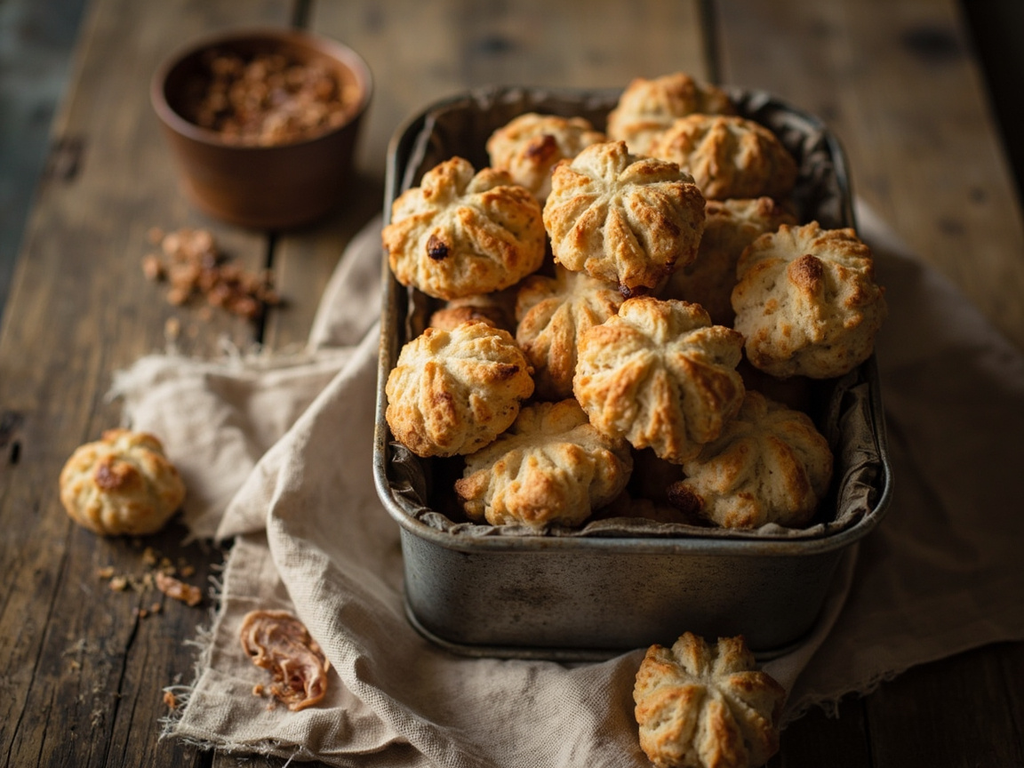
The contemporary twist : Present them stacked in a vintage metal tin, like provisions ready for a long train journey.
Sources : George Lang, The Cuisine of Hungary, 1971 · Tradition boulangère hongroise (tepertős pogácsa)
John von Neumann · Charactorium