 flip
flipFestival Mole with Chili and Cacao
Festival Mole with Chili and Cacao
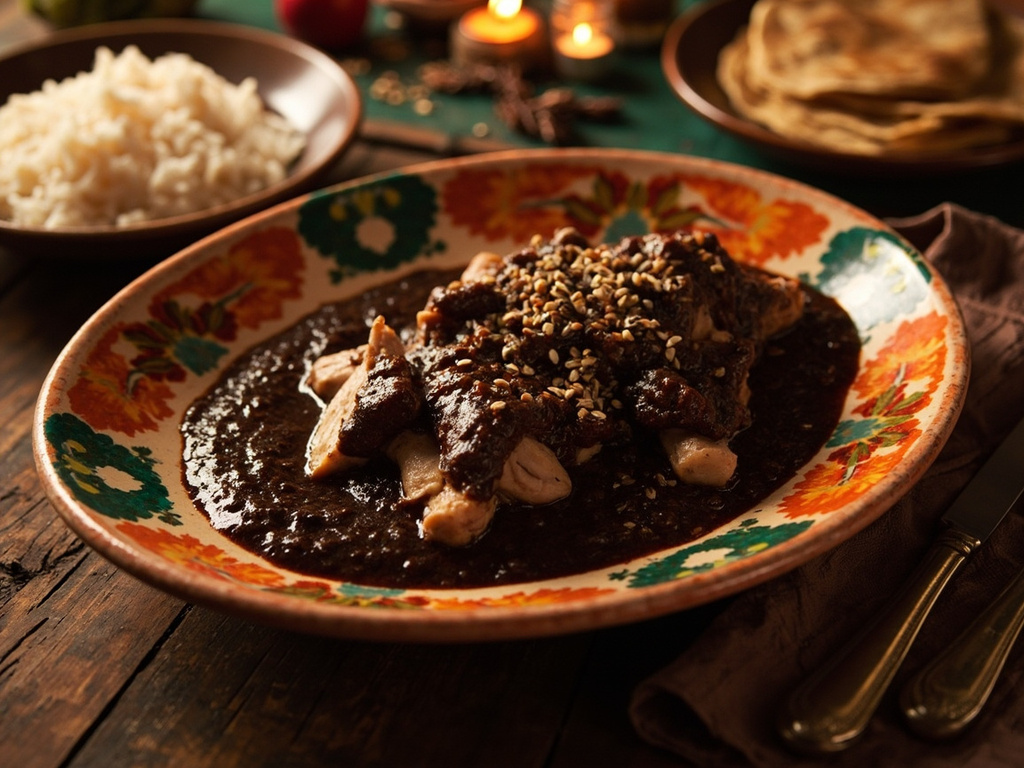
Why this dish? Mole crowned the banquets of the post-revolutionary elite and patron saint festivals. For Vasconcelos, the minister who celebrated mestizaje, this baroque dish — blending indigenous chiles, Eastern spices, and Mesoamerican cacao — was the very table of the Cosmic Race: a nation made of all contributions.
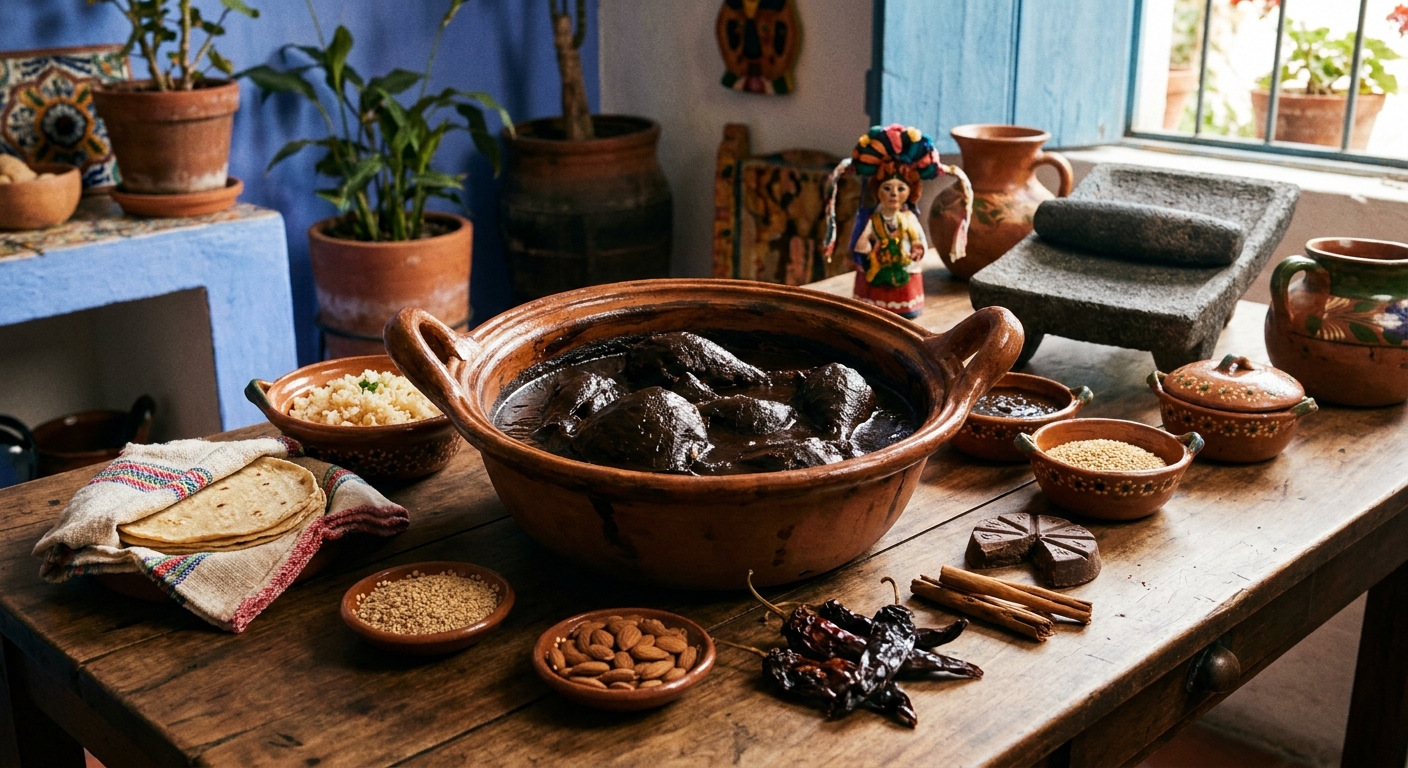
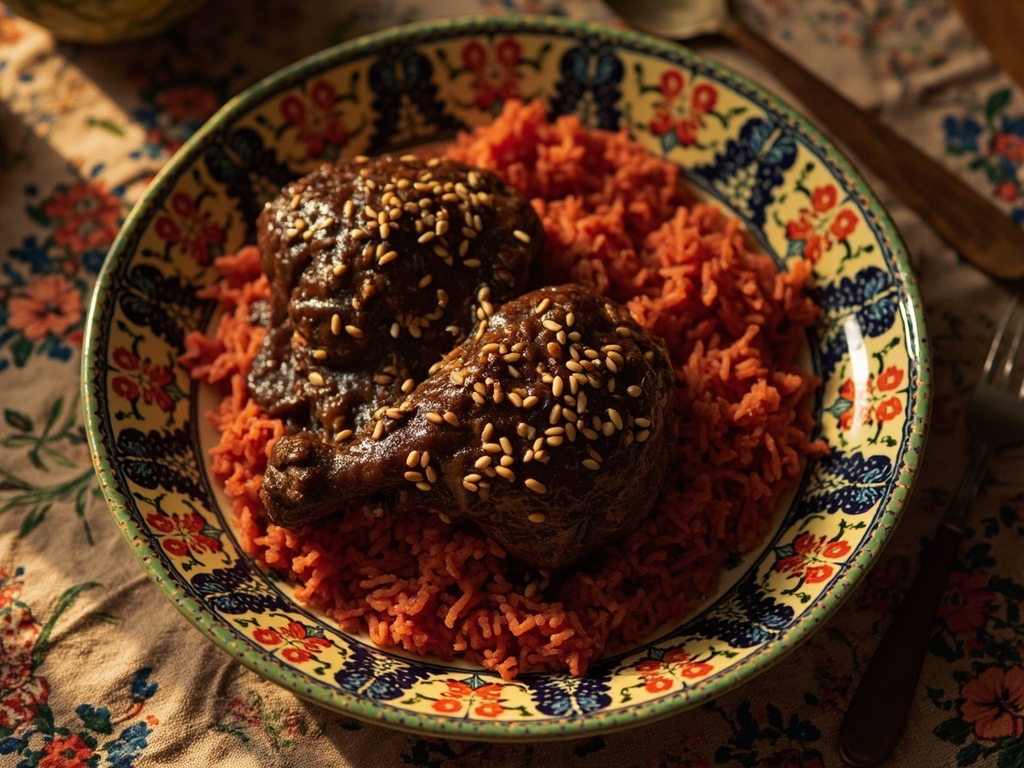
A dense, deep sauce, almost black, where about twenty ingredients marry: dried chiles, spices, dried fruits, and a touch of bitter cacao. It is ladled over chicken or turkey, accompanied by rice and tortillas.
Here, my friends, is the dish where my entire homeland reveals itself. Count the ingredients: the chili from our valleys, the spices brought by galleons from the East, the sacred cacao of the ancients — this is the synthesis, this is the cosmic race in a single spoonful. At my ministerial table as at village festivals, we ground these ingredients for a whole day on the metate, for greatness demands patience. Taste its noble bitterness: it is not a dish, it is a philosophy of mestizo America.
- •Dried chiles (mulato, ancho, pasilla) — a handful each (body and depth)
- •Turkey or chicken — one bird (base)
- •Bitter cacao — a small piece (roundness and bitterness)
- •Almonds, sesame, raisins — by hand (binder and sweetness)
- •Cinnamon, clove, anise — to taste (spices)
- •Stale tortilla and fried bread — a little (thickener)
Festival Mole with Chili and Cacao
A dense, deep sauce, almost black, where about twenty ingredients marry: dried chiles, spices, dried fruits, and a touch of bitter cacao. It is ladled over chicken or turkey, accompanied by rice and tortillas.
Why this dish? Mole crowned the banquets of the post-revolutionary elite and patron saint festivals. For Vasconcelos, the minister who celebrated mestizaje, this baroque dish — blending indigenous chiles, Eastern spices, and Mesoamerican cacao — was the very table of the Cosmic Race: a nation made of all contributions.
Here, my friends, is the dish where my entire homeland reveals itself. Count the ingredients: the chili from our valleys, the spices brought by galleons from the East, the sacred cacao of the ancients — this is the synthesis, this is the cosmic race in a single spoonful. At my ministerial table as at village festivals, we ground these ingredients for a whole day on the metate, for greatness demands patience. Taste its noble bitterness: it is not a dish, it is a philosophy of mestizo America.
Ingredients (period version)
- Dried chiles (mulato, ancho, pasilla) — a handful each (body and depth)
- Turkey or chicken — one bird (base)
- Bitter cacao — a small piece (roundness and bitterness)
- Almonds, sesame, raisins — by hand (binder and sweetness)
- Cinnamon, clove, anise — to taste (spices)
- Stale tortilla and fried bread — a little (thickener)
Ingredients
- Dried chiles ancho + mulato + pasilla — 6 total, seeded (sauce base)
- Chicken thighs — 6 (protein)
- Dark chocolate 70% (or pure cacao) — 30 g (bitterness and binder)
- Almonds — 50 g (creaminess)
- Sesame seeds — 3 tbsp (toasted flavor)
- Raisins — 40 g (sweetness)
- Cinnamon, clove, anise seeds — 1 tsp total (spices)
- Grilled tortilla + slice of fried bread — 1 each (thickener)
- Chicken broth — 1 liter (sauce consistency)
Method
- Poach the chicken in the broth, reserve both.
- Toast the chiles dry for a few seconds (without burning), then rehydrate in hot water for 20 min.
- Toast separately almonds, sesame, and spices; fry raisins, tortilla, and bread.
- Blend drained chiles, dried fruits, spices, sesame, tortilla, and bread with a little broth until smooth paste.
- Fry this paste in a large pot for 10 min, stirring, then thin with broth; add chocolate.
- Simmer 30 to 40 min on low heat until a coating and shiny sauce; salt.
- Reheat the chicken in the mole and serve sprinkled with sesame, with rice and tortillas.
How it was made : The true festival mole mobilized the whole family and could include over twenty ingredients ground by hand on the metate, sometimes over two days. Each house, each region (Puebla, Oaxaca) kept its own formula, passed from mother to daughter.
The contemporary twist : Plate the chicken with a mirror-like sauce, sprinkle golden sesame and an edible flower petal: Mexican baroque in a gala plate version.
Sources : El Cocinero Mexicano (1831) · Josefina Velázquez de León, Mexican Cookbook (1947) · Diana Kennedy, The Art of Mexican Cooking (1989)
José Vasconcelos · Charactorium