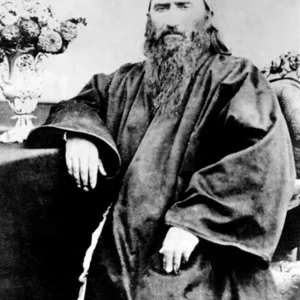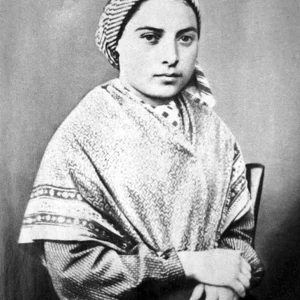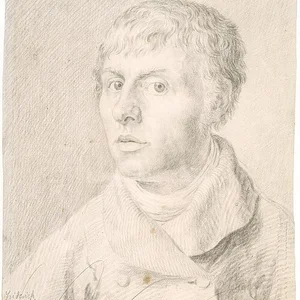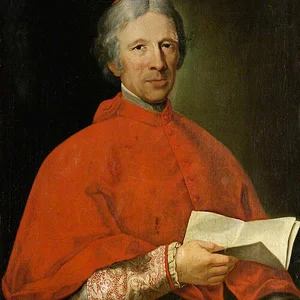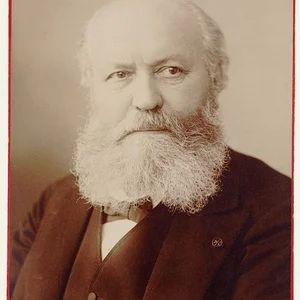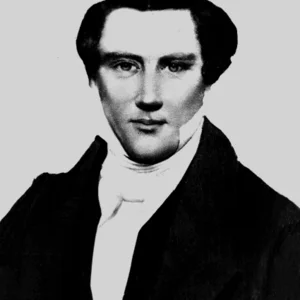

Joseph Smith was an American religious leader and founder of the Latter Day Saint movement (Mormonism) in 1830. He published the Book of Mormon, which he presented as a translation of golden plates revealed by an angel, and organized a new church before being assassinated in 1844.
Joseph Smith(1805 — 1844)
Joseph Smith
États-Unis
7 min read
Frequently asked questions
Key Facts
- Born December 23, 1805, in Sharon, Vermont, USA
- Published the Book of Mormon in 1830
- Founded the Church of Christ (later the Mormon movement) on April 6, 1830
- Established the community of Nauvoo, Illinois, in the 1840s
- Assassinated June 27, 1844, in Carthage, Illinois
Works & Achievements
Foundational work of the Mormon movement, presented as a translation of golden plates. A fundamental religious text containing doctrines, prophecies, and an account of pre-Columbian civilizations according to Mormon belief.
Collection of revelations and commandments that Joseph Smith claimed to have received directly from God. Canonical text outlining the distinctive doctrines of Mormonism and guiding religious organization.
Compilation of texts including the Book of Moses, the Book of Abraham, and the Articles of Faith. Contains additional teachings and important doctrinal corrections for the Mormon movement.
Complex religious structure developed by Joseph Smith, including apostles, seventy, high council, and secret temple orders. An organizational system that consolidated prophetic and administrative power.
Major architectural monument commissioned by Joseph Smith before his death. A building representing the religious ambition and organizational capacity of the Mormon movement, becoming a symbol of its power.
Introduction of temple ordinances (sealing, spiritual adoption) and esoteric teachings reserved for initiates. A mystical system reinforcing group cohesion and prophetic control.
Anecdotes
In 1820, in a sacred grove near Palmyra, New York, Joseph Smith reportedly had a vision in which God the Father and Jesus Christ appeared to him, telling him not to join any existing church. This "First Vision" became the foundation of the Mormon movement and marked the beginning of his prophetic mission, according to his followers.
In 1823, the angel Moroni reportedly revealed to him the existence of golden plates buried on the Hill Cumorah, containing an ancient religious record. After four years of waiting, Smith claimed to have received the plates in 1827 and began translating them, which would become the Book of Mormon.
Joseph Smith founded his church in 1830 in New York with only six members. The Book of Mormon, presented as his translation of the golden plates, quickly attracted converts and became the basis of the new religious movement that spread rapidly westward.
In Nauvoo, Illinois, Joseph Smith established a thriving religious community of several thousand followers between 1839 and 1844, where he built the most ambitious temple in North America at the time and organized a complex hierarchical religious structure.
On June 27, 1844, Joseph Smith was killed by an angry mob in Carthage, Illinois, while imprisoned. His death as a martyr solidified his legend and ensured the survival of the movement, which would continue westward under the leadership of Brigham Young.
Primary Sources
And it came to pass that I, Nephi, saw the heavens open, and I saw the inhabitants thereof clothed in robes of great purity, and I also saw that their hair was white as snow.
For behold, the field is white already to harvest; and lo, he that thrusteth in his sickle with his might, the same layeth up in store that he perisheth not.
I am in prison for defending the rights of my religion and the liberties of my people. Every apostle has suffered; I accept my cross.
And I beheld the heavens, and the earth continued to turn, and men did not see that I was working for them.
Key Places
Birthplace of Joseph Smith and site of his early visions (1820). The sacred grove where he reports receiving the First Vision and the Hill Cumorah where the golden plates were said to be buried are sacred sites for Mormons.
Place where Joseph Smith settled with his wife Emma in 1829 to secretly translate the golden plates. This small rural community became the birthplace of the translation of the Book of Mormon.
First religious center established by the Church in 1833. Joseph Smith built the first Mormon temple here and established the foundation of the movement's religious and economic organization.
Attempt to establish the "New World Jerusalem" in 1838. Site of violent conflicts with local residents and authorities, marking the growing hostility toward Mormons.
City founded by Joseph Smith in 1839, quickly becoming a religious community of several thousand followers. Center of Mormon power with its temple, religious school, and autonomous political and military organization.
Place where Joseph Smith was imprisoned and assassinated on June 27, 1844. This event martyred the prophet and consolidated the identity of the Mormon movement.
Typical Objects

According to Joseph Smith, engraved plates in reformed Egyptian characters containing an ancient religious record. He claimed to have received them from the angel Moroni in 1827 and translated them to produce the *Book of Mormon*.

Foundational work published in 1830, presented as the translation of the gold plates. It recounts the history of pre-Christian civilizations in North America and introduces distinctive doctrines of Mormonism.

A translucent stone that Joseph Smith used for translation and revelations, placed in a hat to focus light. An object symbolizing his role as a prophet and seer.

A collection of revelations that Joseph Smith claimed to have received from God. This text, compiled gradually, contains the foundational teachings and commandments of the Mormon movement.

A major 19th-century architectural monument, symbolizing the religious and political power of Joseph Smith. This building became emblematic of the Mormon movement and reflects its organizational ambitions.

An esoteric symbol associated with Joseph Smith's secret teachings, representing the degrees of celestial glory and temple ordinances in Mormon doctrine.
School Curriculum
Vocabulary & Tags
Key Vocabulary
Tags
Daily Life
Morning
Joseph Smith begins his day with prayer and scripture reading, often before dawn. He prepares his revelations and teachings, consulting with his religious assistants to organize Church affairs. The morning is devoted to spiritual and administrative tasks.
Afternoon
After the family lunch, Joseph Smith receives visitors, converts, and faithful members seeking his spiritual counsel. He participates in the construction of the Nauvoo Temple, supervising workers and discussing with architects. Afternoons are often dedicated to public meetings or collective teachings.
Evening
In the evening, Joseph Smith withdraws to his office or home to translate texts, write revelations, and correspond with his followers. He dines with his family, then devotes time to spiritual meditation and writing in his journal. Evenings may also include secret meetings with the apostles.
Food
Joseph Smith follows a simple 19th-century American diet: cornbread, pork or poultry, beans, seasonal vegetables, and dairy products. He drinks coffee and tea, although Mormon doctrine later prohibits these beverages (Word of Wisdom). His diet reflects that of farmers and frontier pioneers.
Clothing
Dressed in the style of 19th-century gentlemen, Joseph Smith wears a suit, vest, white shirt, and top hat for public occasions. For daily work, he wears simpler clothes: canvas trousers, work shirt, and vest. His appearance reflects his status as a religious leader among the pioneers.
Housing
Joseph Smith lives in a frontier-style house in Nauvoo, spacious but modest by urban standards. The home includes offices for religious affairs, a reception room for the faithful, and family spaces. Close to the temple under construction, the house symbolizes the prophet's spiritual authority at the heart of the community.
Historical Timeline
Period Vocabulary
Visual Style
Style visuel combinant l'austérité des communautés de frontière du 19e siècle avec une spiritualité ésotérique dorée. Atmosphère mystique mêlant textes religieux anciens, architecture temple grandiose, et symbolisme céleste.
Sound Ambience
Sons empreints de spiritualité et de ferveur religieuse : chants d'hymnes revivalistes, murmures de prières intimes, lecture solennelle des textes sacrés, et l'atmosphère de recueillement des assemblées religieuses du 19e siècle américain.
Liens externes & ressources
Références
Œuvres
Le Livre de Mormon
1830
La Doctrine et Alliances (Doctrine and Covenants)
1835-1844
La Perle de Grand Prix (Pearl of Great Price)
1851 (compilée après sa mort)
Organisation hiérarchique de l'Église (Apostolat, Sévérité, Haute-Prêtrise)
1829-1844
Le Temple de Nauvoo
1841-1846
Réformes religieuses et secrets du temple
1842-1844