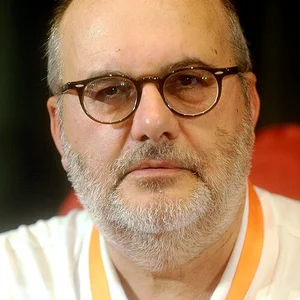

American economist born in 1943, winner of the 2001 Nobel Prize in Economics for his work on information asymmetries. A former chief economist of the World Bank, he has become a leading critic of neoliberal globalization.
Joseph Stiglitz(1943 — ?)
Joseph Stiglitz
États-Unis
6 min read
Frequently asked questions
Key Facts
- Born on February 9, 1943, in Gary (Indiana, United States)
- Chief economist and senior vice president of the World Bank (1997-2000)
- Nobel Prize in Economics in 2001 for his work on markets with information asymmetry (shared with George Akerlof and Michael Spence)
- Author of *Globalization and Its Discontents* (2002), a critique of the IMF and globalization
- Chaired President Bill Clinton's Council of Economic Advisers (1995-1997)
Works & Achievements
A body of work showing that markets function poorly when participants do not have access to the same information. This is the contribution that earned him the Nobel Prize.
An award honoring the best American economist under the age of 40, a prelude to his worldwide recognition.
Received jointly with George Akerlof and Michael Spence for the analysis of markets with asymmetric information.
A worldwide bestseller criticizing neoliberal globalization and the IMF's handling of crises.
A piece that popularized the denunciation of inequality and inspired the Occupy Wall Street movement.
A major work demonstrating how inequality threatens the economy and democracy.
Chairmanship of a commission proposing to reform the global monetary system after the 2008 crisis.
Anecdotes
In 2001, Joseph Stiglitz received the Nobel Prize in Economics for his work on markets where information is unevenly distributed. His central idea is simple: in a market, the seller often knows more than the buyer, which distorts exchanges. This theory of "information asymmetry" transformed the way we think about economics.
As Chief Economist of the World Bank from 1997 to 2000, Stiglitz eventually resigned after publicly criticizing how the IMF managed crises. He accused these institutions of imposing on poor countries remedies that worsened their hardship. This dramatic departure turned him into one of the leading critics of globalization.
In 2002, he published "Globalization and Its Discontents
a book that denounced the excesses of globalization and became a worldwide best-seller translated into dozens of languages. Rare for an economist of his standing, he wrote it for the general public and not only for specialists.
Stiglitz popularized the phrase "the 1%" in a famous 2011 article titled "Of the 1%, by the 1%, for the 1%
denouncing the capture of wealth by a small minority. This idea fueled the Occupy Wall Street movement that same year.
Brilliant from a very young age, he earned his doctorate at MIT and became one of the youngest full professors in the university's history, at only 26. He went on to teach at the most prestigious universities: Yale, Princeton, Stanford, Oxford, and then Columbia.
Primary Sources
Globalization, as it is currently being managed, has not lived up to its promises. It has failed to reduce poverty or to ensure stability.
Information asymmetries lie at the heart of how markets function; taking them into account profoundly alters the conclusions of classical economic theory.
One percent of Americans now take home nearly a quarter of the national income every year.
Inequality is not simply the product of market forces: it also results from politics and from the choices we make collectively.
Key Places
Industrial steel-manufacturing city where Joseph Stiglitz was born in 1943. His childhood in a region marked by social inequality shaped his future thinking.
University where Stiglitz earned his doctorate in economics in 1967, under the influence of the great economists of his time. A founding place of his career.
International institution where Stiglitz served as chief economist from 1997 to 2000. It was there that he forged his critique of the policies imposed on developing countries.
University where Stiglitz has taught since 2001 as a renowned professor. His academic home base throughout most of the 21st century.
Capital where Stiglitz received the Nobel Prize in Economics in December 2001. The site of the international recognition of his work.
Typical Objects

Gold medal awarded in Stockholm to Nobel Prize laureates, the symbol of supreme scientific recognition. Stiglitz received it in 2001 for his work on the economics of information.

The everyday tool of the university professor for working through models and equations in front of students. Stiglitz used it across decades of teaching at Yale, Princeton, Stanford and Columbia.

A 2002 book for the general public denouncing the excesses of globalization, translated into dozens of languages. It made Stiglitz a global figure in public debate.

A set of mathematical equations used to analyze the behavior of markets and the effect of incomplete information. It is Stiglitz's theoretical working tool.

An official economic analysis document intended to guide countries' development policies. As chief economist, Stiglitz oversaw publications of this kind.
School Curriculum
Vocabulary & Tags
Key Vocabulary
Tags
Daily Life
Morning
An academic and economist, Stiglitz often begins his day by reading the financial press and market data. A large part of his morning is devoted to research, writing articles, and preparing his classes at Columbia.
Afternoon
His afternoons are paced by lectures, research seminars, and the supervision of doctoral students. He also takes part in conferences, international commissions, and interviews with journalists or political leaders.
Evening
In the evening, he continues writing his books for the general public or prepares his public appearances. Very much in demand, he travels frequently to give lectures around the world.
Food
Stiglitz leads the life of an East Coast American academic, with meals often eaten in restaurants, on campuses, or at international symposiums. His diet is ordinary for a 21st-century intellectual, with nothing particularly noteworthy about it.
Clothing
He dresses in an understated suit, in keeping with the codes of the academic and institutional world. Tie and jacket for conferences, more casual attire for research work.
Housing
He lives in New York, home to Columbia University, in the comfort befitting a world-renowned professor. His many travels regularly take him to major capitals for missions and conferences.
Historical Timeline
Period Vocabulary
Liens externes & ressources
Références
Œuvres
Théorie des asymétries d'information
années 1970-1980
Médaille John Bates Clark
1979
Prix Nobel d'économie
2001
La Grande Désillusion
2002
Article « Of the 1%, by the 1%, for the 1% »
2011
Le Prix de l'inégalité
2012
Commission de l'ONU sur la réforme financière internationale
2009