 flip
flipQuinoa lawa with charqui (campaign soup-porridge)
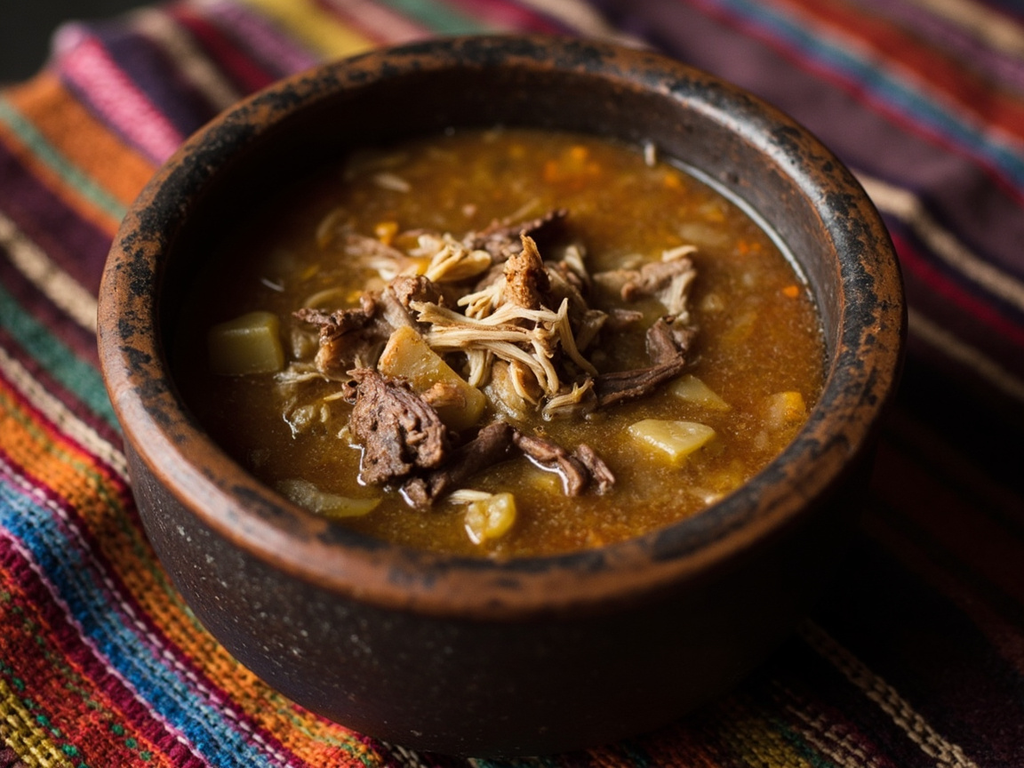
Quinoa lawa with charqui (campaign soup-porridge)
Why this dish? This was the everyday fare of the indigenous troops Juana commanded in the valleys of Chuquisaca: a thick broth that sticks to the ribs, made with only Andean resources, eaten squatting between two marches above Tarabuco and Padilla.
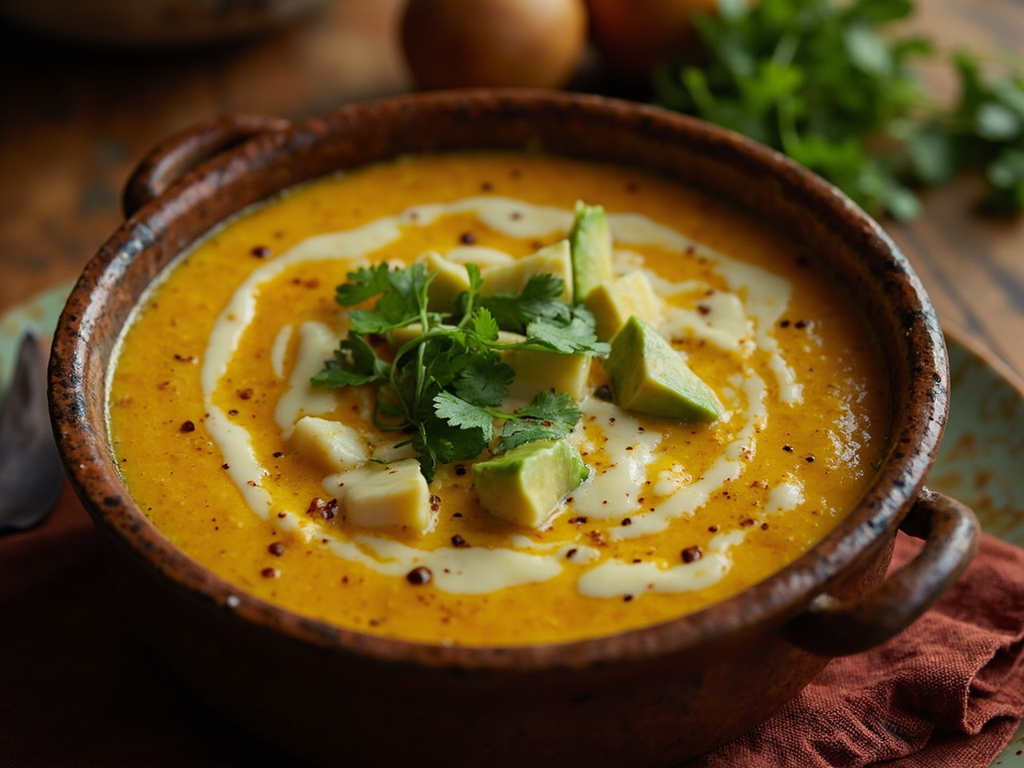
A creamy quinoa soup-porridge thickened with corn flour, scattered with rehydrated chuño and strips of dried meat. Nourishing, hot, frugal: the dish that sustained a day on horseback at altitude.
Soldier, come close to the cloth and make no fuss: here the colonel eats the same lawa as the last of my Indians. We would throw the chuño into the water at daybreak, the quinoa washed seven times to remove its bitterness, and a bit of charqui that each man kept in his satchel like a treasure. When the pot thickened, I knew my people would stay in the saddle all the way to Tarabuco. Eat hot, child: with a full belly, you fear the Spaniard less than the cold of the puna.
- •Altiplano quinoa — a handful per mouth (base grain, protein)
- •Chuño (freeze-dried potato) — a few rehydrated tubers (preserved starch)
- •Charqui (dried llama or alpaca meat) — one strip per person (umami, protein)
- •Corn flour — enough to thicken (thickener)
- •Dried Andean chili (ají) — a little (heat)
- •Rock salt and puna herbs (muña) — to taste (seasoning)
Quinoa lawa with charqui (campaign soup-porridge)
A creamy quinoa soup-porridge thickened with corn flour, scattered with rehydrated chuño and strips of dried meat. Nourishing, hot, frugal: the dish that sustained a day on horseback at altitude.
Why this dish? This was the everyday fare of the indigenous troops Juana commanded in the valleys of Chuquisaca: a thick broth that sticks to the ribs, made with only Andean resources, eaten squatting between two marches above Tarabuco and Padilla.
Soldier, come close to the cloth and make no fuss: here the colonel eats the same lawa as the last of my Indians. We would throw the chuño into the water at daybreak, the quinoa washed seven times to remove its bitterness, and a bit of charqui that each man kept in his satchel like a treasure. When the pot thickened, I knew my people would stay in the saddle all the way to Tarabuco. Eat hot, child: with a full belly, you fear the Spaniard less than the cold of the puna.
Ingredients (period version)
- Altiplano quinoa — a handful per mouth (base grain, protein)
- Chuño (freeze-dried potato) — a few rehydrated tubers (preserved starch)
- Charqui (dried llama or alpaca meat) — one strip per person (umami, protein)
- Corn flour — enough to thicken (thickener)
- Dried Andean chili (ají) — a little (heat)
- Rock salt and puna herbs (muña) — to taste (seasoning)
Ingredients
- Quinoa — 150 g, rinsed (base grain)
- Chuño (Andean grocery) or failing that, firm potatoes — 150 g (starch)
- Dried beef (cecina) or charqui — 100 g in strips (umami)
- Corn flour — 2 tbsp (thickener)
- Mild Andean chili (ají amarillo) paste — 1 tsp (heat)
- Onion — 1, minced (base)
- Water or broth — 1.2 L (base)
- Salt, Andean mint (muña) or fresh mint — to taste (seasoning)
Method
- Soak the chuño the night before, then rinse and cut into pieces; soak the charqui for 30 min and shred it.
- In a pot, sauté the onion, add the ají amarillo, then pour in the water or broth.
- Add the chuño and meat, simmer for 20 min.
- Pour in the rinsed quinoa, cook 15 min until it opens.
- Dissolve the corn flour in a little cold water, stir it in to thicken for 5 min.
- Salt, sprinkle with Andean mint, and serve piping hot.
How it was made : Lawas (flour-thickened soups) are attested throughout Andean peasant cuisine. On campaign, they were cooked in a single clay or copper pot over a fire of dried dung (taquia), the only fuel on the treeless puna.
The contemporary twist : Serve in a single steaming bowl with a drizzle of ají amarillo oil and a few puffed quinoa grains for crunch.
Sources : Antonio Paredes Candia, La comida popular boliviana
Juana Azurduy · Charactorium