 flip
flipKālua puaʻa — pork baked in an earth oven
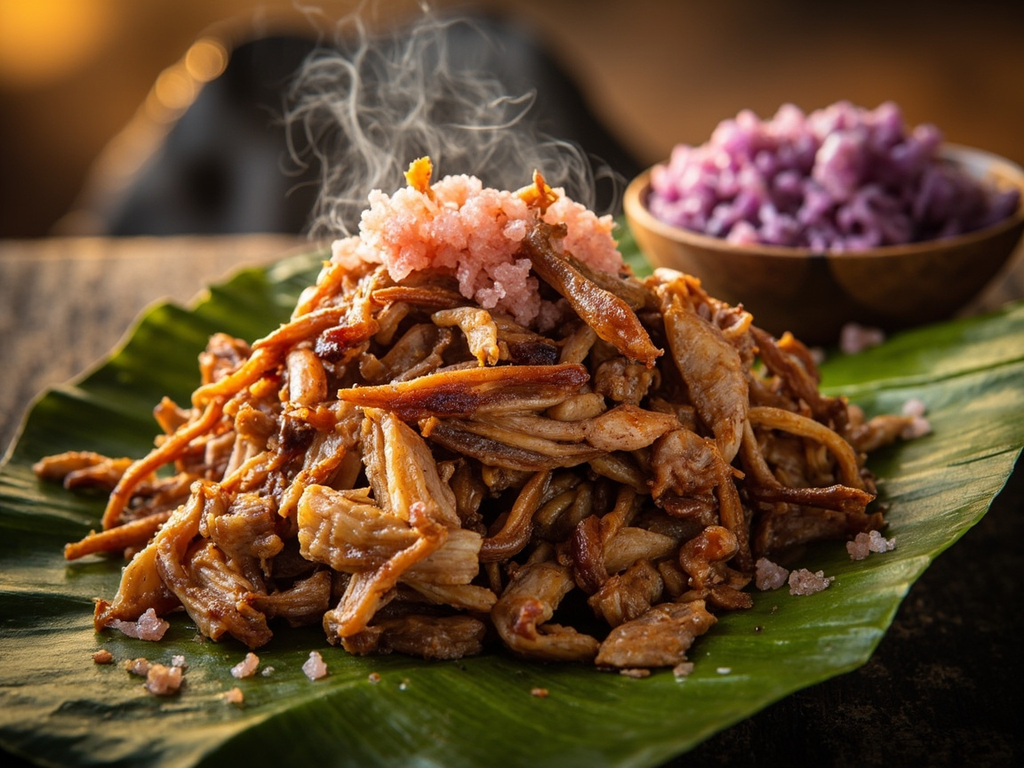
Kālua puaʻa — pork baked in an earth oven
Why this dish? Pork was kapu — forbidden to women on pain of death. In 1819, at Kailua-Kona, Kaʻahumanu sat at the men's table and ate with the young king Liholiho: this ʻai noa broke in one meal the order of taboos that had ruled Hawaii for centuries. No dish tells the queen's story better than this once-forbidden pork, which she chose to eat to change a world.
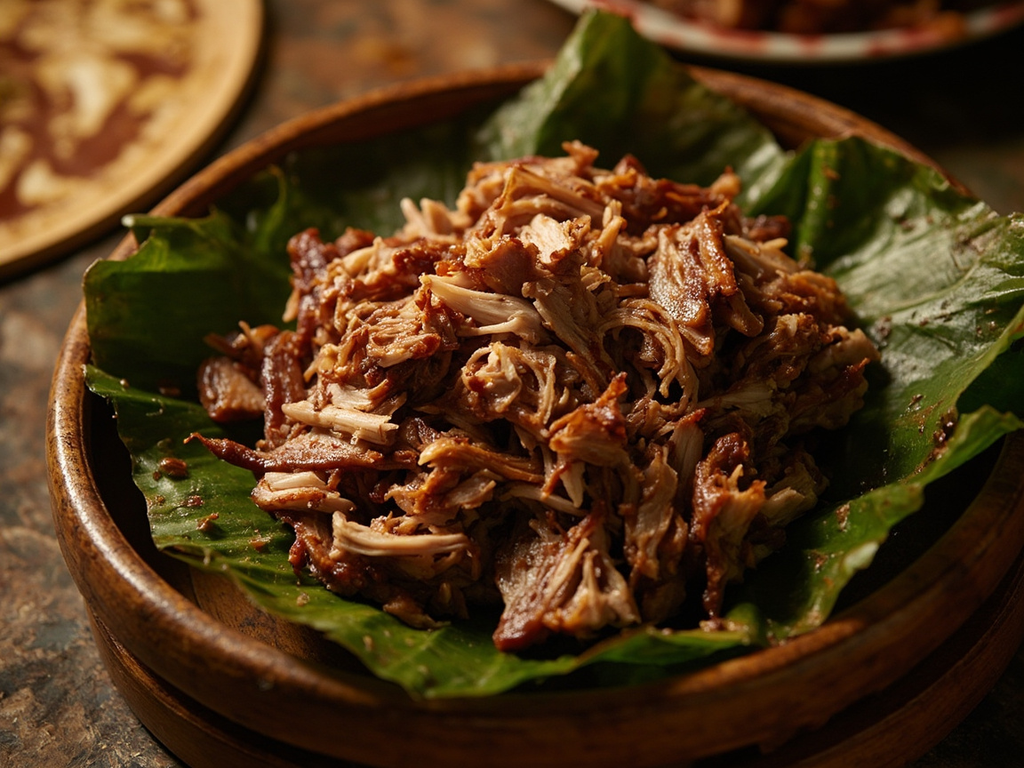
A whole pig — or a shoulder — rubbed with sea salt, wrapped in ti leaves and cooked for hours in the imu on hot stones. The meat comes out so tender it shreds, smoky, salty, deeply savory: the heart of any great Hawaiian feast.
Look well at what I hold in my hand: pork. All my life I was told that a woman who touched it would die, that the gods would strike her down. Well, I ate, and the sky did not fall. This pig, my people laid it at dawn on the red stones of the imu, wrapped in lāʻī leaves, and the earth cooked it all day until it melts under the fingers. Take some with your poi, and remember that a shared meal can overthrow a kingdom.
- •Whole pig or shoulder (puaʻa) — 1 animal / one large shoulder (noble feast meat)
- •Sea salt (paʻakai) — generously (seasoning and preservation)
- •Ti leaves (lāʻī) — a large armful (wrap, steam, flavor)
- •Heated volcanic stones (pōhaku) — the imu floor (heat source)
Kālua puaʻa — pork baked in an earth oven
A whole pig — or a shoulder — rubbed with sea salt, wrapped in ti leaves and cooked for hours in the imu on hot stones. The meat comes out so tender it shreds, smoky, salty, deeply savory: the heart of any great Hawaiian feast.
Why this dish? Pork was kapu — forbidden to women on pain of death. In 1819, at Kailua-Kona, Kaʻahumanu sat at the men's table and ate with the young king Liholiho: this ʻai noa broke in one meal the order of taboos that had ruled Hawaii for centuries. No dish tells the queen's story better than this once-forbidden pork, which she chose to eat to change a world.
Look well at what I hold in my hand: pork. All my life I was told that a woman who touched it would die, that the gods would strike her down. Well, I ate, and the sky did not fall. This pig, my people laid it at dawn on the red stones of the imu, wrapped in lāʻī leaves, and the earth cooked it all day until it melts under the fingers. Take some with your poi, and remember that a shared meal can overthrow a kingdom.
Ingredients (period version)
- Whole pig or shoulder (puaʻa) — 1 animal / one large shoulder (noble feast meat)
- Sea salt (paʻakai) — generously (seasoning and preservation)
- Ti leaves (lāʻī) — a large armful (wrap, steam, flavor)
- Heated volcanic stones (pōhaku) — the imu floor (heat source)
Ingredients
- Pork shoulder with skin — 2 kg (shredding meat)
- Coarse sea salt (ideally red ʻalaea salt) — 2 tbsp (seasoning)
- Ti or banana leaves (or parchment paper + foil) — enough to wrap (steam cooking)
- Liquid smoke (optional) — 1 tsp (evoke imu flavor)
Method
- Score the skin in a crosshatch pattern, rub the whole shoulder with salt (and liquid smoke if using).
- Wrap tightly in ti/banana leaves, then in a double layer of parchment paper and foil.
- Cook in a very low oven (150 °C) for 5 to 6 hours, until the meat falls apart with a fork.
- Let rest 20 min, then shred the meat with two forks, mixing with its salty juices.
- Serve warm, mounded, with poi and a few cabbage or seaweed leaves.
How it was made : In the imu, red-hot stones were placed at the bottom of the pit, covered with banana and ti leaves, the pig (often stuffed with hot stones to cook from inside) placed on top, then covered with moist foliage and earth. The steam-baking lasted half a day. Pork, dog, and certain red fish were aliʻi foods, strictly regulated by kapu.
The contemporary twist : Today's "kālua" is made in a slow cooker for a festive pulled pork without digging up the garden — but a banana leaf at the bottom of the pot saves the soul of the dish.
Sources : Rachel Laudan, The Food of Paradise (1996) · Margaret Titcomb, Dog and Man in the Ancient Pacific (1969)
Ka'ahumanu · Charactorium