 flip
flipKurt
Kurt
Why this dish? Kurmangazy led the life of an itinerant musician, covering immense distances on horseback between the Inner Horde, Saryarka, and Astrakhan. Kurt — these dried cheese balls, hard as stone, that never spoil — was the quintessential travel food of the steppe rider. One only needed to slip a few into the saddlebag to last days of riding.
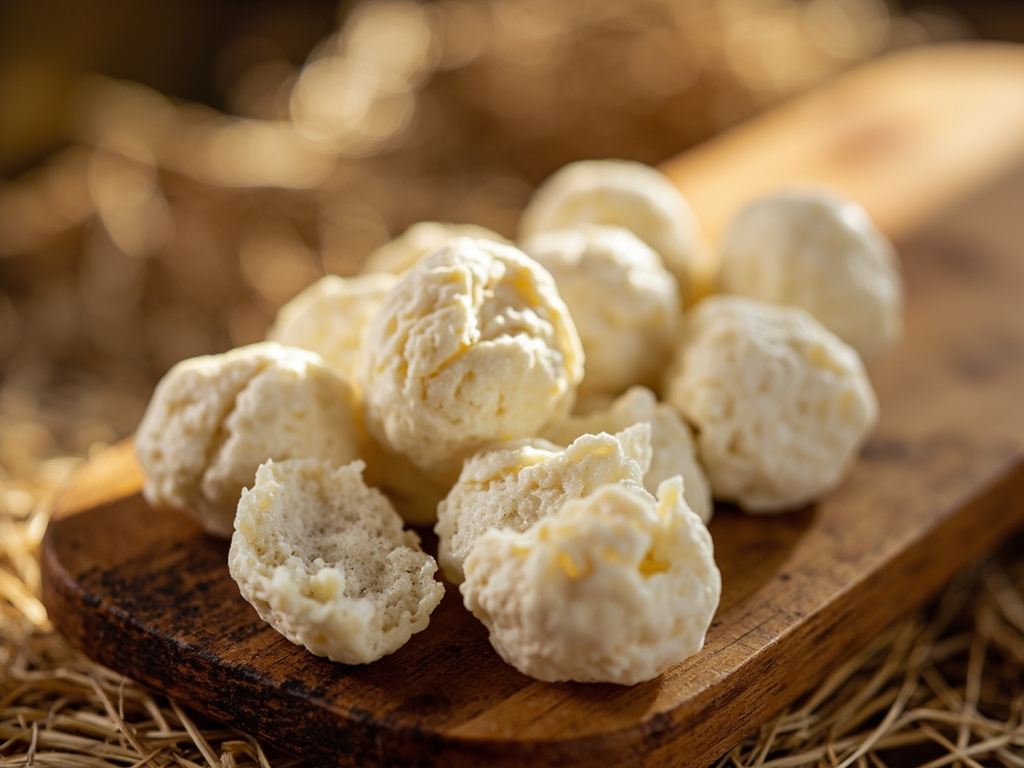
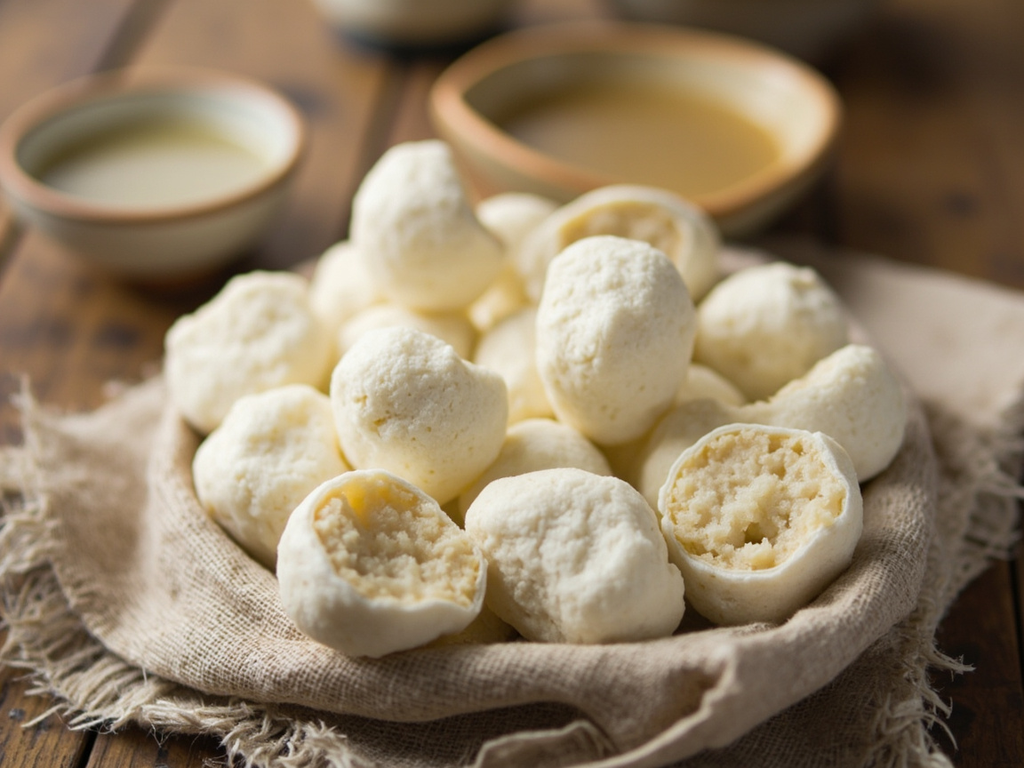
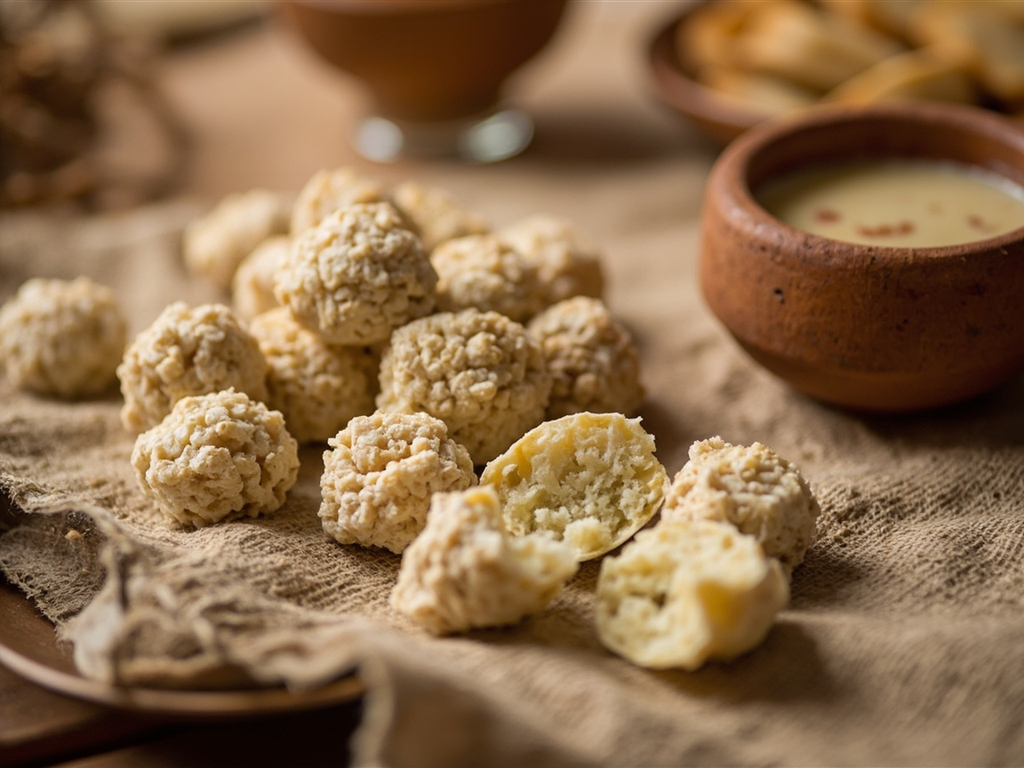
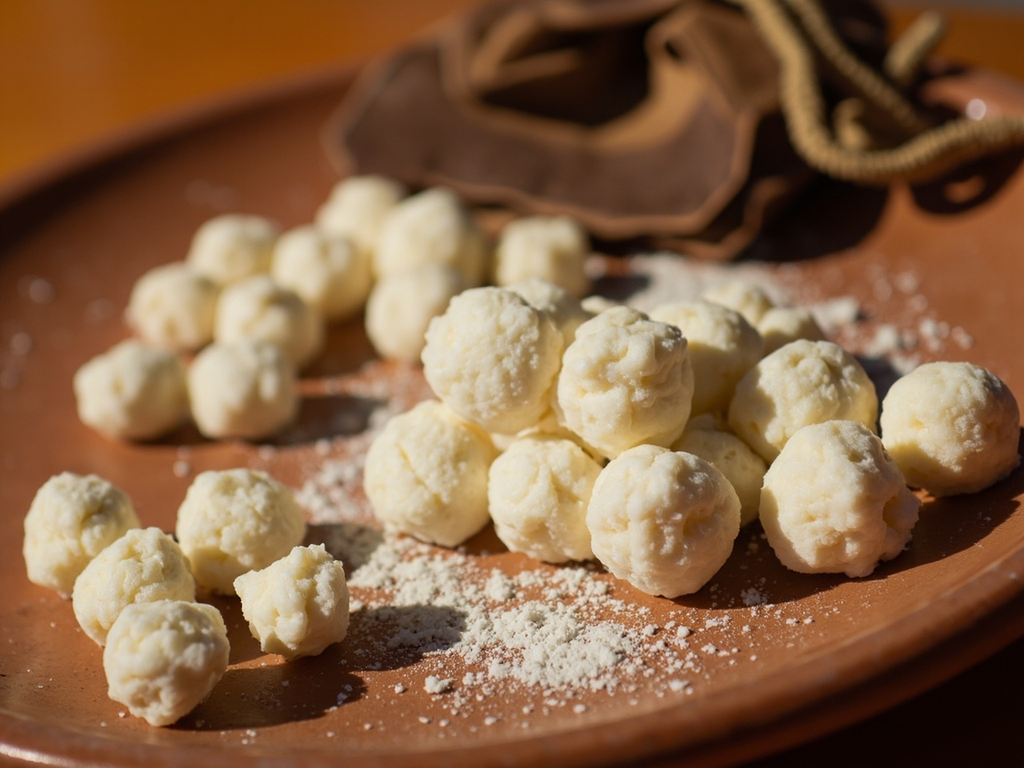
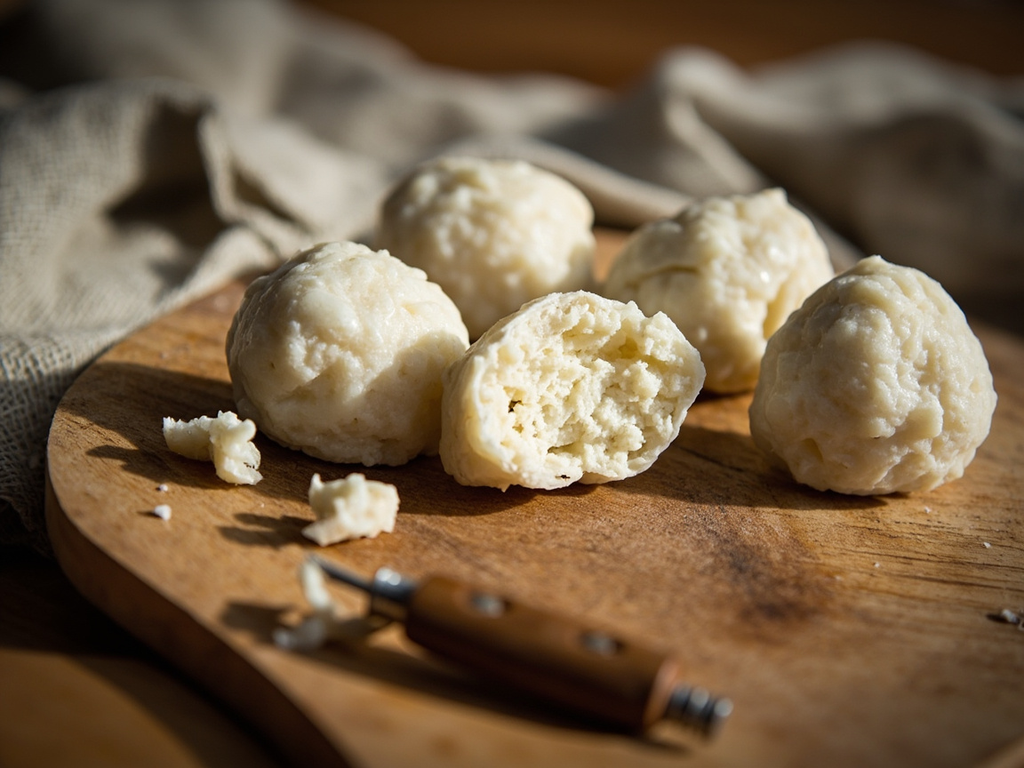
Balls of fermented milk cheese, dried by the sun and wind of the steppe until hard as pebbles. A concentrated source of protein and salt, kurt keeps for months without refrigeration — the nomadic food par excellence.
Kurt is patience dried in the sun. My mother rolled the balls one by one and placed them on the roof of the yurt. The wind did the rest. When I leave to play my dombra three days' ride from here, I take nothing but a bag of kurt and a water gourd. You bite off a piece, let it melt in your mouth as you ride — and hunger knows you no more. It is salty, it is sour, it is the steppe itself reduced to white stone.
- •*Suzme* (strained yogurt from cow, sheep, or goat milk) — a large basin (base)
- •Salt — a good handful (preservation)
Kurt
Balls of fermented milk cheese, dried by the sun and wind of the steppe until hard as pebbles. A concentrated source of protein and salt, kurt keeps for months without refrigeration — the nomadic food par excellence.
Why this dish? Kurmangazy led the life of an itinerant musician, covering immense distances on horseback between the Inner Horde, Saryarka, and Astrakhan. Kurt — these dried cheese balls, hard as stone, that never spoil — was the quintessential travel food of the steppe rider. One only needed to slip a few into the saddlebag to last days of riding.
Kurt is patience dried in the sun. My mother rolled the balls one by one and placed them on the roof of the yurt. The wind did the rest. When I leave to play my dombra three days' ride from here, I take nothing but a bag of kurt and a water gourd. You bite off a piece, let it melt in your mouth as you ride — and hunger knows you no more. It is salty, it is sour, it is the steppe itself reduced to white stone.
Ingredients (period version)
- *Suzme* (strained yogurt from cow, sheep, or goat milk) — a large basin (base)
- Salt — a good handful (preservation)
Ingredients
- Plain full-fat yogurt — 1 kg (base)
- Fine salt — 1 tbsp (preservation and flavor)
Method
- Pour the yogurt into a clean cloth (cheesecloth or thin kitchen towel) placed over a bowl. Tie and hang to drain in the refrigerator for 12 to 24 hours. Reserve the whey (it can be drunk).
- Recover the *suzme* (thick mass). Add salt and mix well.
- Shape into walnut-sized balls (about 20 g each), rolling firmly between your palms.
- Arrange the balls on a rack or tray lined with parchment paper, leaving space between each.
- Dry in an oven with the door ajar at 50–60°C for 6 to 8 hours, or in a dehydrator at 55°C for 10–12 hours. Turn halfway through. Kurt is ready when very hard and dry on the surface.
- Store in a cloth bag at room temperature. Keeps for several months.
How it was made : Traditional kurt dried directly on the roof of the yurt (*üy*) or on reed racks, exposed to the dry wind and blazing sun of the steppe for several days. Its legendary hardness allowed preservation for over a year. Riders nibbled it as is or dissolved it in hot water for a nourishing drink on the road. Variants included smoked kurt and peppered kurt. Some sources report that nomadic steppe armies fed almost exclusively on kurt and dried meat during their campaigns.
The contemporary twist : Roll the balls in dried herbs (dill, thyme) before drying for a flavored kurt — serve as an appetizer with craft beer.
Sources : Charles Blackwell, Tradition and Society in Turkmenistan: Gender, Oral Culture and Song, 2001 (section on nomadic dairy products) · Alma Kunanbayeva, "Traditional Kazakh Food Preservation Methods", in Ethnobiology and Biocultural Diversity, 2002
Kourmangazy · Charactorium