 flip
flipChampurrado — thick cacao atole
Champurrado — thick cacao atole
Why this dish? Near the cold canals of Xochimilco and Lake Texcoco where La Llorona appears in the night mist, champurrado is the hot drink that warms the watchers. Thick as consolation, blending the corn of the ancestors with sacred cacao, it is what you drink while waiting for the souls near the water.
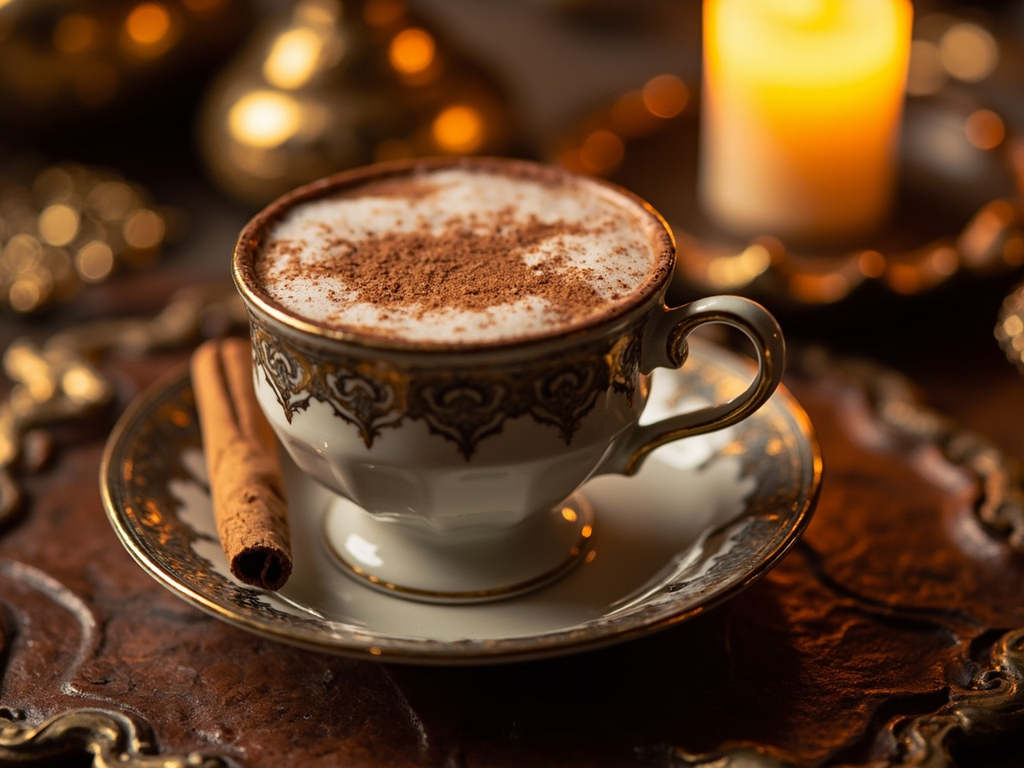
A corn atole thickened and flavored with cacao, cinnamon, and cane sugar (piloncillo): a creamy, almost sweet broth-like drink, drunk in big gulps on damp nights.
Here, take this bowl in your hands, so they stop trembling in the night cold. I thin the masa in water, stir it without pause with the molinillo — always in the same direction, or the cacao sulks. Cacao, you see, was the drink of lords before the Spaniards poured their cane sugar into it; I still like it bitter, like my grief. Drink while it steams. When the wind carries my laments over the water, let your throat at least be warm.
- •Nixtamalized corn masa — a handful, thinned (thickener)
- •Roasted and ground cacao beans — to taste (main flavor)
- •Piloncillo (raw cane sugar) — one piece (sweetness)
- •Cinnamon (Spanish introduction) — one stick (flavor)
- •Water — a large pitcher (base)
Champurrado — thick cacao atole
A corn atole thickened and flavored with cacao, cinnamon, and cane sugar (piloncillo): a creamy, almost sweet broth-like drink, drunk in big gulps on damp nights.
Why this dish? Near the cold canals of Xochimilco and Lake Texcoco where La Llorona appears in the night mist, champurrado is the hot drink that warms the watchers. Thick as consolation, blending the corn of the ancestors with sacred cacao, it is what you drink while waiting for the souls near the water.
Here, take this bowl in your hands, so they stop trembling in the night cold. I thin the masa in water, stir it without pause with the molinillo — always in the same direction, or the cacao sulks. Cacao, you see, was the drink of lords before the Spaniards poured their cane sugar into it; I still like it bitter, like my grief. Drink while it steams. When the wind carries my laments over the water, let your throat at least be warm.
Ingredients (period version)
- Nixtamalized corn masa — a handful, thinned (thickener)
- Roasted and ground cacao beans — to taste (main flavor)
- Piloncillo (raw cane sugar) — one piece (sweetness)
- Cinnamon (Spanish introduction) — one stick (flavor)
- Water — a large pitcher (base)
Ingredients
- Masa harina — 60 g (thickener)
- Water — 750 ml (base)
- Milk — 250 ml (optional, for creaminess) (richness)
- Mexican cooking chocolate (or pure cacao + a little sugar) — 80 g (main flavor)
- Piloncillo or whole cane sugar — 50 g (sweetness)
- Cinnamon stick — 1 (flavor)
Method
- Whisk the masa harina into cold water to avoid lumps.
- Add the cinnamon stick and bring to a gentle simmer, stirring constantly.
- Incorporate the chocolate and piloncillo, stir until dissolved.
- Add the milk if desired, and whisk (molinillo or whisk) until a foam forms on the surface.
- Let thicken for 5 to 8 minutes over low heat, stirring: the drink should coat the spoon.
- Remove the cinnamon and serve piping hot.
How it was made : Atole (from Nahuatl atolli) is a corn porridge drunk for millennia in Mesoamerica. Cacao, used as currency and a ritual drink of the elite, was beaten until frothy. Champurrado was born from the colonial encounter: cacao, cane sugar, and cinnamon introduced by the Spanish are combined. The molinillo, a wooden whisk twirled between the palms, is used to foam it.
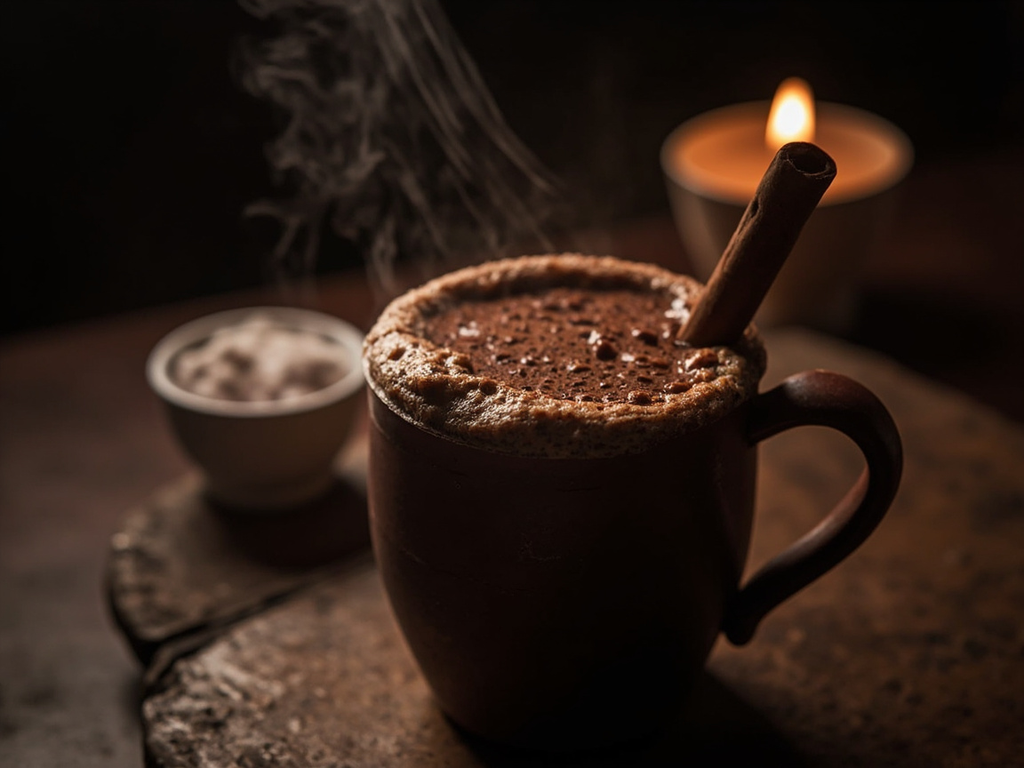
The contemporary twist : Serve it in a clay mug (jarrito) with a cinnamon stick planted in it, and froth at the last moment for a ribbon of cream on the surface.
Sources : Sophie D. Coe & Michael D. Coe, The True History of Chocolate (1996) · Bernardino de Sahagún, Codex de Florence, livre sur les aliments
La Llorona · Charactorium