 flip
flipComal tortillas, green molcajete salsa, and pot beans
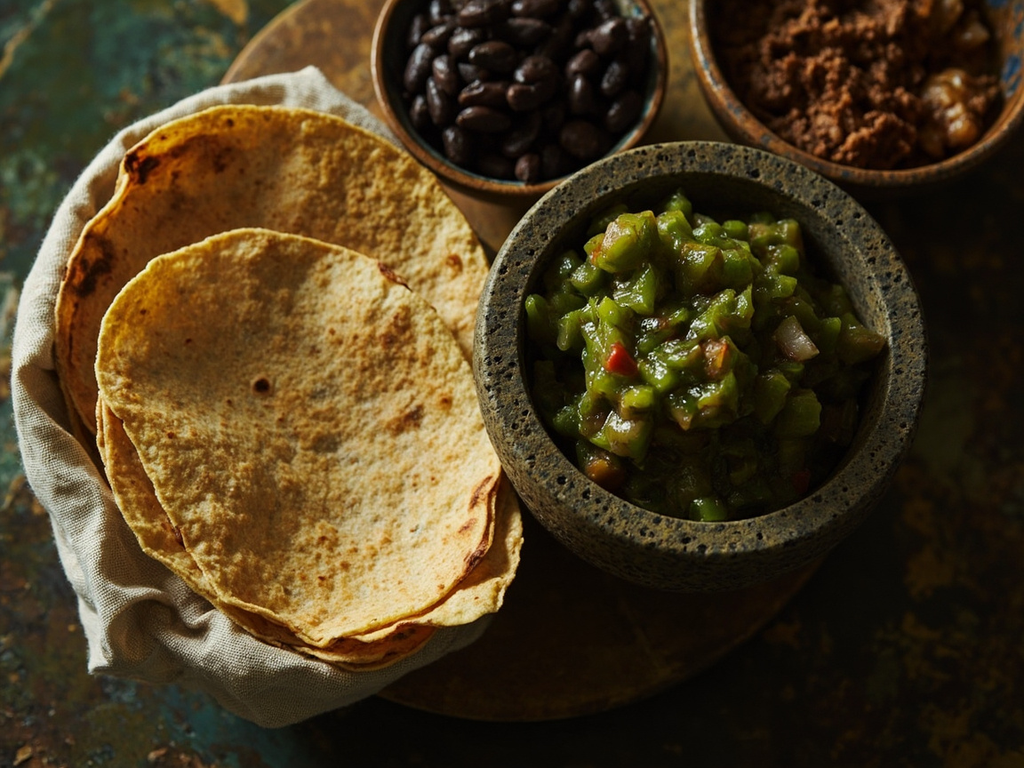
Comal tortillas, green molcajete salsa, and pot beans
Why this dish? Before the river and the tears, La Llorona was, legend says, a housewife. The everyday meal of colonial Mexico is this: warm tortillas folded by hand, a spicy salsa crushed in the molcajete, and beans from the pot. The daily maternal gesture, the one she lost.
Corn tortillas cooked on the griddle, served with a bright green salsa (tomatillos, chili, cilantro) crushed in the stone mortar, and simmered black beans. Simple, tangy, spicy, comforting.
It was my task every morning before dawn: kneading the masa, patting tortillas between my palms, flipping them on the comal with a nimble finger — they puff when they are happy. I crushed green tomatillos, chili, and cilantro in the molcajete, and the pot of beans simmered in a corner. This is what I served my family, simply, day after day. Fold the tortilla, dip it in the salsa. This is the table I weep for, stranger.
- •Nixtamalized corn masa — kneaded daily (tortillas)
- •Green tomatillos — a handful (salsa)
- •Fresh green chili — according to courage (heat)
- •Cilantro and onion — by hand (freshness)
- •Black beans — a measure, simmered (side)
- •Salt — a pinch (seasoning)
Comal tortillas, green molcajete salsa, and pot beans
Corn tortillas cooked on the griddle, served with a bright green salsa (tomatillos, chili, cilantro) crushed in the stone mortar, and simmered black beans. Simple, tangy, spicy, comforting.
Why this dish? Before the river and the tears, La Llorona was, legend says, a housewife. The everyday meal of colonial Mexico is this: warm tortillas folded by hand, a spicy salsa crushed in the molcajete, and beans from the pot. The daily maternal gesture, the one she lost.
It was my task every morning before dawn: kneading the masa, patting tortillas between my palms, flipping them on the comal with a nimble finger — they puff when they are happy. I crushed green tomatillos, chili, and cilantro in the molcajete, and the pot of beans simmered in a corner. This is what I served my family, simply, day after day. Fold the tortilla, dip it in the salsa. This is the table I weep for, stranger.
Ingredients (period version)
- Nixtamalized corn masa — kneaded daily (tortillas)
- Green tomatillos — a handful (salsa)
- Fresh green chili — according to courage (heat)
- Cilantro and onion — by hand (freshness)
- Black beans — a measure, simmered (side)
- Salt — a pinch (seasoning)
Ingredients
- Masa harina — 300 g + warm water (tortillas)
- Tomatillos (fresh or canned) — 400 g (salsa)
- Green chili (serrano or jalapeño) — 1 to 2 (heat)
- Fresh cilantro — 1 small bunch (freshness)
- Onion — 1/2 (aromatic)
- Cooked black beans — 400 g (side)
- Garlic, salt — 1 clove + to taste (seasoning)
Method
- Mix masa harina with salted warm water to a soft, non-sticky dough; form balls.
- Flatten each ball between two sheets (press or rolling pin) and cook on a very hot pan for 30-45 seconds per side, until it puffs.
- For the salsa: blanch or roast tomatillos and chili, then crush in a mortar (molcajete) with garlic, onion, cilantro, and salt — rustic texture.
- Reheat black beans, mash roughly if desired, adjust salt.
- Serve warm tortillas stacked under a cloth, with salsa and beans on the side.
- Eat by hand: fold tortilla, fill with beans, top with salsa.
How it was made : The tortilla cooked on the clay comal is the daily bread of Mesoamerica for millennia. The molcajete salsa — volcanic stone mortar — and beans (frijoles, domesticated in the Americas long before the conquest, here in their cradle) form the basic trio of the home. In colonial times, this indigenous foundation remained unchanged on modest tables.
The contemporary twist : Stack the tortillas in a basket lined with an embroidered cloth and serve the salsa directly in the stone molcajete: everyday cooking becomes a centerpiece.
Sources : Diana Kennedy, The Cuisines of Mexico (1972) · Sophie D. Coe, America's First Cuisines (1994)
La Llorona · Charactorium